
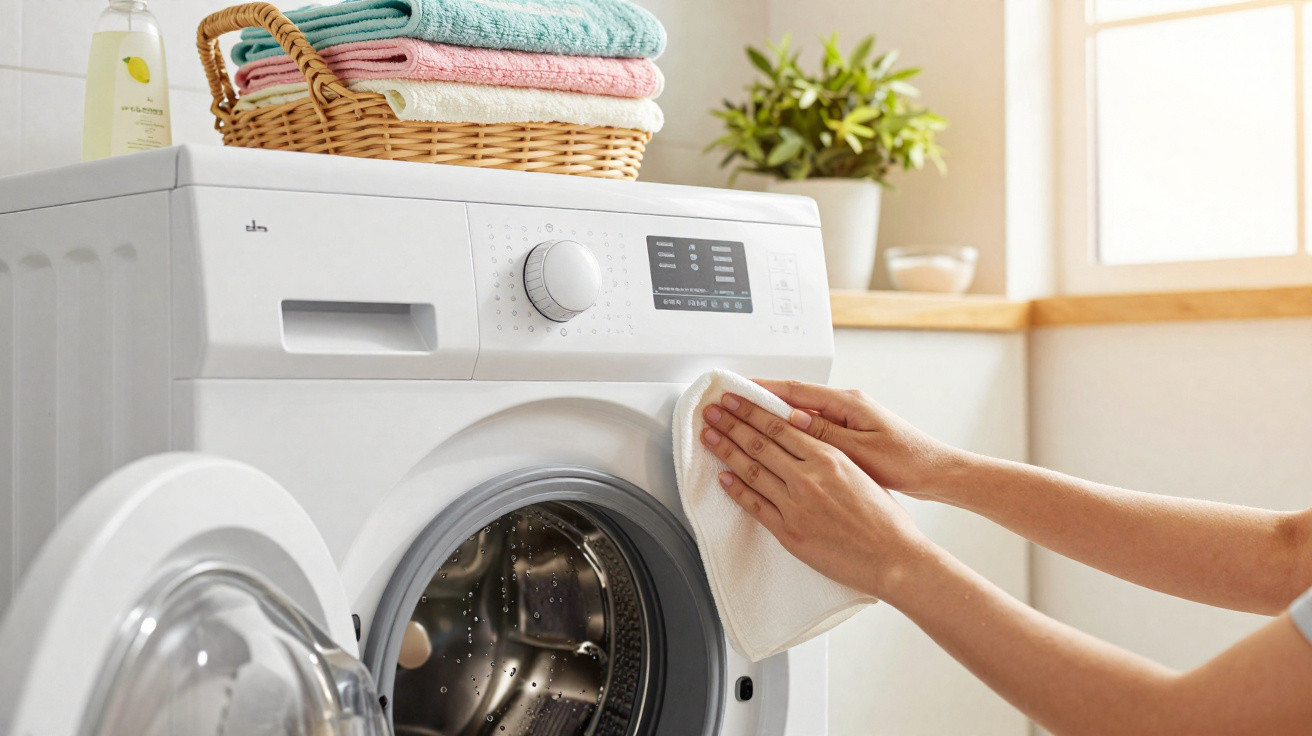
In many households, the washing machine is running almost every day, yet some habits still raise questions. According to manufacturers and service technicians, shutting the door immediately after use can encourage bad smells, mould and premature wear of the rubber door seal-particularly in damp spaces with limited air movement.
Why does moisture in the washing machine cause bad smells and mould?
After every cycle, a small amount of water is left behind in the drum, the detergent drawer and around the door seal. When the door stays closed, air cannot circulate, drying takes longer, and the inside remains warm and humid-ideal conditions for microorganisms that create unpleasant odours.
That familiar “wet clothes left in storage” smell often appears when fungi and bacteria cling to internal surfaces. The door gasket is also a magnet for detergent, fabric conditioner and grime, which can produce the dark marks typical of mould. In some cases, these deposits may even transfer onto light-coloured items during a wash.
How is the rubber door seal affected when the door is kept shut?
The door seal prevents leaks and is designed to cope with heat and cleaning products. However, constant exposure to trapped moisture-combined with poor ventilation-speeds up deterioration and makes cracks, staining and loss of elasticity more likely, meaning replacements may be needed more often.
With the door closed, an internal “microclimate” develops: high humidity, chemical residue and very little airflow. Over time, this environment tends to cause several specific issues:
- The seal’s structure weakens, making splits and fissures easier to form;
- Heavy mould build-up in the inner folds of the gasket;
- Reduced sealing performance, increasing the risk of small leaks;
- Stains that are difficult to remove, even with specialist products.
Is it better to leave the washing machine door open after use?
Manufacturers advise leaving the door ajar for a few hours, until the drum and the rubber seal are completely dry. This simple step improves ventilation, lowers internal moisture and makes odours less likely-something that matters even more in enclosed utility areas or spaces without windows.
To support this routine, a few habits can keep the machine cleaner and working efficiently for longer: wipe the rubber seal with a clean cloth, remove the detergent drawer for periodic washing, and avoid overusing detergent and fabric conditioner, as excess product leaves residue that can feed mould growth.
How can you prevent odours and extend the life of the washing machine?
Avoiding smells comes down to straightforward habits: don’t leave wet laundry sitting in the drum, make sure the room is well ventilated, and check the condition of the door seal regularly. In very humid locations, opening windows, using an extractor fan, or placing a fan nearby can help the machine dry naturally.
It is also helpful to run internal cleaning cycles every one to two months, depending on how often the machine is used, following the manual and using cleaning products recommended for sanitising. By not keeping the door shut all the time and sticking to these measures, you are more likely to reduce mould, protect the seal and keep the appliance hygienic and efficient for years.



Comments
No comments yet. Be the first to comment!
Leave a Comment