
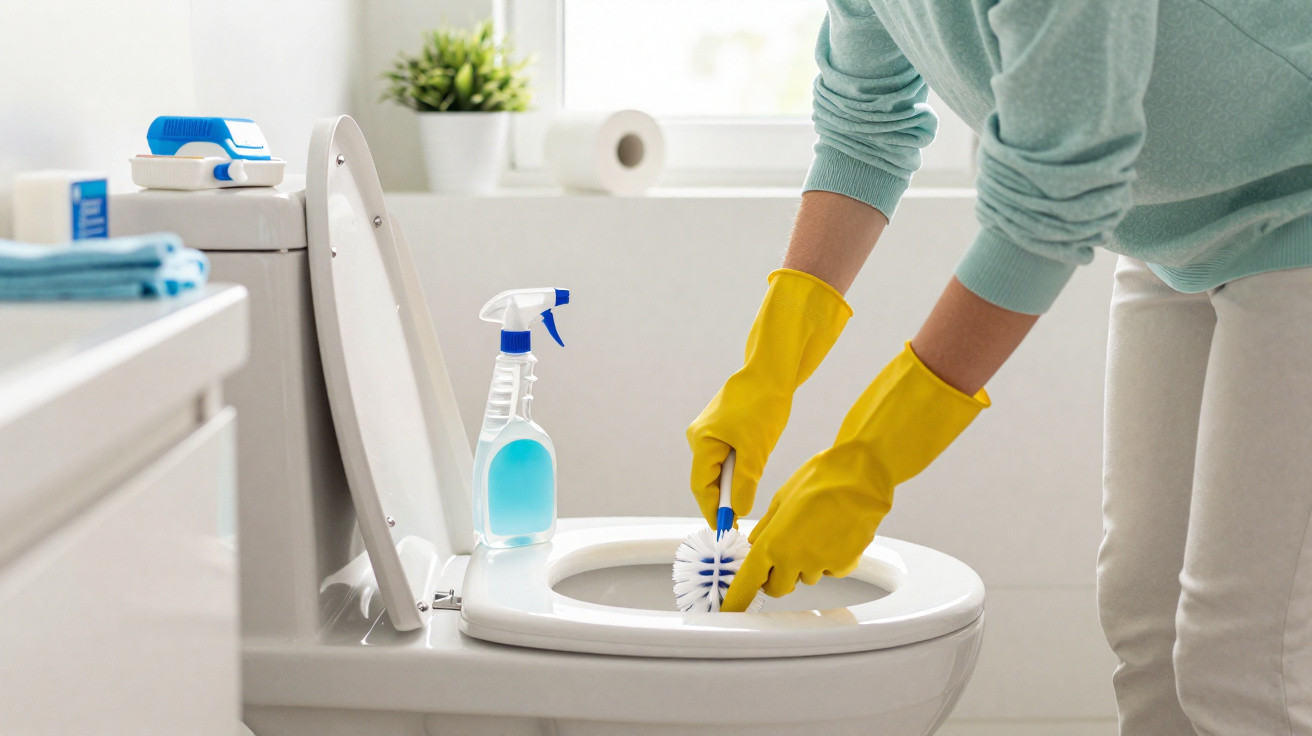
Cleaning the toilet is one of the most important parts of bathroom hygiene, because it collects splashes, organic residue, moisture and micro-organisms in areas that are touched frequently. Doing it properly means removing grime, disinfecting when needed, and paying attention to the lid, seat, flush control, inner rim and the floor around the toilet.
Why does the toilet need frequent cleaning?
Bathrooms combine water, warmth, hand-touch surfaces and waste, which can lead to unpleasant smells and the spread of germs. With a toilet, the issue is not limited to the inside of the bowl: the seat, lid, flush button/lever and the outside base are also handled or bumped every day.
Flushing can release microscopic droplets into the surrounding space, especially if the lid is left up. That is why lowering the lid before flushing and wiping nearby surfaces helps reduce contamination on toilet brushes, worktops, floors and items kept close to the toilet.
How often should you clean the toilet?
In a home where nobody is unwell, a thorough weekly clean is usually enough to keep the toilet in good condition. In heavily used bathrooms, homes with children, frequent visitors, or anyone with an intestinal infection, you should disinfect the seat, flush control and other touch points more often.
- Normal family use: a full clean once a week.
- Guest bathroom or high traffic: a full clean twice a week.
- Someone ill at home: disinfect touch points every day.
- Visible stains, smells or splashes: clean immediately rather than waiting for cleaning day.
What is the step-by-step method for cleaning without spreading dirt?
Start by removing items from around the toilet, put on gloves, and apply a toilet cleaner inside the bowl, making sure it reaches under the inner rim. Leave it for the time stated on the label before scrubbing; this wait helps loosen marks and supports the product’s hygiene action.
Next, scrub the inside of the bowl using a brush kept exclusively for the toilet, then flush with the lid down. For the outside, work from top to bottom: lid, seat, hinges, flush button/lever, sides, base and the floor around it, using a cloth that is separate from cloths used for the sink and the rest of the bathroom.
Which products should you use, and which mixtures should you avoid?
Warm water and washing-up liquid can shift visible dirt, but disinfection requires a suitable product, such as a bathroom disinfectant or household bleach diluted exactly as the label directs. Before disinfecting, the surface must be clean, because organic dirt reduces how well the disinfectant works.
- Do not mix bleach with vinegar, ammonia, alcohol or scented cleaners.
- Use bleach only on compatible surfaces and with good ventilation.
- Follow the contact time recommended by the disinfectant manufacturer.
- Rinse or wipe with a damp cloth when the label instructs, especially on toilet seats.
- Wash the brush and allow it to dry in a ventilated spot before putting it away.
Daily care stops dirt becoming a bigger problem
A few routine habits make the toilet much easier to maintain: close the lid before flushing, wipe splashes straight away, keep the brush dry, and avoid leaving damp cloths piled up in the bathroom. These small steps help cut down odours, staining and cross-contamination.
Good cleaning is not about using excessive product, but about sequence and contact time. Remove dirt first, disinfect afterwards, and prioritise the areas your hands touch to keep the bathroom more hygienic and prevent the toilet from holding onto invisible residue between cleans.
Comments
No comments yet. Be the first to comment!
Leave a Comment