
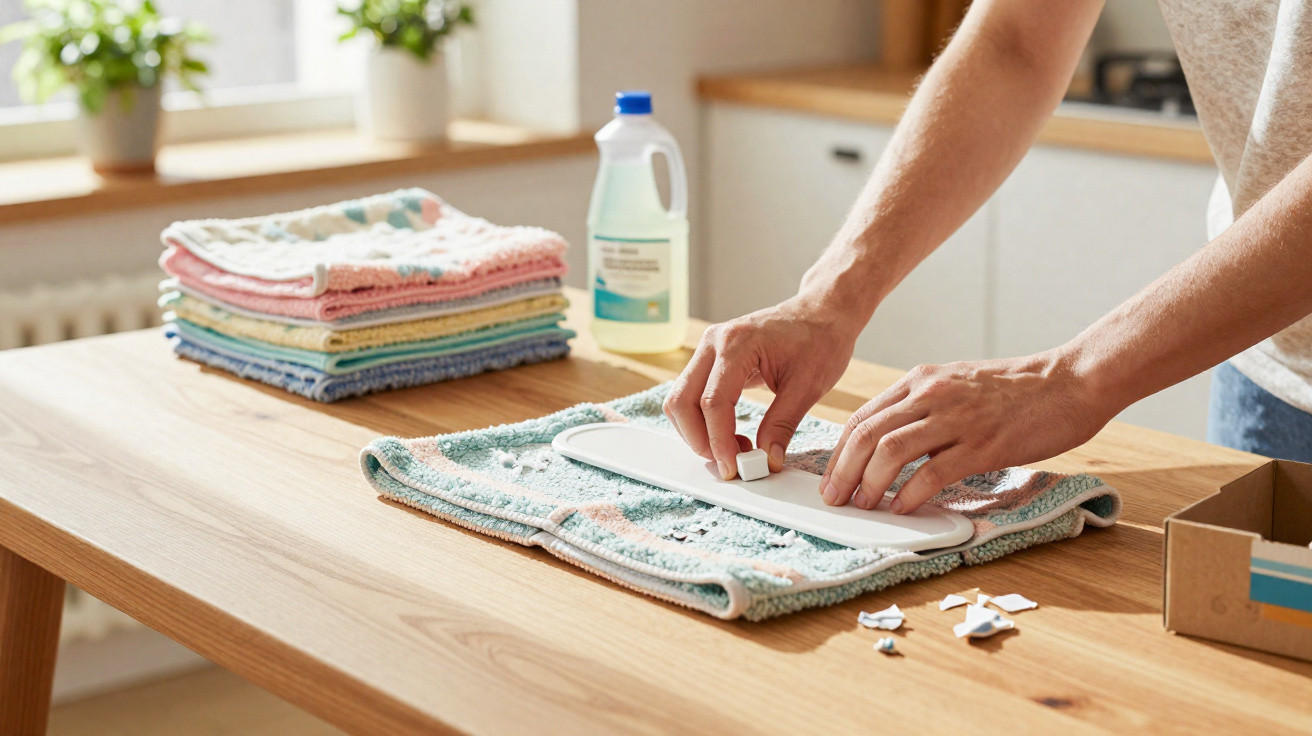
Before they end up in the bin, they can become the unsung hero of cleaning your floors.
In many homes, worn-out bath towels get thrown away or shoved into a corner as emergency rags. Yet every thick terry towel can be a free upgrade for your cleaning cupboard: a reusable mop cover that replaces pricey disposable wipes and noticeably cuts down the amount of rubbish you create.
Why an old bath towel is the better mop cover
Terry cloth may look ordinary, but it is made for floor cleaning. Its tiny cotton loops effectively lift dirt from the surface and keep hold of it.
"The looped structure of a terry towel works like thousands of tiny hooks that reliably trap dust, hair and crumbs."
Cotton is also highly absorbent. While many disposable floor wipes made from synthetic fibres tend to repel water, cotton pulls moisture and grime into the fibres. That means less dirt is left behind on the surface, so the floor comes up properly clean.
This is exactly the approach used in professional cleaning systems: mops, fringe mops and flat mops rely on absorbency and mechanical dirt pick-up, not on fragrances or single-use materials.
What a flat mop and an old towel have in common
The flat mops seen in many adverts usually work with thin disposable wipes. A towel does the same job, just thicker, more sustainable and cheaper. You simply wrap it around the mop head and secure it using the existing clips-no special accessories required.
- picks up dust when used dry, almost like a dust magnet
- when damp, it becomes a small scrubbing aid for marks
- suitable for tiles, laminate, vinyl and sealed parquet
- survives several dozen wash cycles
How much money disposable floor wipes really cost
If you mop twice a week using disposable wipes, you can easily get through more than 200 wipes a year. At around two wipes per clean, that adds up to 208 pieces.
At an average price of €0.30 to €0.40 per wipe, you are looking at roughly €60 to €80 per year-purely for throwaway material that goes in the bin after a few minutes.
"A single large bath towel can be cut into numerous mop covers, replacing disposable cleaning products for years."
A standard bath towel with an area of about 70 x 140 centimetres is enough for roughly 20 smaller cloths, or several fitted covers for a flat mop. They are all washable, durable and can be reused as often as you like.
| Cleaning solution | Use per year | Estimated cost |
|---|---|---|
| Disposable floor wipes | approx. 208 pieces | €60–€80 |
| Towel-made mop covers | 1–2 old bath towels | €0 (plus washing) |
Step-by-step: from bath towel to mop cover - no sewing needed
The best part about this idea is that you do not need a sewing machine, elastic, or complicated patterns. A pair of scissors and a tape measure are enough.
1. Match the size to your mop
Lay the towel flat on a smooth surface. Place the head of your flat mop in the centre. Then mark a rectangle that is 5 to 7 centimetres larger than the mop plate on all sides. You need this extra allowance to clamp the fabric securely later.
Cut out the marked piece neatly. If you want to make several covers, write down the measurements so you can produce identical covers.
2. Small corner cuts for a better grip
At each of the four corners of the cut-out rectangle, make a cut about 2 centimetres deep. These slits make it easier to tuck the thicker terry fabric into the mop’s holders without it pulling tight or slipping back out.
Now place the mop head in the middle of the piece. Fold the edges up and secure them under the existing rubber lips or holding clips-the same ones that normally grip disposable wipes. Thanks to the corner cuts, the towel sits more neatly around the edges.
"The cover stays firmly in place, pulls off cleanly afterwards, and goes straight into the laundry basket after cleaning the floor."
How to use and care for your new mop covers properly
A terry cover behaves differently when used dry versus slightly damp-and you can use that to your advantage.
Dry: a dust catcher for quick touch-ups
When used dry, the mop cover works a bit like a static dust cloth. It is ideal for:
- a quick run through the hallway
- pet hair in living areas
- dust build-up under furniture
In homes with animals, doing a first dry pass is particularly worthwhile. That way, hair and crumbs end up in the cloth rather than being smeared around in a wet film.
Damp: a mini scrubbing mop for tougher dirt
For marks and stuck-on grime, lightly dampen the cover. On tiles, laminate and PVC, you can wring it out firmly but keep it clearly damp. On parquet, only moisten it slightly so water does not seep into the joins.
In heavy-use areas such as the kitchen, entrance, or a pet corner, a two-stage routine works well: first dry for dust and hair, then damp for greasy residue and remaining dirt.
Simple DIY cleaning solution: turning the cover into an all-rounder
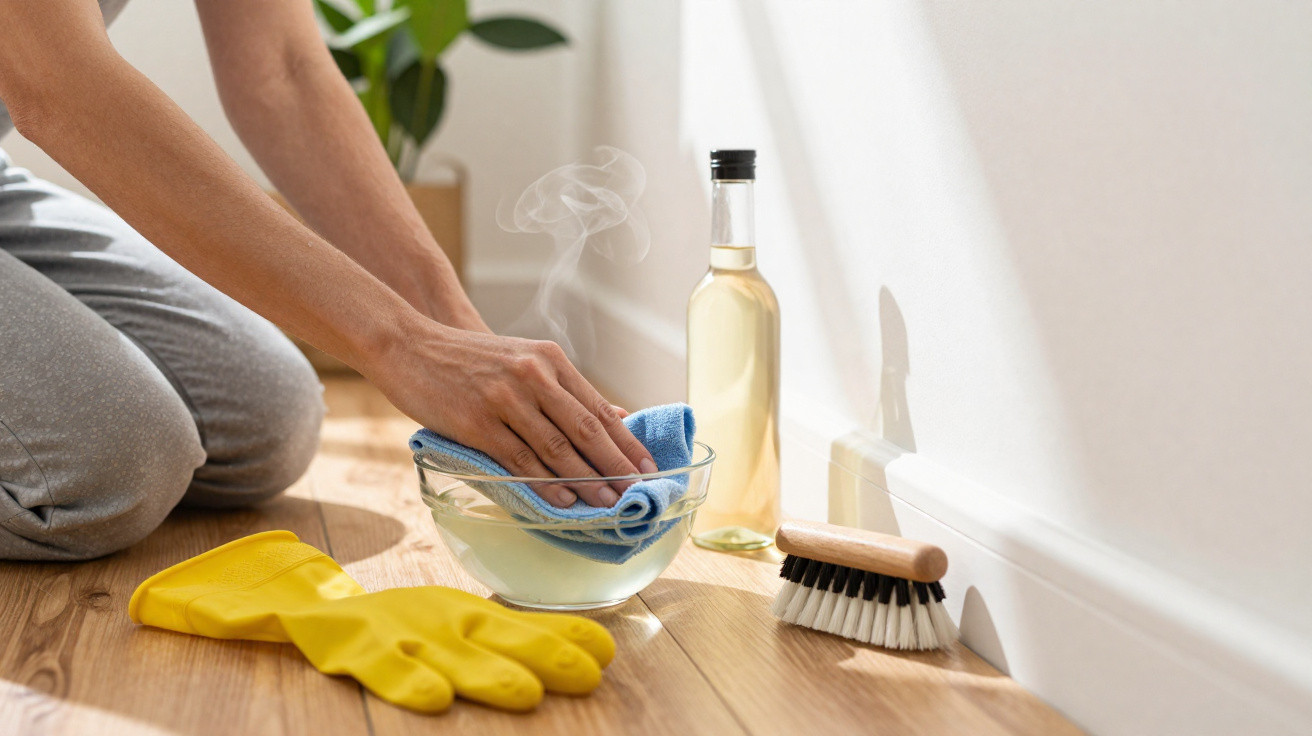
If you want to avoid disposable products entirely, you can also mix up your own cleaning liquid. A sealable jar or plastic container works well.
For a basic household blend you will need:
- 1 part clear household vinegar
- 2 parts distilled or softened (descaled) water
- a few drops of lemon essential oil
Place several towel covers in the mixture, let them soak it up, then wring one out well before mopping. After use, put the covers straight into the laundry basket and later wash them at 60°C with towels or bed linen.
"Do not use fabric conditioner: it coats the fibres like a film and significantly reduces absorbency."
Cleaning more sustainably: benefits and small pitfalls
The most obvious advantage is far less waste. Every homemade floor cloth replaces dozens of disposable products. That is easier on the bin-and, over time, on your budget too.
Another everyday benefit: when you are not constantly buying replacements, you tend to clean more spontaneously. The mop is ready to go, a fresh cover is waiting in the cupboard, and floors get maintained regularly without needing to think about restocking.
A few points do take a little getting used to:
- Terry covers take longer to dry than thin disposable wipes.
- Very gritty dirt such as sand or small stones can wear the fibres faster-sweeping first is a good idea.
- Strongly coloured old towels should be washed separately the first time to avoid dye transfer.
How many covers you actually need
For an average-sized flat, three to five terry mop covers are usually enough. That way, you always have a clean one ready while the others are in the wash. In larger homes, across multiple floors, or with several people, having a few more is sensible.
If you want to give several towels a second life as cleaning helpers, you can sort them by area-for example, using a colour code for bathroom, kitchen and living spaces. That keeps hygiene clearly organised without adding any extra cost.




Comments
No comments yet. Be the first to comment!
Leave a Comment