
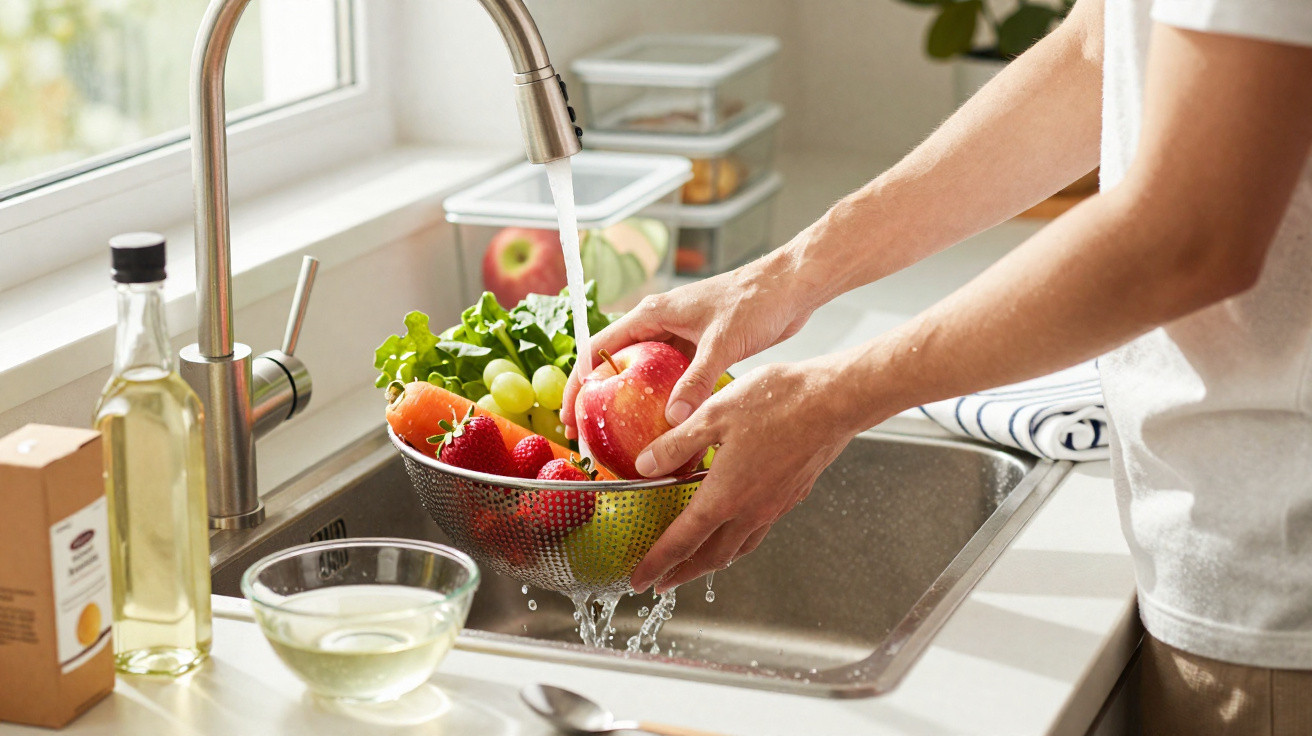
Eating fruits and vegetables each day is an excellent habit for health - but only if you clean them properly first.
Many people understand the risks linked to raw meat and fish, yet assume fresh produce is automatically “safe”. In reality, every year around one in ten people becomes unwell after eating unsafe food, and roughly 46% of those food-borne illness cases are linked to vegetables and fruit.
Why washing fruits and vegetables matters
Most fresh produce is cultivated outdoors, where it can be touched by all sorts of things - including insects and birds. So, alongside soil and grit, unwashed fruit and veg can carry potentially harmful material such as bacteria, fungi, viruses and pesticide residues.
Contamination can also happen later on, during packing, food preparation or storage. Even produce grown hydroponically in greenhouses can still contain germs and pesticides.
All of this is why washing fruit and vegetables is a genuine food-safety step. The question is how to do it most effectively.
Washing your produce
Start by washing your hands. That reduces the chance of transferring germs from your skin onto the items you’re about to clean.
The most straightforward and safest method is to wash produce by hand under cold running water. Use your hands to rub the surface to lift off dirt, pesticide residues and some germs. Keep washing until it no longer appears dirty. If you plan to soak anything, use a clean bowl rather than the kitchen sink, which may contain germs.
Do not wash fruits or vegetables with detergent or bleach. Some skins are porous and can absorb these chemicals, which may alter flavour and texture and could make the produce unsafe to eat.
Water, vinegar and baking soda
There are also some chemical approaches that are considered safe for cleaning produce (and which you may have already seen on TikTok). Both vinegar and baking soda can be used, and they may reduce bacteria and pesticide residues.
For a vinegar wash, distilled malt vinegar, cider vinegar or wine vinegar can be used. Mix 120 ml of vinegar per 240 ml of water, then soak the produce for two to three minutes, stirring now and again. After that, rinse under fresh cold water for at least one minute.
A drawback of vinegar is the acetic acid it contains: if you soak for longer than two to three minutes and don’t rinse thoroughly enough, it can affect taste and texture - especially for softer fruits.
For baking soda, around 0.84g of baking soda per 100ml of water - just under six tablespoons (tbsp) - has been shown to prevent germ growth on fresh produce. Soaking produce for 15 minutes in baking soda solution was also shown to remove nearly all traces of pesticides from fresh produce.
However, in practice you only need one teaspoon of baking soda per 240 ml of cold water to wash produce. This can still help remove microbes and pesticide residues without changing the taste. Soak fruit and vegetables in a clean bowl for 15 minutes, stirring occasionally.
Because baking soda is alkaline, soaking beyond 15 minutes - or failing to rinse well afterwards - can start to damage the skins of delicate fruits and vegetables, which may alter their texture and flavour.
Research comparing apples washed only with water versus apples soaked in baking soda found plain water was nearly as effective at reducing pesticide residues. It’s also worth remembering that most pesticide traces detected on fresh produce are at non-hazardous levels, and the trace amounts we consume in the UK are not believed to cause illness.
However, a very recent study using apples found that pesticides can penetrate beyond the skin. Alongside washing, the authors therefore suggest peeling apples before eating as a further way to reduce any pesticide traces you might be exposed to.
The downside of peeling is that you lose out on the valuable nutrients contained in many fruit and vegetable skins. And, of course, plenty of produce cannot realistically be peeled (such as grapes or lettuce).
Based on the overall evidence available at present, washing with water alone remains the best approach for cleaning fresh produce. There is no clear benefit to using vinegar or baking soda.
Veg vs fruit
Items with a tough rind (such as squashes) or a firm skin (including potatoes, sweet potatoes and other root vegetables) can be scrubbed with a vegetable brush until they look clean. Tomatoes can be rinsed under running water for about 30 seconds, gently rubbing the surface with your hands.
To clean leafy greens - for example lettuce, broccoli, cauliflower, kale or cabbage - separate them into individual leaves or florets. Rinse each piece under the tap, rubbing with your hands for up to a minute. Because lettuce is often eaten raw, it’s safer to throw away any damaged outer leaves, as these are most likely to carry bacteria.
When it comes to fruit, water is again the best option for removing contaminants. For stone fruits, apples and cucumbers, rinse under cold running water for up to a minute to remove dirt, microbes and any waxy coating.
Cherries, grapes, strawberries and other berries contain a lot of water, which makes them especially perishable. Getting them wet can encourage any germs present to multiply and can shorten shelf life. For that reason, keep berries unwashed in the fridge and only wash them just before eating. Remove any berries that are spoiled or mouldy before refrigerating.
If you won’t be eating your fruit and veg straight away, pat them dry with a paper towel or use a salad spinner to remove excess moisture and help limit germ growth. Store them in a lidded container in the fridge. It’s also sensible to clean kitchen sinks, worktops and utensils before washing and preparing produce.
No home-washing method can remove or kill every germ that may be on fruit and vegetables. Only cooking at temperatures above 60°C can do that.
Primrose Freestone, Senior Lecturer in Clinical Microbiology, University of Leicester
This article is republished from The Conversation under a Creative Commons license. Read the original article.




Comments
No comments yet. Be the first to comment!
Leave a Comment