
The woman in the small city kitchen takes pride in how spotless it appears. The worktops have been wiped down, the sink gleams and the floor has just been mopped. A lemon-scented candle flickers by the window, doing all it can to declare: “This place is healthy.”
She checks her phone, scrolls for a moment, breathes in, then coughs. Nothing alarming – simply that slight catch in her throat that she has forgotten about a moment later.
What she cannot see is the fine grey coating collecting somewhere she never considers when reaching for the cleaning spray.
It is the place that subtly affects the air every time she takes a breath.
The hidden “room” you never clean, but breathe from every day
Step into nearly any home and the scene is familiar: fresh flowers on the table, neat vacuum marks in the carpet and perhaps an expensive air purifier tucked into a corner. We clean the things in plain sight.
But look overhead, behind furniture or inside the fixtures. This is where the real account of your indoor air is being written, hour after hour.
The most neglected “cleaning area” is not a forgotten shelf or awkward corner. It is your air vents, grilles and ducts – the concealed network that carries air around your home.
We tend to regard it as background infrastructure. Your lungs, however, are in the front row.
One quiet October afternoon, a heating engineer removed a metal vent cover in a suburban living room. The homeowners watched, a little embarrassed, anticipating some dust.
What came out looked as though a grey blanket had been vigorously shaken. There were balls of lint, pet hair, crumbs and even a crayon. Beneath them, the duct walls were covered in a soft grey coating.
The engineer did not need to make a sales pitch. He simply said, “You’ve been breathing through this.”
Both homeowners had been waking with sore throats and the occasional headache. They had put it down to stress, screens or pollen. The system moving air through their house had never occurred to them.
Indoor air is like a quiet housemate: you only register it once something is wrong. Yet studies suggest indoor air can be two to five times more polluted than outdoor air, particularly in well-sealed modern homes.
Whenever your heating or air conditioning comes on, it draws air through dusty vents and ducts, across coils, filters and fan blades. Particles cling there, accumulate and are later disturbed again. It is a continuous cycle.
Dust, dander, traces of cleaning products, cooking fumes and mould spores all settle happily on surfaces that no one wipes: vent covers, bathroom extractor fans, return-air grilles and the rear of the fridge radiator.
We deal with crumbs on the floor while overlooking the house’s dusty “lungs”.
How to clean air vents and the air you cannot see without going extreme
The reassuring part is that you do not need industrial-scale duct cleaning every month. Begin with the areas you can reach using your hands and a step stool.
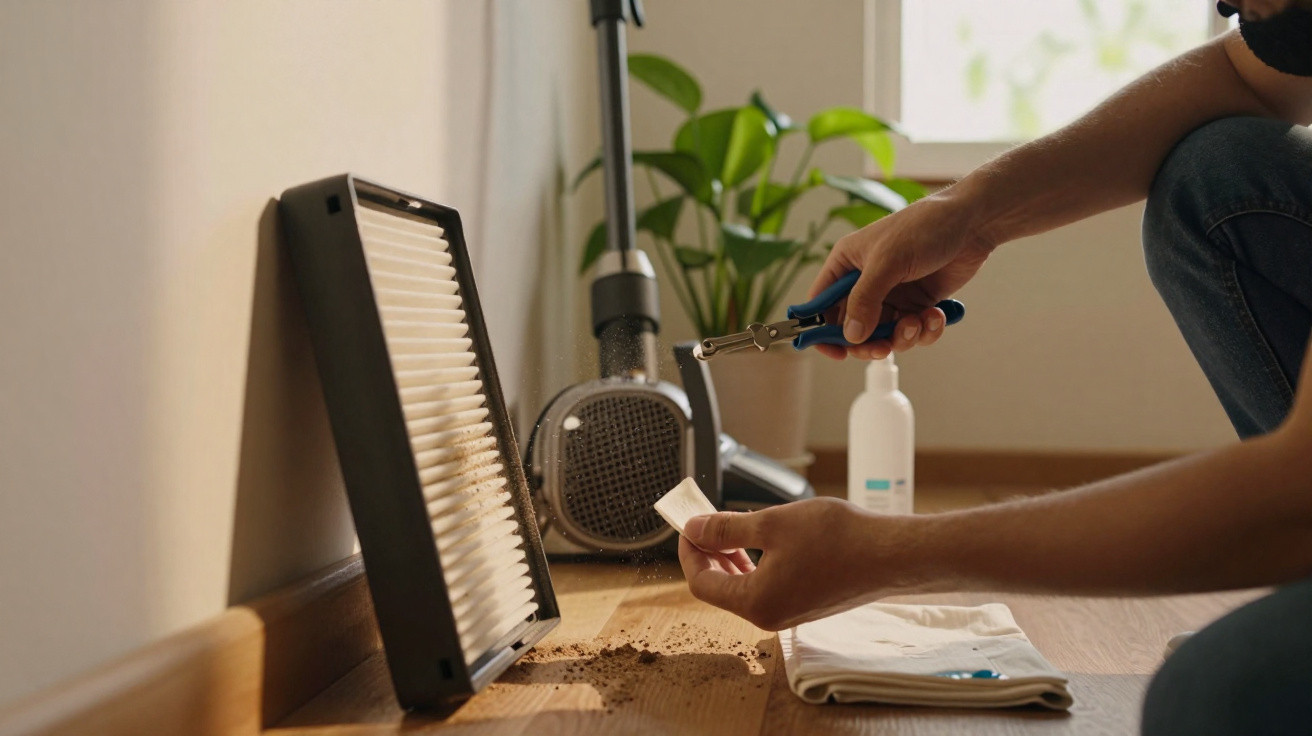
Switch off the heating or cooling first. Next, carefully remove vent covers with a screwdriver, particularly those close to the floor, where dust and pet hair often collect.
Clean metal covers in warm, soapy water, then allow them to dry fully. For fixed grilles, use a microfibre cloth and a vacuum cleaner fitted with a brush attachment. Take your time and watch the grey marks vanish.
Treat bathroom extractor fans in the same way: take off the plastic cover, vacuum the mat of dust resting on top, wash the cover briefly and click it back into place. It is surprisingly satisfying.
Let’s be honest: nobody actually does this every day. Most people do not even consider it once a year.
We have all had that moment of looking at a radiator or the top of a door and thinking: “Oh yes, that exists too…” Then we look away and hope it is unimportant.
If you have pets, allergies or a home office where you spend 10+ hours a day, it matters a little more. Keep the task manageable: clean the vents in one room this weekend and tackle another room the following weekend.
Do not spray harsh products directly into vents; the airflow simply carries them back into the area where you breathe. A lightly dampened cloth, a careful hand and a vacuum cleaner will do almost all of the job.
One HVAC technician I spoke to described it this way:
“People will spend $400 on an air purifier, then leave a felt coat of dust on every vent in the house. The purifier is trying to fight a war with the windows open.”
A straightforward way to approach your “invisible cleaning list” is as follows:
- Vent covers and grilles: wipe or wash every 2–3 months; do so more often with pets.
- Bathroom extractor fans: clean the covers every 3–6 months.
- Ceiling fan blades: dust them quickly every month during warmer seasons.
- Behind the fridge and radiator fins: vacuum 1–2 times per year.
- HVAC filters: inspect monthly and replace as the manufacturer advises, or earlier if they are dirty.
The list may seem lengthy on paper, but it amounts to a few 10-minute tasks spread throughout the year. It is the kind of upkeep your future self will quietly appreciate.
Breathing differently in the same home
After you begin noticing this unseen layer of the home, it becomes difficult to overlook. There is the fluffy edge around the bedroom vent, the grimy cover of the bathroom fan and the warm, faintly dusty scent when the heating is switched on for the first time in autumn.
None of this means your home is “dirty” in any moral sense. It simply means that your air has a history, and some of that history remains attached to the metal.
It is not only the level of dust that changes, but also your relationship with the space where you spend most of your time. People often say their home “feels lighter” following a thorough clean, even when little has visibly changed.
Cleaning the places that quietly influence your air can bring about the same change. It is private, subtle and almost insignificant – until you realise that you are breathing a little more deeply without even noticing.
| Key point | Detail | Why it matters to the reader |
|---|---|---|
| Hidden air pathways | Vents, grilles, fans and coils build up dust and pollutants over time | Helps account for unexplained coughs, stuffy air or lingering smells |
| Simple, accessible cleaning | Regular wiping, vacuuming and washing of covers and filters | Provides practical steps to improve indoor air without major expense |
| Rhythm, not perfection | Light but consistent attention throughout the year | Makes better air quality achievable for busy, real-life households |
FAQ
- How often should I clean my air vents and grilles? For most homes, every 2–3 months is a good routine. Clean them more often if you have pets, live in a dusty area or can see a build-up.
- Do I really need professional duct cleaning? Not necessarily. Start with what is visible and within reach. Professional cleaning is most useful after substantial renovation work, visible mould or years of neglect.
- Are scented candles and sprays enough to “clean” my air? They alter how the air smells rather than what it contains. They may even introduce additional particles. Removing dust physically and using good filtration are what really help.
- What kind of filter should I use for my HVAC system? Choose a filter with a suitable MERV rating recommended for your system, replace it regularly and do not use it beyond its advised lifespan.
- Is opening windows still useful in a city with pollution? Opening windows for brief periods can still dilute indoor pollutants, particularly after cooking or cleaning. Balance this against local air quality and the time of day.





Comments
No comments yet. Be the first to comment!
Leave a Comment