
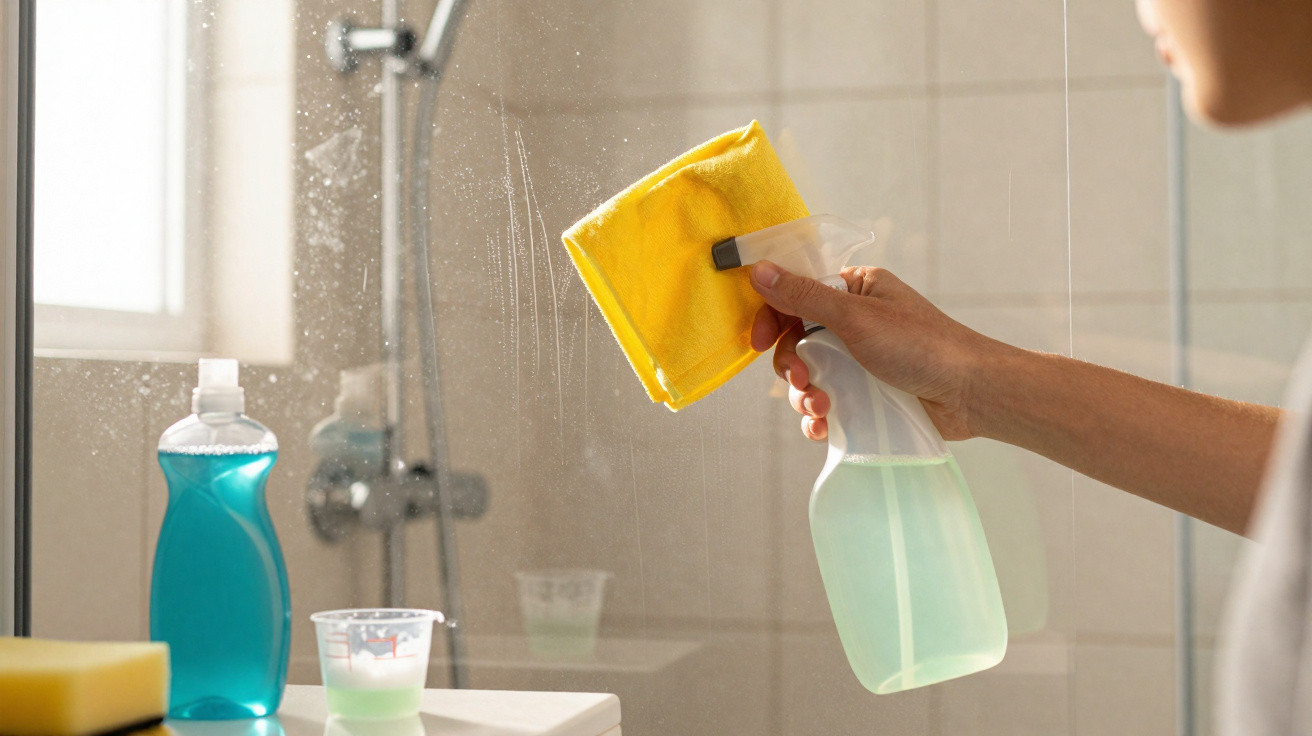
Diego Fernández recommends a straightforward mix for cutting through grease on shower screen glass: water plus a small amount of dishwashing liquid. The same product that breaks down fat on plates can also help lift soap scum, body oils and dull, cloudy marks from glass. The key is getting the dilution right, letting it sit for a short contact time, and rinsing thoroughly so no film is left behind.
Why does dishwashing liquid work on a shower screen?
Dishwashing liquid contains surfactants - substances that help detach grease and grime from a surface. On shower screens, that cloudy layer is not always just limescale: it is often a combination of soap, shampoo, skin oils and dust.
Used in a diluted form, the detergent spreads more evenly over the glass and reaches the enclosure’s corners, tracks and edges. It does not need to produce loads of foam to be effective; too much foam usually makes rinsing harder and can leave the glass streaked once it dries.
How do you prepare the mixture correctly?
The most practical ratio is 500 ml of water mixed with 1 teaspoon of dishwashing liquid. This dilution is enough to clean without making the shower screen slippery or leaving heavy residue.
Keep the preparation simple and avoid unsafe combinations:
- Pour 500 ml of water into a clean spray bottle.
- Add 1 teaspoon of mild, neutral dishwashing liquid.
- Swirl or shake gently to combine without creating too much foam.
- Do not mix it with bleach, ammonia or strong disinfectants.
- Label the bottle if you plan to keep the solution for a few days.
How do you apply it to shower glass?
Spray the mixture onto dry or slightly damp glass, focusing on areas with water-spot marks, grease and built-up soap. Leave it for a few minutes so the detergent can loosen the dirt before you start wiping.
Then wipe with a soft sponge, a microfibre cloth, or a soft-bristled brush for the corners. Rinse well with clean water and finish with a shower squeegee or a dry cloth. This last step helps stop fresh droplets drying on the glass and turning into new marks.
What precautions help prevent stains and scratches?
Shower screens can scratch if you use wire wool, rough sponges or abrasive cleaners. Glass with protective film, anti-residue treatments, or metal profiles also needs extra care, as harsh products can damage the finish.
To clean safely, keep these points in mind:
- Test the mixture on a small area before using it for the first time.
- Use a soft cloth or a non-abrasive sponge.
- Do not let the solution dry on the glass before rinsing.
- Dry the tracks and corners to reduce moisture build-up.
- Do light, regular cleaning rather than waiting for grease to harden.
When is this mixture not enough?
A water-and-dishwashing-liquid mix works very well on grease, soap and recent grime, but it may not remove older limescale stains on its own. If the glass has hardened mineral deposits, that section needs a suitable hard-water limescale product, always chosen with the shower enclosure materials in mind.
The best results come from routine: clean with the diluted solution, rinse thoroughly, and dry the glass after showering. That way, the detergent removes the oily layer before it bonds to the surface, and the screen stays clear without relying on aggressive chemicals or heavy scrubbing.

Comments
No comments yet. Be the first to comment!
Leave a Comment