
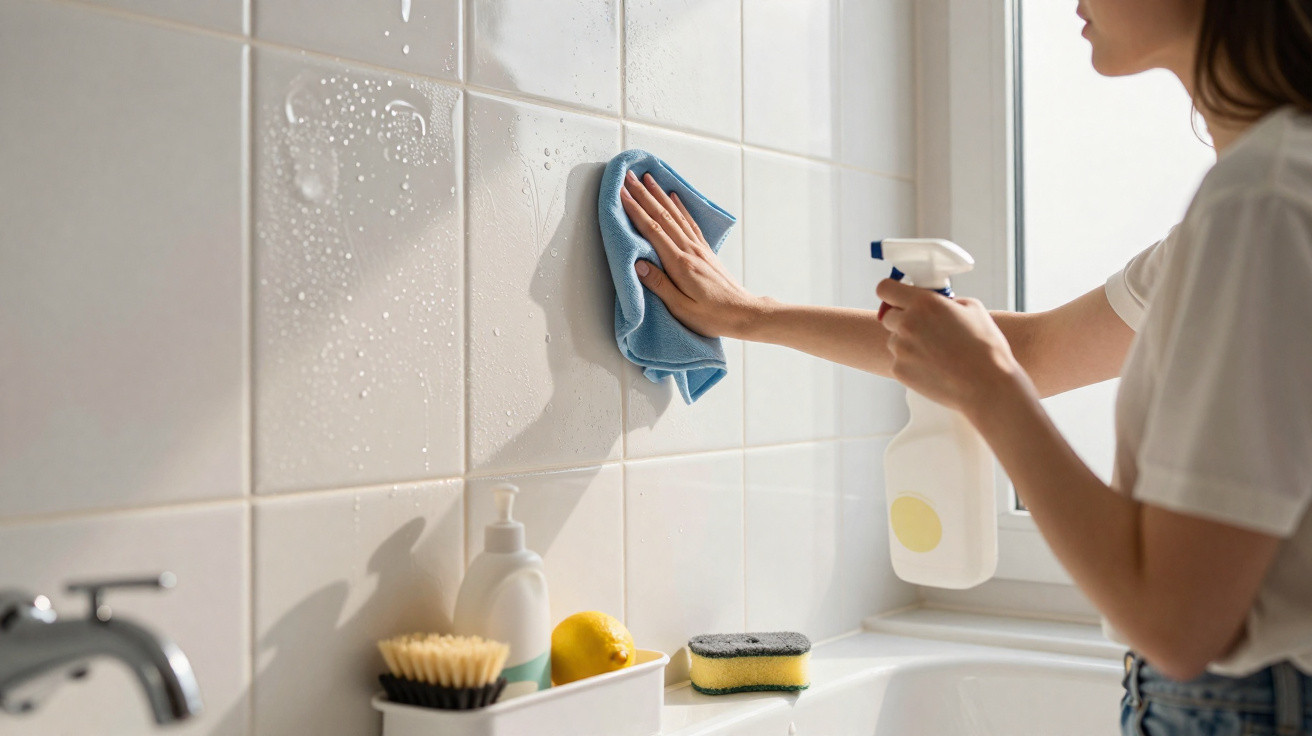
It’s Saturday morning. A shy strip of sunshine slips through the tiny bathroom window, and you’re standing there with a bucket, rubber gloves and that familiar sting in your nose. The sharp-smelling cleaner promises “clinical cleanliness”. The tiles are wet and shiny, and you scrub until your arm aches. On Instagram, cleaning looks like self-care; in your bathroom it feels closer to a minor chemical incident.
Two days later, the limescale line in the shower is back. The grout looks tired and grey again, even though you did “everything right”. Something isn’t working in this quiet war against soap scum, limescale and everyday grime. And no - it’s not just you.
Why we attack our tiles with the wrong weapons
Most of us carry the same mental picture of a “clinically clean” bathroom: a hint of chlorine in the air and surfaces so glossy they look almost slippery. That’s why people instinctively reach for harsh multi-purpose sprays, abrasive cream cleaners, or neat vinegar straight from the bottle. Leave it briefly, scrub hard, rinse, done - it’s how many of us were shown.
The catch is that today’s bathroom tiles and finishes are often less forgiving. Many surfaces are sealed, and grout can be cement-based in some areas and silicone in others. What used to be passable can now cause slow, invisible damage. That post-clean shine can be misleading; the micro-scratches and weakened grout lines tend to show up months later, not immediately.
A tiler in Cologne told me about a client whose bathroom looked “worn out” after only three years: crumbly grout, and glossy wall tiles turned dull - as if someone had gone over them with very fine sandpaper. Her routine was simple: abrasive cream every Sunday, chlorine cleaner now and then for the “grey film”, and a vinegar-based product “for the limescale”. Let’s be honest: hardly anyone properly reads the small-print on the back of the bottle. According to a survey by a major German household-goods manufacturer, more than 60% of respondents use a multi-purpose cleaner on every surface in the bathroom - including natural stone, grout and glass. It’s no wonder so many bathrooms look older than they really are.
The logic is human: when something is stubborn, we escalate. Stronger chemicals, a tougher brush, more pressure, more scrubbing. Chemistry, however, doesn’t follow gut instinct. Limescale responds to acid, grease is better tackled with alkaline cleaners, and grout can be sensitive to both. Multi-purpose products are a compromise - frequently too aggressive for grout, yet not effective enough for older limescale rings. Many people clean bathroom tiles like they’re a hob, assuming everything is equally robust. The tile might cope; the grout often won’t. That’s where the slow decline starts: porous grout, moisture getting in, discolouration. Suddenly “clean” looks strangely exhausted.
What tiles really need: less drama, more system
The first step sounds almost underwhelming: lukewarm water, a mild pH‑neutral cleaner, and a soft cloth or microfibre. No abrasive cream, no wire wool, no razor blades on the tile. For day-to-day dirt, that’s usually more than enough.
Limescale in the shower does benefit from acid - but only with precision. Use a limescale remover sparingly, apply a thin layer, leave it for a few minutes, then rinse very thoroughly. The secret isn’t more force; it’s more patience. If you quickly squeegee the tiles after each shower or wipe them down with an old towel, you’ll need “heavy-duty solutions” far less often. It may sound a bit square, but it saves time, money - and your grout.
A lot of the damage happens under pressure, alongside that quiet guilt that the bathroom has been “left too long” again. Then comes the big cleaning binge: everything at once, ideally with a single “turbo” product. The outcome is predictable - not enough ventilation, too quick a rinse, and cleaner residue lingering in the grout where it keeps working. We all know that moment: “That little bit of foam will wash away next time I shower.” Often it doesn’t.
A better approach is small routines: two minutes with the squeegee after showering, targeted limescale removal once a week, and a quick grout check once a month. It sounds like a lot, but it’s far less effort than desperately scouring dark grout lines twice a year.
A tiling professional summed it up like this:
“Most bathrooms aren’t ruined by dirt - they’re ruined by too much of the wrong kind of cleanliness.”
Rather than cleaning on autopilot, it helps to stick to a simple checklist:
- Gentle routine: Daily or every other day, wipe with clean water and a mild cleaner - avoid abrasive products.
- Treat limescale precisely: Use acidic products only where you can actually see limescale, not “just in case everywhere”.
- Soft tools: Microfibre cloths, soft sponges, and an old toothbrush for grout - not harsh scourers.
- Rinse thoroughly: Always remove cleaner residue with plenty of water, otherwise it continues to attack grout and coatings.
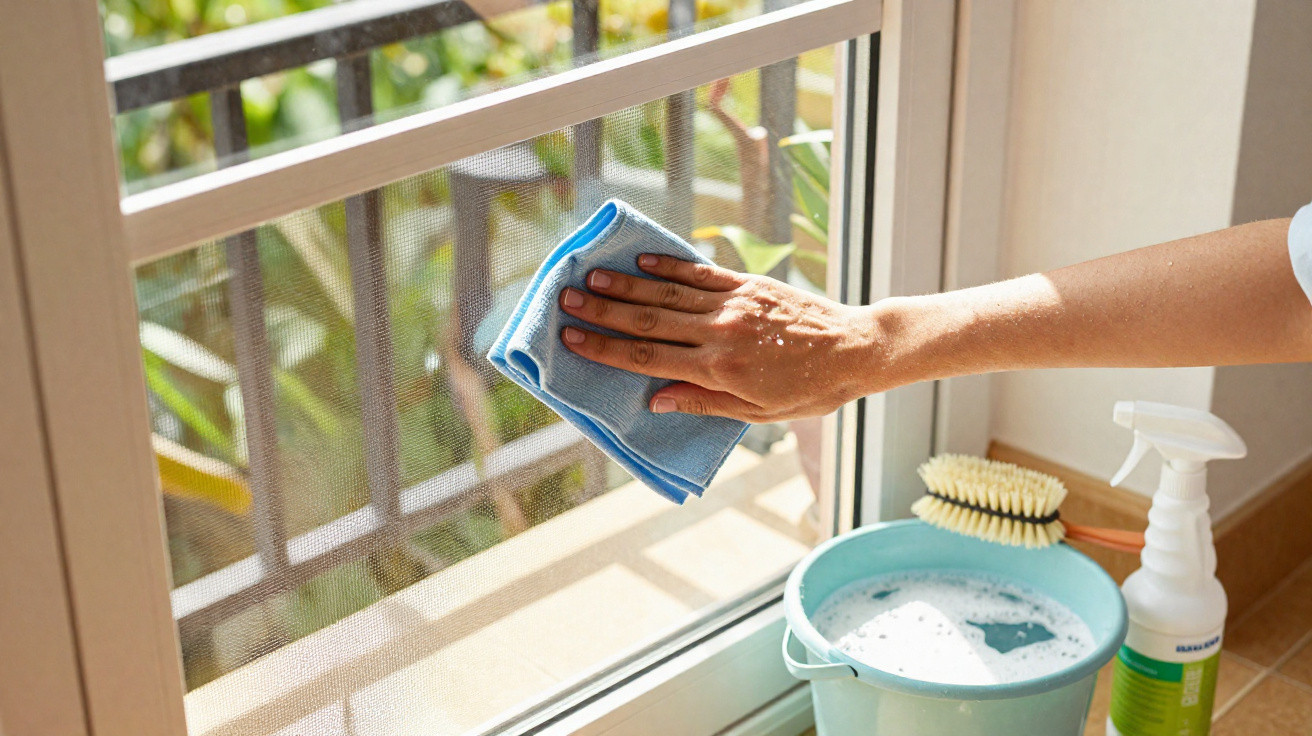
- Ventilate and dry: Open the window, then use a squeegee or towel after showering so a permanently damp microclimate never forms.
How an “ordinary” bathroom can stay looking new
In the end, the aim isn’t to stage a high-gloss hotel bathroom. It’s to have a room that feels pleasant and doesn’t look tired after a year. Anyone who switches from “aggressive and occasional” to “gentle and regular” usually notices a change within weeks: fewer yellowed grout lines, fewer water marks, fewer frustrating moments in front of the shower.
Your tiles repay you quietly by staying unremarkable. No crumbling grout edges. No dull patches where a vinegar frenzy once happened. And mentally, cleaning shifts from “punishment” to a short, manageable care routine.
The interesting part is how many people only realise afterwards how much they were steered by marketing promises. “Extra strong”, “Ultra Power”, “99.9% of bacteria” - it sounds like control in a world that often feels messy. In the bathroom, that desire for control collides with very sensitive materials. If you’re willing to step away from the superlatives, you often find that a modest, clear method works better: a little material awareness, a glance at the grout, and a few minutes after showering.
Maybe that’s the quiet shift in perspective: stop treating the bathroom like a battleground, and see it as a space that ages with us - especially when we handle it too harshly. If you treat your tiles like a good pair of trainers - regular care, no brutal chemical experiments - they’ll look better for longer. And if you’re reading this secretly in the bathroom while the limescale line beside you smirks, you can start small today: one bottle less of abrasive cleaner, one soft cloth more. The rest follows with routine.
| Key point | Detail | Benefit to the reader |
|---|---|---|
| Choosing the wrong cleaner | Aggressive multi-purpose or abrasive cleaners attack grout and protective coatings | Understands why “strong” often causes damage and how to protect tiles over the long term |
| The right cleaning routine | Gentle, frequent cleaning with a pH‑neutral product instead of an occasional chemical offensive | Saves time, money and stress because stubborn build-up doesn’t get the chance to form |
| Targeted limescale removal | Treat only affected areas with acidic products and always rinse well afterwards | Cuts down limescale marks without unnecessarily stressing grout and materials |
FAQ:
- How often should I really clean my bathroom tiles? For a typical bathroom, it’s usually enough to wipe the tiles properly once a week and quickly squeegee after showering in between. Almost nobody needs to scrub every day.
- Is vinegar cleaner bad for tiles and grout? Vinegar is too harsh for many grout types and some natural stones if used concentrated and often. Diluted and used only on specific limescale spots, it can help - but it should always be rinsed off thoroughly.
- Can I use abrasive cream cleaner on tiles? On glazed wall tiles, abrasive cream can leave fine scratches and reduce the shine. Liquid, non-abrasive cleaners plus soft cloths or sponges are the safer option.
- How do I get dark grout looking light again? Mild discolouration can improve with a pH‑neutral cleaner and a soft brush. Grout that’s deeply damp or mouldy often needs replacing or professional refurbishment.
- Do I really need specialist tile cleaners? In most homes, a mild, pH‑neutral cleaner is completely sufficient. Specialist products mainly make sense for heavy limescale, natural stone, or very delicate surfaces.


Comments
No comments yet. Be the first to comment!
Leave a Comment