
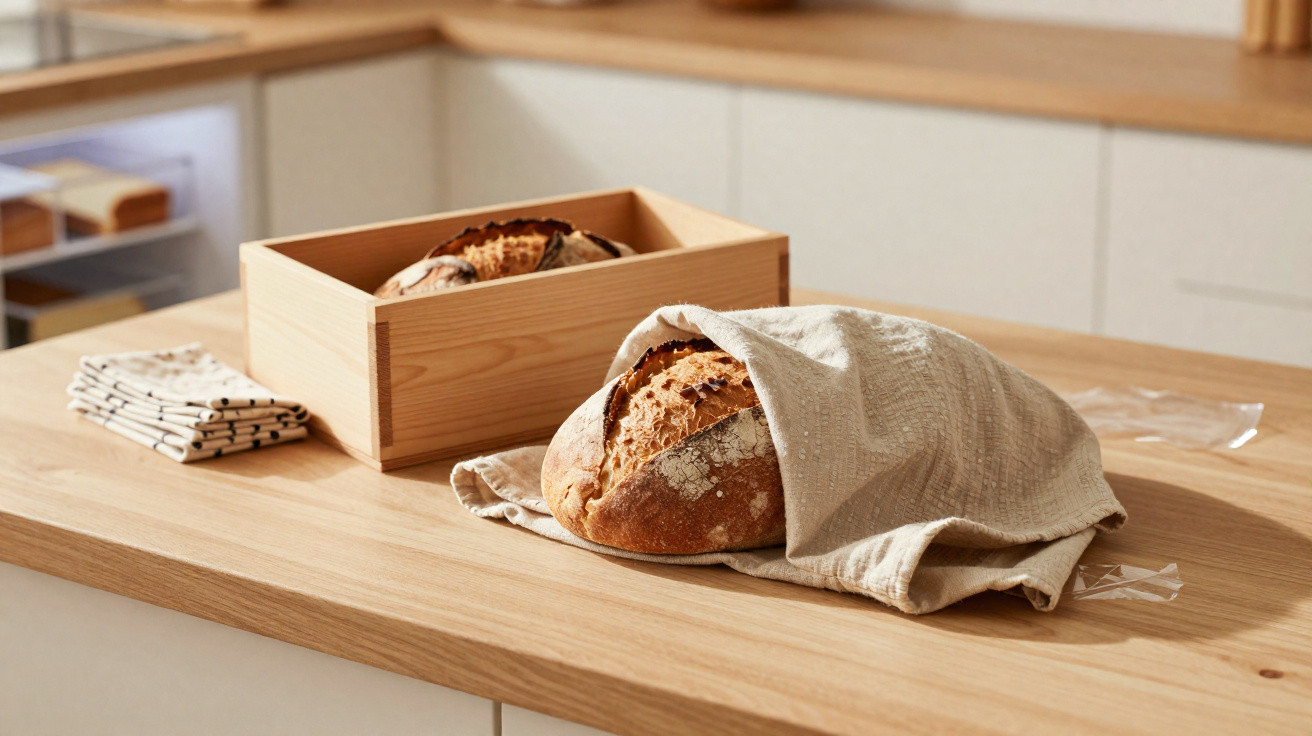
Anyone who buys bread regularly will know the routine: in the evening the crust is wonderfully crisp, yet by the next morning it can feel chewy, dry, or even slightly mouldy. Many people automatically reach for a plastic bag or cling film. In practice, that often speeds up spoilage. With the right balance of airflow, fabric and storage location, bread can stay appetising for several extra days.
Why bread goes stale or mouldy so quickly
Bread changes for two straightforward reasons: the crumb loses moisture, and micro-organisms thrive in warm, damp conditions. With a few smart habits, you can influence both.
Inside bread is starch. After baking it is gelled, which is why the crumb feels soft and moist. Over time that structure reorganises. Water gradually moves from the crumb towards the crust, the loaf dries out, and it becomes firm and crumbly. At the same time, the surrounding environment matters: high humidity and warmth encourage mould spores - especially when bread is sealed away airtight.
It also helps to remember that not every type of bread behaves the same. A few real-world examples:
- Baguette and light bread rolls: lots of surface area, little weight - they dry out very fast.
- Mixed loaf and farmhouse-style bread: denser, larger, with more water in the dough - they naturally keep longer.
- Sourdough bread: the natural acidity often makes it more resistant to mould and, stored well, it can stay pleasant for up to a week.
Many bakers say that a hearty rustic country loaf of around 600 g remains perfectly edible for four to five days when kept in a cloth or bread bag, while a baguette noticeably deteriorates after just a day. That is exactly why proper storage pays off - particularly in households where bread is often left over.
The biggest mistake: putting bread in plastic film or a plastic bag
A common belief in many kitchens is: “If it’s airtight, it stays fresh longer.” With bread, that is only partly true. Plastic traps moisture. The crust softens, the crumb turns rubbery - and the damp environment inside becomes an ideal breeding ground for mould.
“Plastic makes bread sweat. What feels soft at first often tips towards mould after a short time.”
At room temperature, the effect is even stronger. If the bag is then stored near the hob, oven or dishwasher, the extra warmth pushes conditions further in the wrong direction - perfect for anything you do not want growing on bread.
The fabric trick: how to wrap bread properly without plastic
A better approach is to protect bread without suffocating it. Breathable materials are the key.
Fabric instead of film - how the ideal wrapping works
For everyday use, you only need a very simple combination:
- a clean cotton or linen bag or a cloth tea towel
- a wooden or ceramic bread bin with a small amount of ventilation
The steps are simple, but effective:
- Let the bread cool completely before wrapping it. Warm bread will sweat inside a bag.
- Wrap the loaf or baguette in a cotton or linen cloth, or place it in a fabric bread bag.
- Put it into a bread bin - wooden or ceramic models with small ventilation holes work best.
- Keep the bread bin somewhere cooler and shaded in the kitchen, well away from the hob, oven and dishwasher.
“Fabric absorbs moisture without drying the bread out - the crust stays crisp and the crumb stays moist.”
Stored this way, a baguette usually stays acceptable for one to two days longer. Hearty mixed loaves benefit even more. Many households find that bread which previously went in the bin after two days can now be used for four or five days - sometimes in a different form, such as toasted slices or bread salad.
Bread bin, fridge or worktop - where bread really belongs
There are plenty of myths about the best place to store bread. Here is a quick guide to what makes sense and what does not:
| Storage location | What happens to the bread? | Recommendation |
|---|---|---|
| Wooden/ceramic bread bin | Fairly stable conditions, protected from light and draughts, little condensation | Very suitable when combined with a fabric bag |
| Left out on the worktop | Crust stays a bit crisper, but the loaf dries out faster overall | Acceptable for fast eaters (within 24 hours) |
| Fridge | Starch crystallises faster, so bread dries out and tastes stale more quickly | Generally not worthwhile for bread |
| Plastic bag at room temperature | Soft, rubbery crust, damp environment, increased mould risk | Only use briefly and with care |
Freezing bread - how to extend shelf life without losing quality
If you already know a loaf is too large, it is worth thinking about the freezer early. Frozen bread can be brought back surprisingly well, as long as a few rules are followed.
Start by letting the bread cool completely. Putting bread in a freezer bag while it is still warm or even lukewarm creates condensation - which later shows up as ice crystals and a soggy crumb. For convenience, slice the loaf before freezing so you can take out only what you need.
A thick freezer bag or a well-sealed container both work. Press out as much air as possible, then seal. Bread usually keeps for around one month, and with good packaging it can remain in usable condition for up to two months.
Two defrosting methods work especially well:
- Put slices straight into the toaster from frozen - ideal for a quick breakfast.
- Defrost larger pieces at room temperature, then crisp them in the oven at around 150°C for a short time.
What to do with bread that has already dried out
Slightly stale bread does not automatically belong in the bin. With a little effort, you can make it far more enjoyable again. One reliable approach is to wrap the bread in a clean, lightly damp tea towel and warm it in the oven for a few minutes. The moisture moves back into the crumb, and the crust becomes crisp again.
Alternatively, mist a little water directly onto the crust and then put it briefly into the oven. The key is not to bake it for too long, otherwise the crumb will dry out completely.
If the bread is genuinely very dry, it becomes a good base for all sorts of recipes:
- make your own breadcrumbs
- toast croutons for salads and soups
- make French toast from slices soaked in an egg-and-milk mixture
- prepare bread salad with tomatoes, onions and olive oil
How bread types differ when it comes to storage
Buying with storage in mind can prevent many problems from the outset. Light white bread with a thin crust is better suited to eating immediately. Households of two, or anyone who often eats on the go, frequently do better with compact mixed loaves, wholemeal loaves or sourdough. They hold more water, often taste more flavoursome, and stay palatable for longer when stored correctly.
The bake also matters. Very lightly baked bread often keeps worse. A well-baked, slightly darker crust protects the crumb and slows moisture loss. Many traditional bakeries deliberately offer “well baked” loaves or “crisp crust” options - and it is not only about flavour.
Why switching to fabric and a bread bin is genuinely worth it
Avoiding plastic wrap brings several benefits at once. First, far less bread ends up in the bin - saving money and reducing food waste. Second, it cuts down on single-use plastic in the kitchen. Once you have them, cotton or linen bread bags can last for years.
Anyone who follows the steps above consistently for a few weeks usually develops a quick feel for what works: how much bread fits their day-to-day life, and which type of loaf suits their household habits best. In many families, not only does the plastic bag disappear from the table - the bin also fills up less often with half-dried leftovers.

Comments
No comments yet. Be the first to comment!
Leave a Comment