
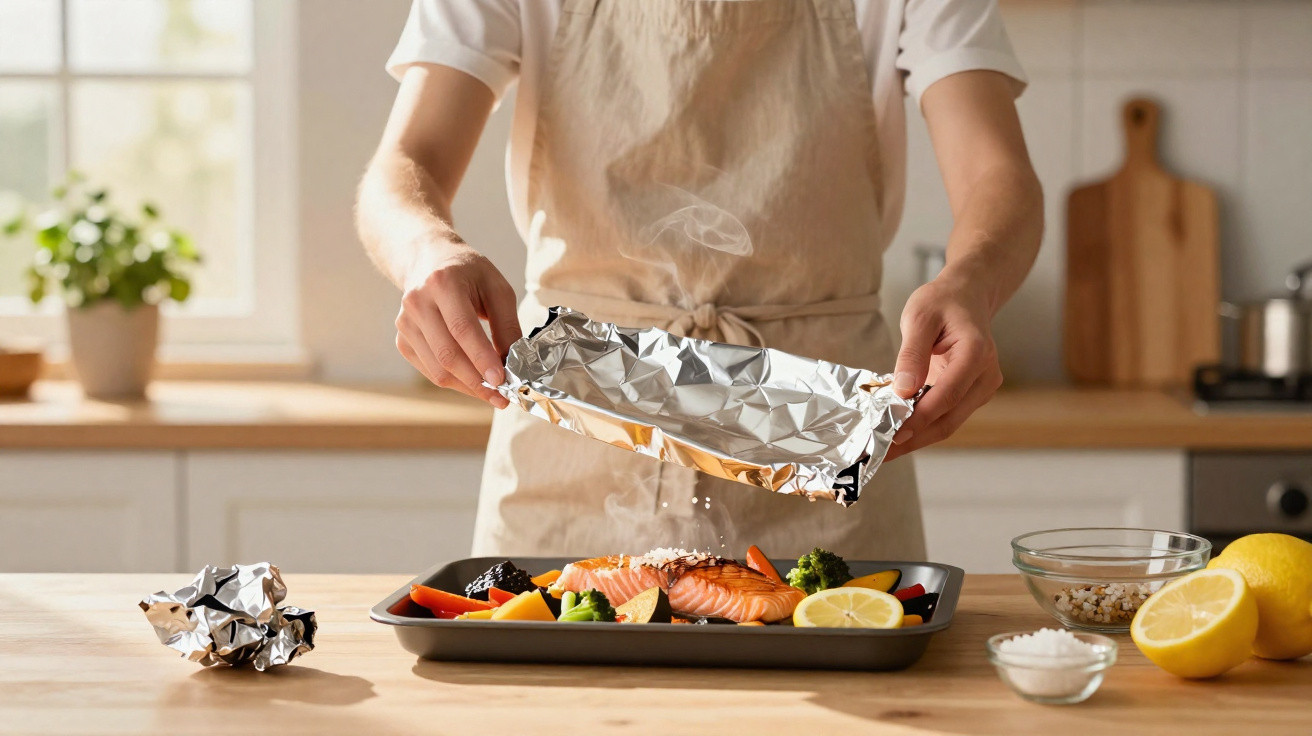
Practical, tidy, familiar. Yet in the presence of heat, salt and acid, that shiny kitchen helper can quietly become a risk - for you, for children, and for anyone with sensitive kidneys.
The evening air smells of smoke and rosemary. On the balcony the charcoal crackles, fish fillets sit in lemon juice, and potatoes are wrapped tightly. A neighbour calls over the railing: “Do you really still use aluminium foil? My doctor avoids it.” I laugh, keep folding - and only later notice the foil darkening where it touches the marinade, pinpricking with tiny holes as if something has been nibbling at it. The fish turns out perfect; the foil looks torn to shreds. I run my fingers over the metal, slightly crumbly, and wonder what ended up in the food. The question won’t let go.
Why aluminium foil becomes an uninvited ingredient when you cook
Aluminium is reactive, even though it normally protects itself with a thin oxide layer. Under heat - and especially in the presence of salt or acidity - that protective skin can destabilise. When that happens, aluminium ions can dissolve and move into your meal, particularly in moist dishes and anything marinated.
One study found that fish baked in aluminium foil with a lemon-and-salt marinade contained noticeably higher aluminium levels than the same dish prepared without foil. Grilled feta with tomato and olives also showed measurable increases. Depending on the recipe, the amounts can sit in the milligram range per portion - not a catastrophe on its own, but in everyday life it adds up.
The mechanism is straightforward: acid (lemon, vinegar, tomatoes) and salt attack the oxide layer, while heat speeds the process. The hotter and the longer the cooking time, the more migration you can expect. The European Food Safety Authority sets a tolerable weekly intake of 1 mg aluminium per kg body weight. If you regularly combine “foil + acid + heat”, you edge towards that limit for no good reason - and children reach it faster than adults.
Cooking without foil: crisp, juicy and straightforward
Use baking parchment instead of foil: make a tight “papillote” parcel, lightly oil the paper, add fish or vegetables, and seal it well. You get moist results and concentrated flavour, without metal reacting with your food. For the barbecue, a cast-iron pan is a reliable fix: preheat it, add oil, then the food - it holds heat brilliantly and delivers proper browning.
Common mistakes crop up again and again: laying foil directly against tomatoes, lemon, or feta; putting salty, acidic marinades into foil parcels; and wrapping hot leftovers tightly in foil - condensation encourages contact. We all know the moment when it needs to be quick and you just “wrap it up”. Let’s be honest: nobody washes or inspects every detail, every time.
“ The best exposure is the one that never happens in the first place,” says a toxicologist I asked about this.
“The less direct contact there is between aluminium and moist, hot food, the more clearly the risk drops.”
- Baking parchment + an ovenproof dish: for fish, vegetables, feta.
- Glass or ceramic dish with a lid: gentle cooking, neutral material.
- Stainless-steel pan on the barbecue: heat-resistant, no flaking.
- Silicone baking mat in the oven: non-stick, reusable.
- Banana or corn leaves for aromatic parcels: traditional and lovely.
What it comes down to: weigh the risk, keep the enjoyment
Nobody wants to cook in fear. Food should comfort, bring people together, and surprise you. Once you understand when aluminium foil starts acting like an extra ingredient - acid, salt, heat, time - worry turns into a simple kitchen habit. You reach for baking parchment, choose a glass dish, and realise how well a lid traps steam. Small changes, big impact. For children and for people with sensitive kidneys, every avoidable intake matters. And the good news: the flavour doesn’t suffer - it improves. Mention it to the barbecue friend who wraps everything in foil. Maybe you try a papillote parcel together and notice how differently lemon oil can smell. Less risk, more enjoyment - that’s the real point.
| Key point | Detail | Why it matters to you |
|---|---|---|
| Aluminium migration | Increases with acid, salt, heat, and long cooking times | A clear traffic-light guide for when foil becomes risky |
| Alternatives | Baking parchment, glass/ceramic, cast iron, silicone | Easy swaps without losing quality |
| Practical tips | Fold parcels well, use lids, store food dry | Immediately doable in day-to-day cooking |
FAQ:
- Is aluminium foil inherently dangerous for cooking? Not inherently, but avoidable aluminium intake is real - especially with acid, salt and heat. Without that combination, the amount transferred drops markedly.
- Can I bake potatoes in aluminium foil? You can, but it’s better to cook them directly on the rack and split them afterwards. With baking parchment or an ovenproof dish, they stay moist - without foil.
- Does aluminium increase Alzheimer’s risk? The research is not clear-cut. High aluminium exposure is considered neurotoxic, but a direct causal link from everyday use has not been proven. Reducing exposure is still worthwhile.
- Is baking parchment safe on the barbecue? Yes, as long as you cook indirectly and it doesn’t get into the flames. For direct heat, a cast-iron pan is a better choice.
- How can I use foil if there’s no alternative? Avoid contact with acidic or salty foods, put a layer of baking parchment in between, choose moderate temperatures, and keep cooking times short.

Comments
No comments yet. Be the first to comment!
Leave a Comment