
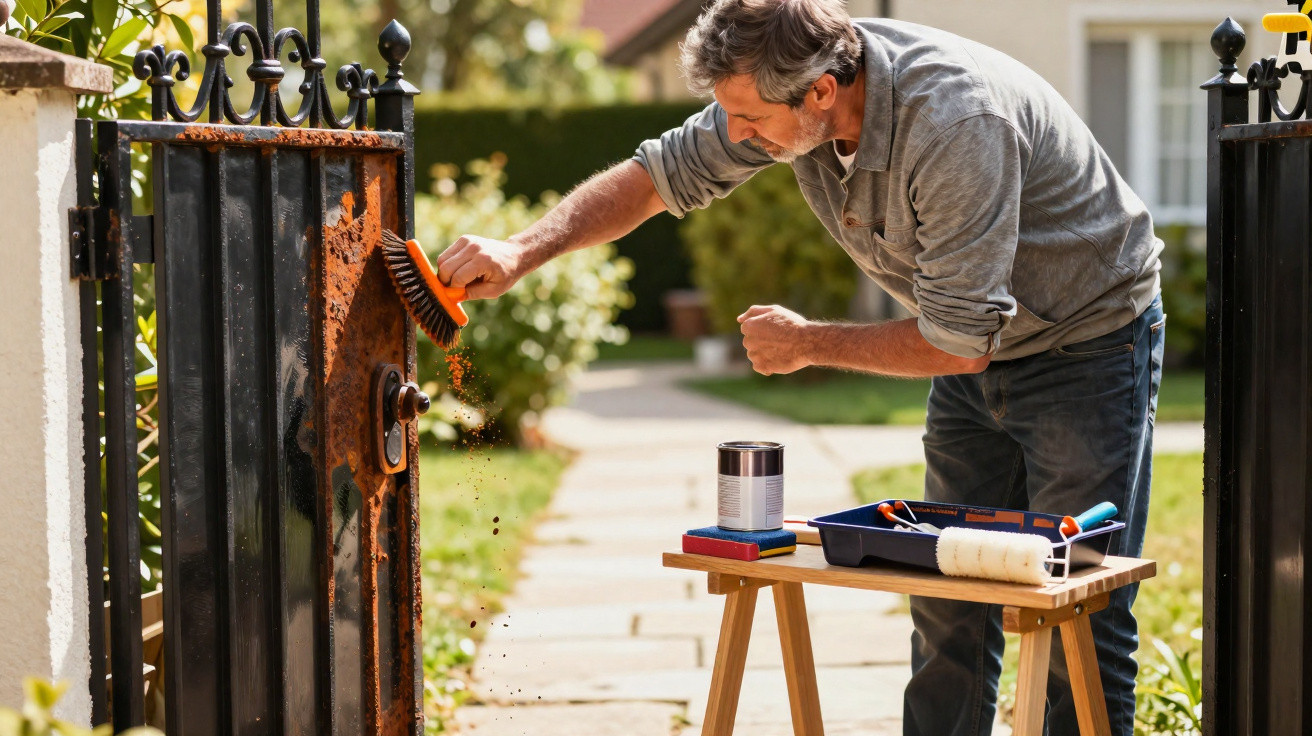
Rust on an iron gate needs dealing with before corrosion spreads, lifts the paintwork and weakens parts of the frame. The most reliable approach combines physical removal of the oxidised layer, an anti-corrosion product, a protective primer and a suitable exterior topcoat.
Why does rust appear on an iron gate?
Rust forms when iron is exposed to water and oxygen. This oxidation gradually damages the metal surface, creating a reddish, porous layer that cannot protect the material underneath.
Gates left in the rain, in persistently damp conditions or in salty coastal air are far more prone to corrosion. Scratches, cracks and areas where the paint has flaked away also leave the metal exposed. The most typical warning signs are:
- Orange staining around welds and screws
- Paint blistering or lifting off in small patches
- A rough surface with a reddish powder
- Dark spots that return after painting
- Sections of metal that have thinned or developed holes
How do you remove the oxidised layer from the gate?
Start by using sandpaper designed for metal or a wire brush, working until the loose rust is removed and you reach a firm surface. Afterwards, the dust must be cleared with a dry brush or a clean cloth, because residue left on the iron reduces adhesion of the next coats.
- Protect the floor area around the gate
- Strip away flaking paint and loose rust
- Sand the edges to feather and level the old paint
- Clean corners, welds, hinges and screws
- Remove all dust completely before moving on
What is the anti-corrosion product for?
Even after sanding, small traces of oxidation can remain inside pores and uneven areas of the metal. A rust converter or phosphoric-acid-based anti-corrosion treatment reacts with these residues and creates a more stable layer, getting the surface ready for the protective primer.
Apply the product exactly as the manufacturer directs, using gloves, ensuring good ventilation and following the drying time stated on the label. It does not replace removing loose rust, and it should not be mixed with other cleaning products. The safest sequence is:
- Apply only to a clean, dry surface
- Spread an even coat over the affected areas
- Avoid letting excess product pool in corners and gaps
- Wait for the reaction to finish and for it to dry fully
- Prepare the surface as instructed on the packaging
Why won’t paint alone stop corrosion from coming back?
A finishing coat can hide marks for a while, but it does not stop oxidation that is still active beneath the surface. That is why, before the final paint, you need an anti-rust primer suitable for iron and exterior use. This primer improves adhesion and creates a barrier between the metal, moisture and oxygen.
- Choose a primer intended for ferrous metal surfaces
- Follow the drying interval between coats
- Do not paint the gate when it is wet or heated by strong sun
- Cover welds, edges and areas close to the ground
- Finish with an exterior-grade enamel topcoat
How do you prevent rust returning after painting?
Prevention comes down to maintaining the protective coating. The gate should be checked regularly, especially after wet spells or for properties near the coast. Small scratches and chips should be repaired before water reaches the iron. As with restoring and protecting older surfaces, cleaning and finishing must match the condition of the material.
The iron gate should also be kept clean, with no soil, leaves or standing water collecting at the base. If there are holes, failed welds or a noticeable loss of thickness, sanding and painting alone will not solve the structural issue. In those situations, the damaged section must be repaired before applying the anti-corrosion product, the primer and the final paint.

Comments
No comments yet. Be the first to comment!
Leave a Comment