
This isn’t about the toilet, but about an unassuming helper found in almost every home: the kitchen sponge. Fresh insights from microbiology are seriously calling its everyday use into question - and they put a cheap accessory from Action, costing under three euros, in the spotlight as a realistic alternative for day-to-day washing up.
Why the classic kitchen sponge is considered a germ hotspot
From the outside, a sponge looks harmless enough: soft, yellow, wet - job done. Inside, however, it’s a very different story. Researchers at Furtwangen University of Applied Sciences in Germany showed back in 2017 just how heavily kitchen sponges are contaminated with bacteria - and that the problem persists.
They analysed used sponges from ordinary households. The outcome was stark: the damp fibres contained millions of bacteria, sometimes at a density more commonly associated with wastewater. Even thorough rinsing, using a microwave, or soaking in vinegar water offered little long-term relief.
“A normally used washing-up sponge is among the most heavily contaminated items in the home - significantly more critical than many surfaces around the toilet.”
That comes down to the sponge providing an almost ideal habitat for microbes:
- constantly damp and warm
- traces of grease and food residue
- lots of tiny cavities where germs can lodge
- frequent contact with plates, glasses and worktops
This combination allows bacteria to multiply quickly. Before long, the sponge is back at a “precaution-level” density of germs, regardless of how thoroughly it was treated beforehand.
How often should you really replace the sponge?
Hygiene experts advise swapping sponges far more often than most people assume. From a specialist perspective, replacing one only every few weeks - or even months - is well wide of the mark.
A practical benchmark from the researchers is roughly one new sponge per week. If you cook a lot or regularly handle raw meat, fish or eggs, it makes sense to be even stricter. Washable microfibre versions only partly address the underlying issue, because after a wash cycle they often end up lying around damp in the kitchen again.
What matters, then, is not only how you clean the sponge, but above all how quickly it dries after use - and how controlled your use of washing-up liquid is.
The Action washing-up liquid dispenser: what can the 3-euro gadget do?
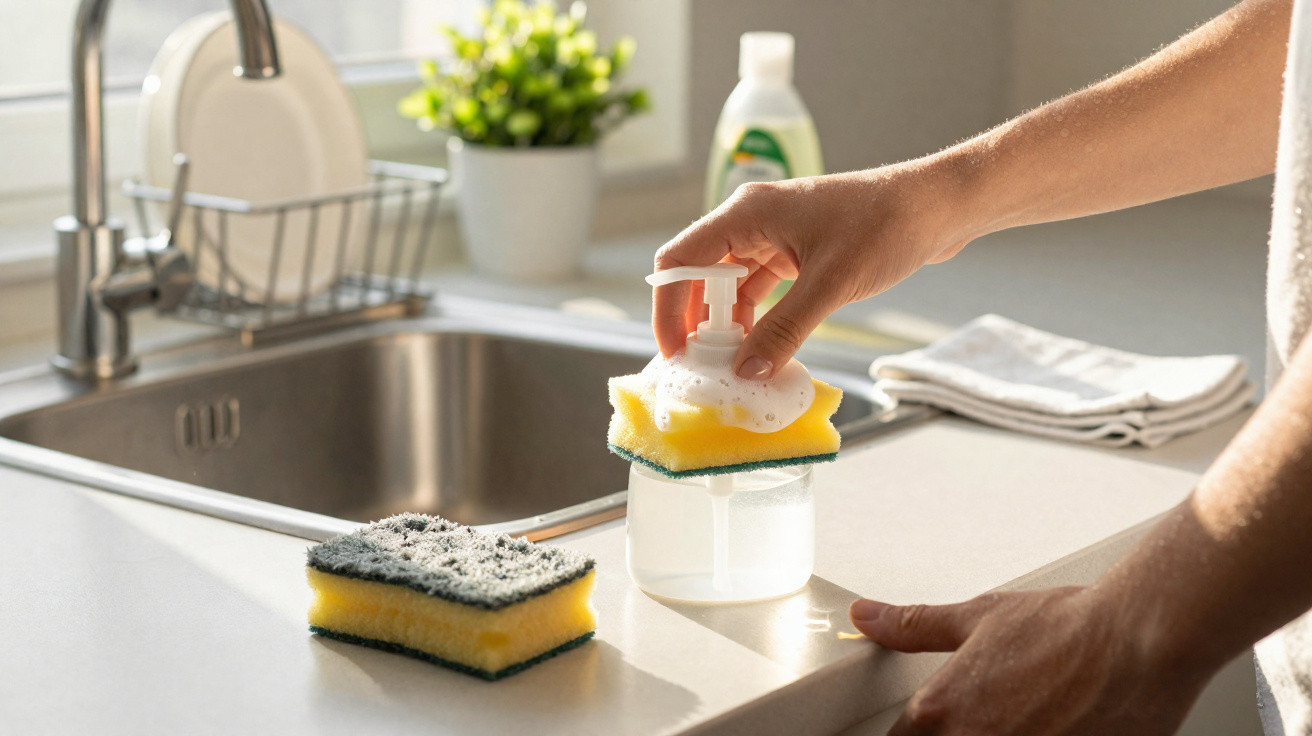
This is exactly where the currently much-discussed product from Action’s household section comes in. It costs under three euros, comes with a matching sponge rest, and is intended to ease several problems at once.
The concept is straightforward: at the bottom there’s a small reservoir for washing-up liquid, with a pump surface above it. You place the sponge on top. Press down with your hand and a measured amount of washing-up liquid is pumped into the sponge. After washing up, the sponge stays on the top platform, so it can dry more effectively instead of sitting in a puddle.
| Feature | Function |
|---|---|
| Dimensions | approx. 10 x 10 x 15 cm |
| Price | under 3 euros (around €2.70) |
| Construction | lower reservoir for washing-up liquid, upper resting platform with pump |
| Extras | includes sponge, non-slip base, removable reservoir |
One tester describes pouring all of their washing-up liquid from the plastic bottle into the reservoir and then using just a single press per washing-up session. They particularly praise two effects: reduced washing-up liquid consumption and a tidier sink area because there’s no bottle left standing around.
How the dispenser can genuinely improve hygiene
The dispenser doesn’t replace soap - and it doesn’t remove the need for healthy scepticism about germs. Even so, it changes the washing-up routine in several meaningful ways:
- More precise dosing: One or two pumps are usually enough. That reduces the tendency to pour far too much washing-up liquid directly onto the sponge.
- Faster drying: The sponge sits raised on the dispenser rather than in a wet sink or a dish with leftover water.
- Cleanable reservoir: The lower section can be removed and rinsed out before a biofilm forms.
- Less skin contact with washing-up liquid: For people with sensitive skin, the controlled amount is a clear advantage.
“The dispenser doesn’t disinfect, but it does ensure the sponge spends less time in a warm, damp micro-habitat - exactly where germs feel most at home.”
Even the best gadget is no substitute for basic rules
However practical the accessory may seem, it can’t override the fundamentals of hygiene. Microbiologists make it clear that the sponge still needs to be thrown away regularly, even when used with a dispenser.
If you use the product, a simple routine helps:
- Fill the dispenser with washing-up liquid and top up as required.
- For each washing-up session, pump once or twice; don’t “top up” by pouring more onto the sponge afterwards.
- After use, quickly rinse and squeeze out the sponge, then place it on the platform.
- At least once a week, empty the reservoir, rinse it briefly with hot water, and leave it to dry.
- Replace the sponge roughly once a week - sooner with heavy use.
If you want to be extra cautious at certain times - for instance, when there’s a stomach bug in the household - switching more often to washing-up brushes can help temporarily. They have a smaller surface area and dry faster, which makes life harder for germs.
How dangerous are the germs in everyday life, really?
Many bacteria in the home are harmless, or even beneficial. The real concern is with pathogens that can trigger diarrhoea, stomach upsets or infections - for example, if residue from chicken and raw eggs is spread around by the sponge.
Healthy people often cope without issue. Those with weakened immune systems, very young children, pregnant people or older adults can be more vulnerable. In households that include these groups, the extra hygiene effort is particularly worthwhile.
Common mistakes that many people don’t even notice:
- Using the same sponge to clean chopping boards used for raw meat and then washing glasses.
- Leaving the sponge in the sink between washing-up sessions.
- Reusing old sponges for all sorts of jobs - from the fridge to the bin lid.
Breaking these habits reduces the risk of germs ending up where they don’t belong - such as on cutlery, children’s cups or kitchen worktops.
Practical additions for a cleaner washing-up routine
The Action dispenser is only one part of a more hygienic, less stressful sink set-up. A few simple additions can make the difference more noticeable day to day:
- Second sponge or a brush: Use one for “high-risk” tasks such as raw meat, and another for glasses and cutlery.
- Wash up as soon as possible: Dried-on residue means heavier scrubbing and more contact with potentially contaminated areas.
- Clean the sink regularly: The rim where the dispenser sits shouldn’t become a germ trap.
- Change tea towels more often: Dishcloths and towels age in much the same way as sponges and should go into the wash regularly.
Many people underestimate how much small tweaks - like controlled dosing or improved drying - can shift the overall hygiene picture. A 3-euro gadget won’t replace a properly cleaned kitchen, but it can cut down effort and help break unhelpful habits.
Next time you’re standing at the sink, you may look at the old sponge rather differently. A smart dispenser, a clear plan for replacing the sponge, and a few simple behaviour changes are enough to turn an easy-to-overlook germ trap into a noticeably more hygienic everyday step.


Comments
No comments yet. Be the first to comment!
Leave a Comment