
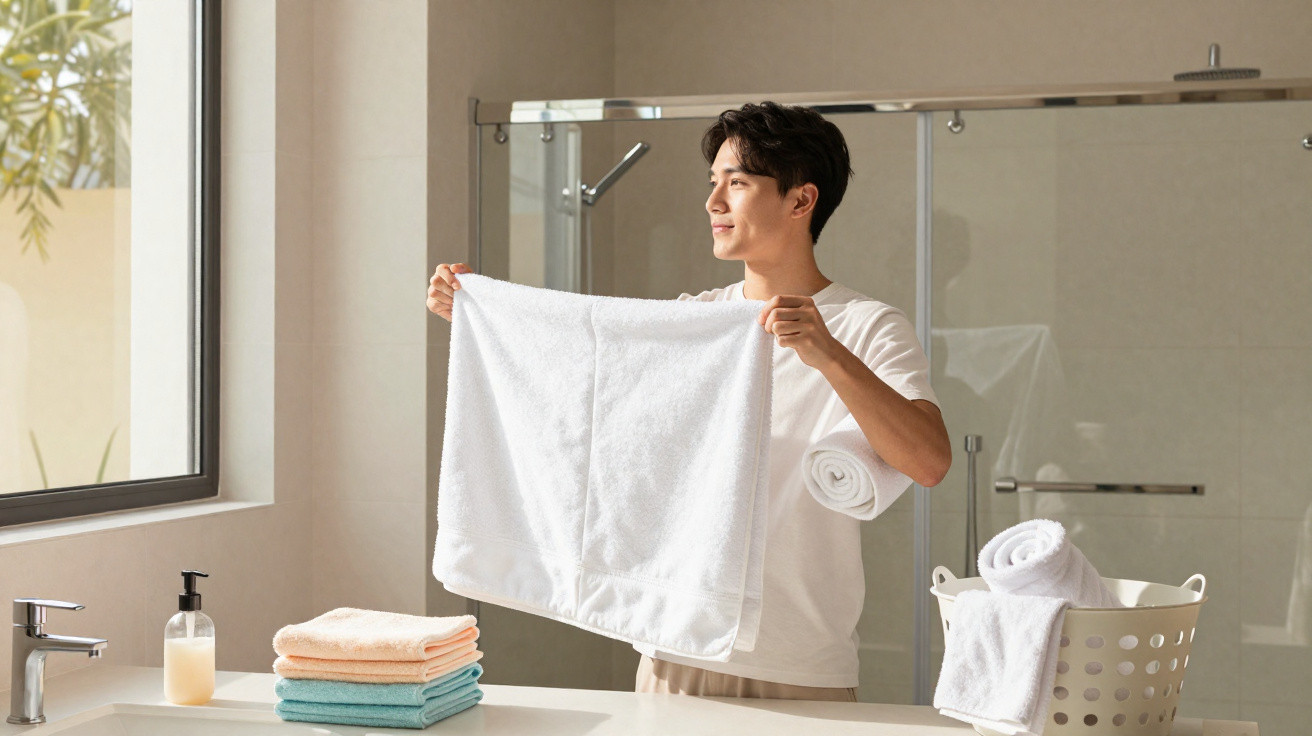
Leaving a shower towel hanging in the bathroom for weeks can feel like a sustainable habit. A microbiology expert, however, considers this routine risky: after only a few uses, bathroom textiles can accumulate huge amounts of bacteria and fungi - with potential consequences for skin and overall health.
Why towels get dirty faster than we think
A towel can still look clean even after several days, but appearances are misleading. Every time you dry off, you leave behind traces such as:
- dead skin cells
- skin oils and sweat
- residues of shower gel, shampoo, make-up and suncream
These end up deep in the fibres and may seem harmless, yet they form an ideal food source for micro-organisms. Add the typical bathroom conditions - warmth, humidity and often poor airflow - and contamination builds quickly.
"A damp towel in a poorly ventilated bathroom becomes an ideal breeding ground for bacteria and fungi - in some cases after only a few uses."
New York microbiologist Philip Tierno points out that after two to three uses, noticeably more germs can already be detected on towels. If they then hang for days without fully drying in a humid bathroom, the likelihood of skin issues increases further.
People with acne, eczema (atopic dermatitis), fungal skin conditions or allergies tend to react particularly sensitively. And anyone who regularly uses asthma sprays or other inhalers can also introduce additional particles and germs around the face - making towel cleanliness far more important than many realise.
How often should you actually wash towels?
Many households follow a simple rule: wash once a week. In some homes, shower towels are left for two or even three weeks. Hygiene specialists recommend much shorter intervals.
"Recommendation: wash bath towels after three to four uses at the latest - which often works out at two to three days."
Exactly how often depends on how frequently someone showers, how well the bathroom is ventilated and whether there are pre-existing skin conditions. Different towel types come with different rules of thumb:
| Type of towel | Recommended washing frequency |
|---|---|
| Bath towels | after 3–4 uses |
| Hand towels by the sink | every 1–2 days |
| Sports and sauna towels | after every use |
| Face towels / flannels | daily |
If you live in a very damp older property, or you have an internal bathroom without a window, it is better to shorten the intervals. The longer a towel stays wet after use, the faster germs multiply.
Risks: from skin irritation to infections
Most bacteria found on towels do not cause severe illness. Even so, repeated exposure can worsen existing problems or trigger new ones:
- Acne can deteriorate if the same germs are rubbed back onto the face again and again.
- Fungal infections on the feet or in skin folds spread more easily if several people share a towel.
- Staphylococci and other germs may encourage infection when skin is broken or irritated.
- People with allergies more often report itching and redness when towels are washed infrequently.
There is another factor: if you are unwell - for example with a cold, a stomach bug or flu - you also transfer pathogens onto textiles. In that situation, hand and shower towels should go into the washing machine much more often, ideally daily.
How to keep towels hygienic: practical everyday rules
Clean towels are not just about how often you wash them. A few simple habits make a big difference.
Dry properly instead of leaving towels damp
- After use, spread towels out fully rather than hanging them in a thick bundle.
- Hang them on a hook or rail with space, ideally away from the wall.
- In very humid bathrooms, move towels to a different room with better ventilation to dry.
- Open a window or run the extractor fan until the moisture has cleared.
"The faster a towel dries, the fewer opportunities bacteria have to multiply."
Wash temperature, detergent and fabric conditioner
A 60°C wash cycle is recommended for towels. This is usually sufficient to significantly reduce most germs. A powder biological detergent often performs better against odours and bacteria than very mild liquid products.
It is also worth going easy on fabric conditioner: it coats fibres like a film. That can make towels feel softer, but it reduces absorbency. Many households do well using it only every third or fourth wash - or skipping it entirely and adding a splash of white household vinegar to the fabric-conditioner compartment instead. This can neutralise odours and soften laundry without clogging the fibres.
No sharing: one towel per person
In families or house shares, it is common for someone to use another person’s towel "just quickly". From a hygiene perspective, that is a poor idea. Households should have clear ownership - for example via different colours or hanging loops.
- A colour system helps prevent mix-ups in everyday rush.
- Children learn early to use their own towel.
- During infections (e.g. conjunctivitis, fungal infection, stomach bug), keep textiles strictly separate.
How long do towels last at all?
Even with good care, textiles do not last forever. Over time, towels lose absorbency, fibres break down, and the fabric becomes harder to clean properly. Specialists advise replacing heavily used towels about every two years, though it may be slightly earlier or later depending on use.
Signs it is time for a new set include:
- The fabric still feels greasy or stiff even after washing.
- Grey or yellowish shadows remain despite the towel being freshly laundered.
- It smells slightly musty straight after drying.
- Fibres shed, loops pull, or the first holes appear.
If you have sensitive skin, it can help to wash new towels twice before first use. This removes manufacturing residues and excess dye, and it also improves absorbency.
How often to wash in special situations?
In some circumstances, stricter rules apply than for the day-to-day routine of a healthy adult.
- Babies and toddlers: change hand towels and flannels daily where possible; wash shower towels after two to three uses.
- Caring for relatives at home: keep towels for the person needing care separate and wash more often, ideally at 60°C with a full-strength detergent.
- Skin conditions such as fungal infection, eczema, acne: follow your clinician’s guidance closely; if unsure, choose shorter washing intervals.
- Athletes: always wash sports and sauna towels after training, because sweat is a strong breeding ground for germs.
If you do not have a tumble dryer, you can still reduce germ load by drying towels for longer and completely in the open air - ideally in a room with low humidity and good air circulation.
What studies show about bacteria on damp textiles
Microbiology research illustrates how quickly micro-organisms can multiply on wet surfaces. On a damp towel, counts can rise sharply in a short time - in some cases within 20 minutes. That may sound dramatic, but it helps explain why a textile that stays soaking wet after every shower so quickly develops an unpleasant smell.
That familiar "musty" odour is almost always linked to bacteria and fungi breaking down organic residues. If a towel smells noticeably after showering, it is a clear sign: it does not belong back on the hook - it belongs in the laundry basket.
A practical everyday approach: less guessing, more planning
If you do not want to keep working out which towel is due, adopting a simple routine can help. For example:
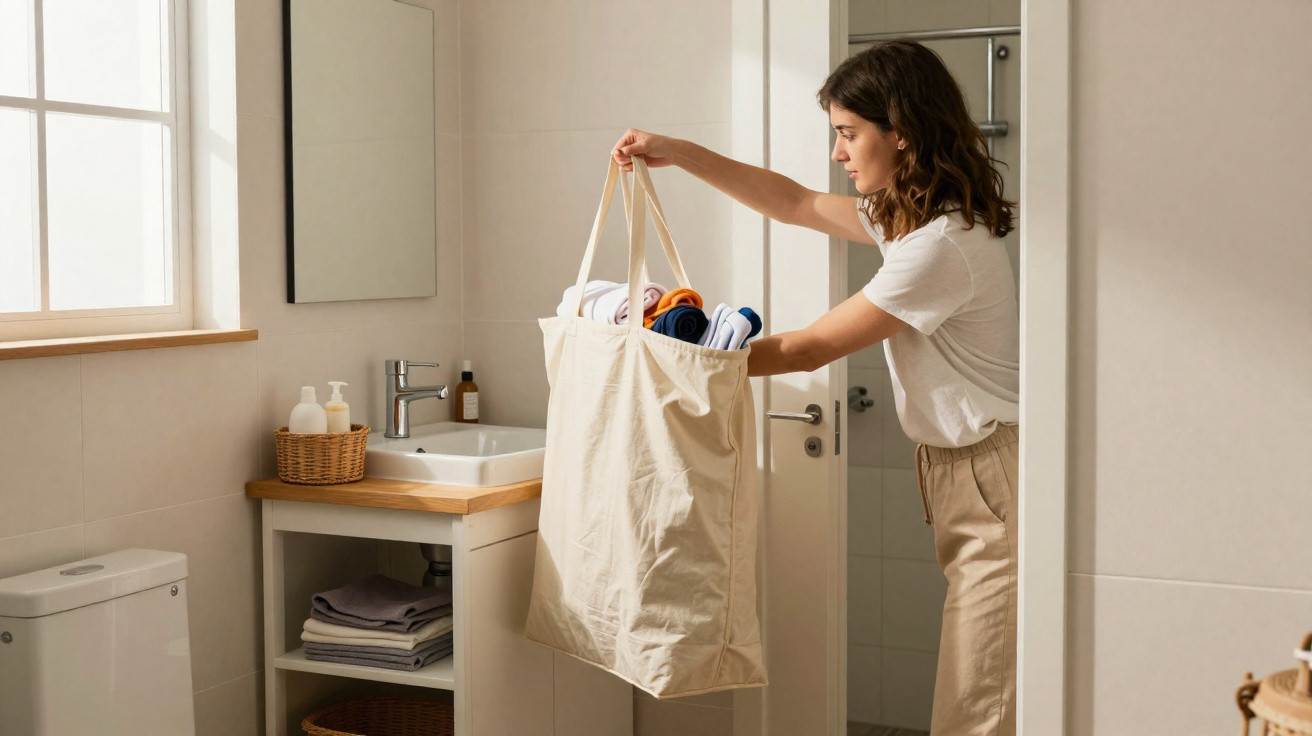
- Pick two to three fixed laundry days per week specifically for hand towels and bath towels.
- Keep three to four bath towels per person in rotation: one in use, one clean, one in the wash, one as a spare.
- Swap sink hand towels on set days, such as Monday, Wednesday and Friday.
Following routines like these not only supports your skin, but also eases the load on your immune system. Clean, thoroughly dried towels are not a luxury detail; they are a quiet but highly effective part of a healthy daily routine - and they simply smell better.
Comments
No comments yet. Be the first to comment!
Leave a Comment