
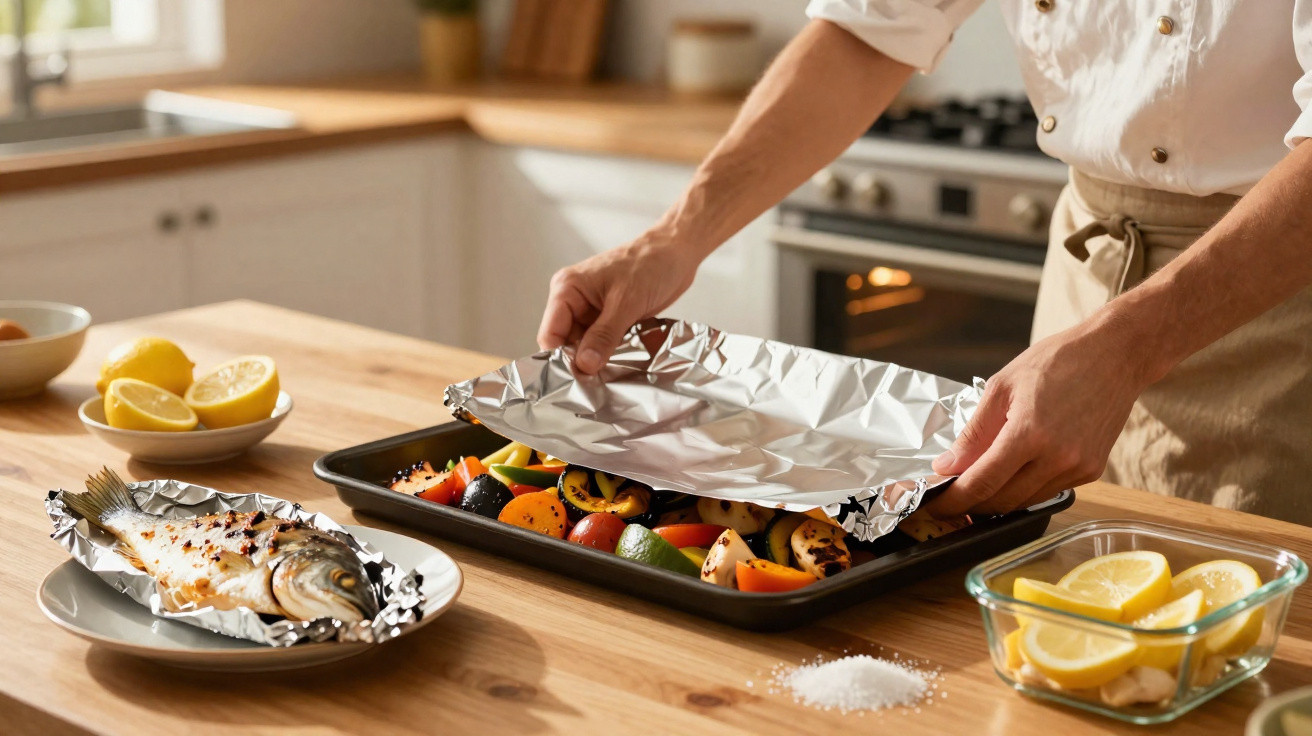
In cookery groups, at family celebrations or over a traditional Sunday roast, the same argument keeps resurfacing: which is the “correct” side of aluminium foil? Some people insist the shiny side is the only way, while others claim the dull (matte) side is the real professional trick. Look a little closer, though, and it becomes clear: this kitchen myth is mostly habit - with a small dash of physics.
Shiny versus dull: what manufacturers actually say
Producers of branded aluminium foil tend to be very straightforward on this point: both sides are the same metal and conduct heat in virtually the same way. Whether your roast sits against the shiny side or the dull side makes almost no difference to the cooking result in a normal domestic oven.
"For typical household use, the orientation of aluminium foil has hardly any measurable effect on cooking time or browning."
Materials-physics specialists point out a simple fact: heat conduction depends on the material itself, not on how it looks. Aluminium is still aluminium - regardless of whether the surface reflects like a mirror or appears slightly muted.
Food scientists who have run baking tests in home ovens report the same outcome. The temperature differences between the shiny and dull sides are minimal. In practice, a chicken, a tray of vegetables or fish cooked in a foil parcel turns out much the same.
Why aluminium foil has two different-looking sides at all
The visual contrast is created during manufacturing. To turn a thick aluminium slab into very thin foil, two sheets are rolled at the same time. The sides that sit directly against the rollers get smoothed and end up shiny. The two faces that touch each other in the middle remain dull.
In everyday cooking, that industrial detail stops mattering. What reaches your kitchen is foil whose two sides pass heat along in a very similar way and shield food equally well. Aluminium foil acts as a barrier against air and moisture, which supports cooking and helps keep food fresh - whichever side faces outwards.
How heat moves through the foil
When you roast or bake, several processes happen at once:
- Conduction: Heat travels through the metal from the hot tray or pan to the food.
- Contact: Where the foil sits directly on the food, the surfaces exchange heat.
- Shielding: The foil reduces drafts and evaporation, so food dries out more slowly.
Whether the outside looks shiny mainly affects how light is reflected inside the oven. At the temperatures typical of a domestic oven, this effect is so small that it gets lost in the overall result.
The real exception: coated, non-stick aluminium foil
There is one important exception to the “it doesn’t matter” rule: non-stick aluminium foil. With this type, only one side has a special coating designed to stop cheese, fish skin or caramel from sticking. The packaging usually states clearly which side should face up or inwards.
"With non-stick foil, the coated side must always be in contact with the food - otherwise everything sticks as usual."
Many manufacturers indicate the coated side with a small logo, a printed mark or a slightly different tint. If you are unsure, check the box. If in doubt, a quick cold test using a small piece of cheese can help you spot the side where hardly anything clings.
When orientation can still be handy
Technically the side makes no difference, but some people use the differing appearance as a memory aid:
- Shiny side out, if you want a dish to be easier to spot in the fridge.
- Dull side out, if you plan to write on the foil with a pen - ink often grips better.
- Always using the same orientation, so you can keep track of which foil has the coated side.
These tricks are not about cooking performance, but they can make kitchen routines smoother.
Where aluminium foil has limits: acidic foods and salt
Things get more interesting with strongly acidic or very salty foods. Tomato sauce, lemon slices, vinegar-based marinades or salty brines can attack the metal surface. Over time, tiny amounts of aluminium can migrate into the food, which may create a faint metallic taste.
"With acidic or heavily salted dishes, it’s worth adding a buffer: don’t place foil directly on the food - use baking parchment or a glass dish first."
For healthy adults, typical kitchen use is generally considered uncritical, but specialists still advise keeping aluminium migration as low as reasonably possible. If you use aluminium foil very frequently, or you are cooking for young children, a few simple habits can be a sensible choice.
Tips for using aluminium foil safely
- Don’t wrap marinated tomatoes or lemons directly in aluminium foil.
- For longer storage, choose glass containers or plastic tubs with lids.
- Don’t leave foil on very moist foods for weeks.
- Don’t line the bottom of the oven with aluminium foil - heat can build up and the oven may be damaged.
Practical kitchen scenarios
Roast chicken and oven vegetables
When you cover a chicken in the oven, the foil’s main job is to keep moisture in the roasting tin. That helps the meat stay juicier. After a while, you remove the cover so the skin can crisp up. Whether the shiny or dull side faces out is secondary. More important is leaving a little air space between foil and meat, and ensuring the foil is not stuck directly to the skin.
Fish in a foil parcel
For fish parcels, a combination of baking parchment and aluminium foil works well. Put the parchment on the inside and the foil on the outside for structure. This keeps the fish from touching the metal directly, lets it cook gently in its own juices, and makes the parcel easier to open. If you use only aluminium foil, take care that lemon or vinegar is not left in direct contact with the metal for hours.
Leftovers in the fridge
For a quick leftover snack, aluminium foil is convenient: a piece of bake or pizza can be wrapped up in seconds. For several days in the fridge, many people prefer storage containers instead. They stack more easily, seal more tightly, and are less likely to give food any metallic note.
When aluminium foil isn’t the best choice
In some situations, another material is simply more suitable. A quick overview:
| Use | Aluminium foil sensible? | Better alternatives |
|---|---|---|
| Long-term storage in the fridge | Only to a limited extent | Glass containers, storage boxes, screw-top jars |
| Acidic marinades | Unfavourable | Glass, ceramic, stainless steel |
| Covering dishes in the oven | Well suited | Ovenproof glass with lid, a roasting tin with lid |
| Grilling vegetables | Suitable | Stainless-steel grill trays, grill pans |
How much aluminium foil does a household really need?
If you use aluminium foil thoughtfully, you can cut consumption significantly without giving up convenience. Reusable covers, beeswax wraps and sturdy storage containers can noticeably reduce how often you reach for a new sheet. For certain jobs, however, foil remains practical - for example, when grilling in public spaces or protecting delicate foods during transport.
A useful approach is to use aluminium foil deliberately where it offers clear benefits, rather than tearing it off out of habit. That helps the environment, saves money, and reduces unnecessary contact between metal and food.
Practical takeaway for everyday cooking
In day-to-day life, the famous shiny-side-versus-dull-side question has a relaxed answer. For normal oven cooking or wrapping leftovers, the orientation makes virtually no difference. What matters instead are other factors: the coating on specialist non-stick foils, how you handle acidic foods, and making conscious choices about which containers to use.
If you keep these points in mind, you can tear off your next sheet of aluminium foil without overthinking it - and focus on what really counts in the kitchen: flavour, good ingredients and a calm cooking experience.
Comments
No comments yet. Be the first to comment!
Leave a Comment