
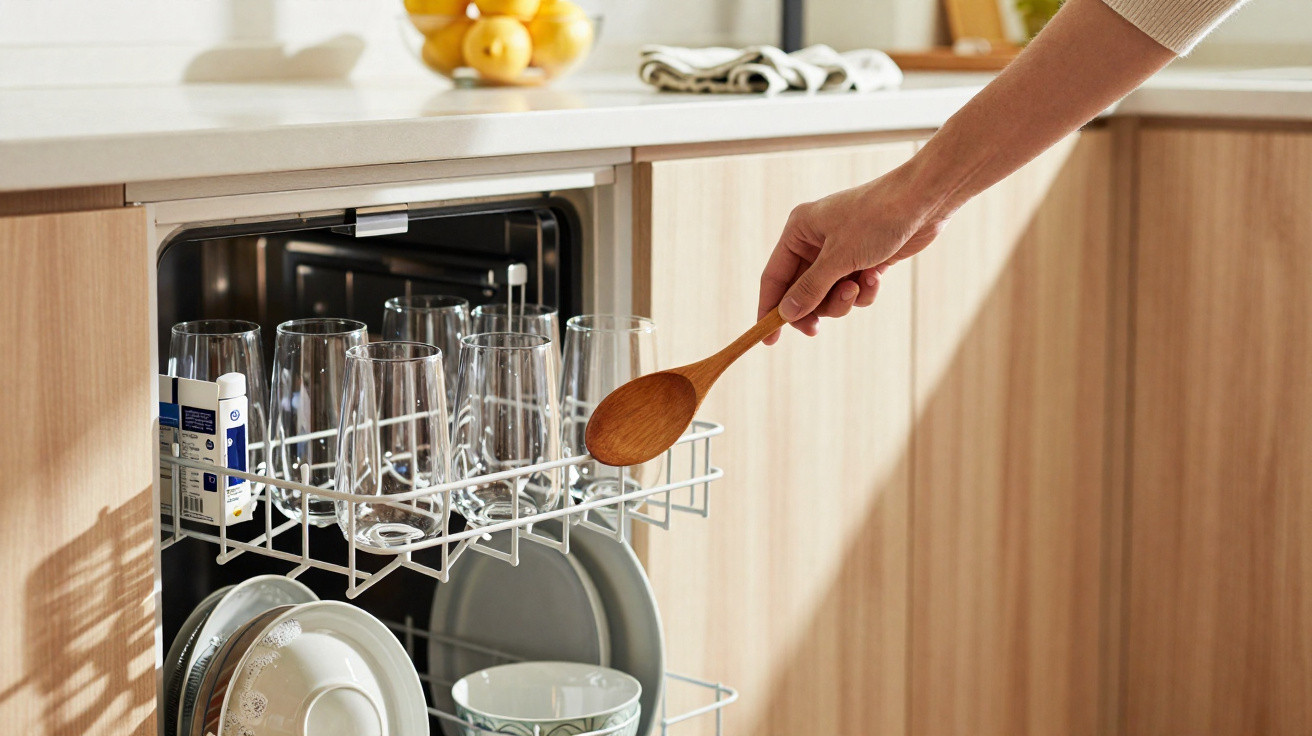
People add extra drying cycles, rattle the racks, and end up towel-drying lids anyway. Then an odd tip starts doing the rounds in group chats and neighbourhood threads: put a wooden spoon in the dishwasher. Not to clean it - to keep the door slightly open.
In one small-city flat, the machine beeped at 9:47 p.m. The owner eased the door open and a burst of steam skimmed the ceiling paint. She slid in a wooden spoon by the handle, resting it on the edge of the top rack so the door couldn’t fully shut. Twenty minutes later she returned. The air felt less heavy, and those plastic containers that normally sit in sulky puddles were… dry. It had the feel of a grandmother’s “swear by it” fix, with the sort of explanation an engineer friend would happily provide. It felt like getting away with something.
The odd little prop that fixes a big dishwasher gripe
If you’ve ever opened the dishwasher the moment it finishes and felt a small wave of let-down, you’re in good company. The plates look spotless, the cutlery sparkles, and the plasticware still clings to droplets like a stubborn badge. Using a wooden spoon in the dishwasher as a simple door prop immediately after the cycle changes the result. The real problem is trapped humidity, not a lack of heat. Give the steam somewhere to go and everything sheds moisture much faster.
I watched a neighbour test it after cooking for six. She ran a standard cycle, then wedged an old beech spoon so the door stayed open by roughly a thumb’s width. A cheap digital hygrometer on the worktop showed 96% above the machine at first, then dropped to 71% after 10 minutes and 63% by the 20-minute mark. Plastic lids that normally needed a tea towel… didn’t. No detergent swaps, no temperature tweaks - she simply changed the air.
The reason it makes sense is straightforward. In a sealed tub, warm, wet air lingers and then condenses on the coolest items - usually plastic, because it doesn’t retain heat the way ceramic or steel does. Crack the door and you reduce the humidity while allowing a gentle draught. Moisture migrates into drier air rather than settling back onto your dishes. Wood is ideal here because it’s forgiving, handles warmth well, and is kinder to seals and enamel. A wooden spoon is a soft, low-tech vent you already have in a drawer. As a bonus, that heavy “wet dog” odour some machines develop after a hot programme eases when steam isn’t left to sit inside the cavity.
How to try the wooden spoon trick, step by step
Once the dishwasher beeps or the timer reaches zero, open the door slowly to release the first plume of steam. Place the handle of a dry wooden spoon across the edge of the top rack, near the side, so the door hits the spoon and stays ajar with a gap of about 1–2 centimetres. The latch should not click. Leave it like this for 20–40 minutes. Plastic dries faster, glasses lose their haze, and the racks cool without that squelchy, damp film.
The most common mistakes? People accidentally wedge the door so the latch engages, or they start a wash with the spoon in place. Don’t do either. This is a post-cycle boost only. If you’ve got children or curious pets, keep them out of the kitchen while the door is cracked open. Pick a smooth spoon with no splinters and keep it clean - no old tomato sauce stains that could touch the gasket. Keep the spoon away from the bottom heating-element area. And yes, some higher-end machines automatically pop the door open; if yours already does that, you may not need the spoon.
A quick dose of honesty: hardly anyone keeps up with this every single day. But on busy weeknights after bigger cooks, it genuinely helps.
“Steam doesn’t need more heat,” an appliance tech told me. “It needs an exit.”
- Use the spoon only as a door prop after the cycle finishes.
- A thumb-width gap is plenty; don’t force the latch.
- Keep children and pets away from the open door.
- Don’t use wood during the wash - detergent and high heat can split it.
- Twenty minutes makes a real difference; set a timer and get on with your evening.
A small ritual with outsized results
Most of us have had the moment where the sink becomes a second drying rack because the dishwasher didn’t quite finish the job. This is the quiet workaround. It doesn’t require a new machine, a lab-grade detergent, or a PhD in rinse aid. It asks for a spoon and a minute of attention at the right time. You can almost hear the dishes sigh.
There’s a small psychological boost hidden in these domestic wins. Plastic containers stack without drips, lunch boxes pack without paper towels, and the kitchen stops smelling like a sauna. When the day is already overfilled, the wooden spoon trick gives you back a bit of energy and patience. If you’ve ever wondered why restaurant dish pits feel bone-dry, the answer is above you: the air is moving. Recreate that gently at home.
For the purists: no, the spoon doesn’t “soak up” all the moisture. Airflow does the hard work. The wood is simply a non-scratch spacer that happens to be everywhere. Do not run the spoon through the full cycle. Some dishwasher manuals warn against wood with high heat and caustic detergents, and they have a point. Use the spoon like a doorstop that stays dry, and it’ll last for years.
| Key point | Detail | Benefit to the reader |
|---|---|---|
| Crack the door with a wooden spoon post-cycle | Leave a 1–2 cm gap for 20–40 minutes | Faster drying, especially on plastic lids and tubs |
| Do not wash the spoon in the cycle | Heat and detergent can warp, split, or roughen wood | Protects your utensils and dishwasher gaskets |
| Think airflow, not more heat | Lower humidity inside the tub dries dishes efficiently | Less energy used, fewer towels, nicer-smelling kitchen |
FAQ:
- Is it safe to put a wooden spoon in the dishwasher? Safe as a post-cycle door prop, yes. Not safe to run through the entire wash, which can damage wood and gaskets.
- Will this void my dishwasher warranty? Propping a door slightly after a cycle ends is no different than leaving it ajar. Don’t force the latch or block sensors, and you’re within normal use.
- My dishwasher has an AutoOpen feature-do I need this? Probably not. Auto-opening vents steam for you. If drying is still weak, you can open it a bit wider with a spoon.
- Does this help with odors and that damp smell? Yes. Letting steam escape reduces residual moisture, which is where musty odors linger.
- Can I do this mid-cycle to speed things up? No. Opening mid-cycle interrupts washing, releases too much heat and water, and might confuse sensors. Wait for the end beep.


Comments
No comments yet. Be the first to comment!
Leave a Comment