
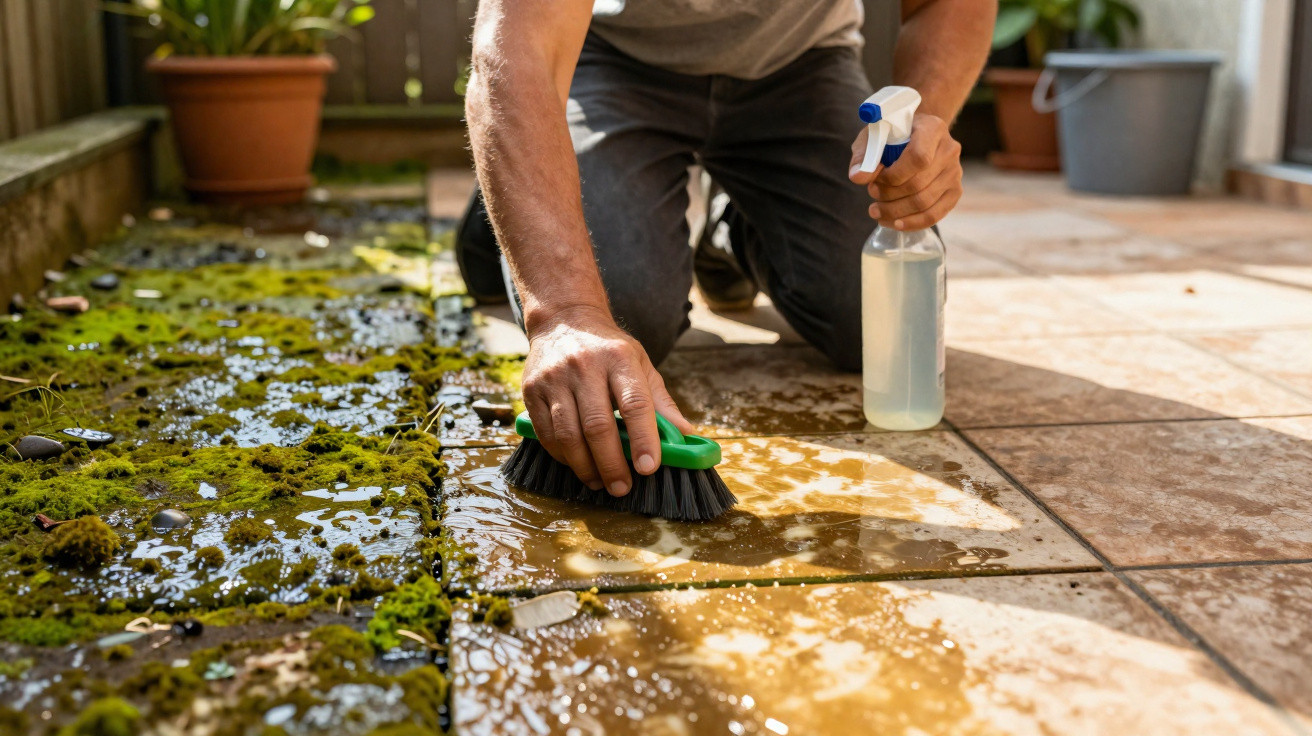
As soon as the frost lifts, many homeowners recognise the same unwelcome sight: the favourite outdoor spot suddenly looks dreary - and feels risky underfoot. Slabs coated in grime, slick patches, a musty smell. A practical report from the UK now shows how a cheap kitchen liquid can lift moss and algae far faster than most people expect - without using a pressure washer.
Why the terrace becomes so hazardous after winter
Over the colder months, plenty builds up: rain, persistent damp, weak sunshine, and leaves left sitting for too long. On concrete, paving blocks and tiles, that creates a mix of moss and fine algae. The surface takes on a greenish film that does more than spoil the look.
"The greenish film significantly increases the risk of falls - especially for children and older people."
Step out briefly in slippers or socks and it is easy to skid. Many people assume the area will simply dry out “by itself” once spring arrives. In reality, the opposite often happens: every wet spell makes the coating thicker, darker and more stubborn.
That is why the in-between period matters. When days start getting longer but the ground is still cool and damp, targeted cleaning tends to be most effective. If you tackle it then, the green layer often comes away with far less effort than in high summer, when everything has baked on.
The surprise from the kitchen: what simple table vinegar can do
In a UK report, a journalist describes how she reaches for an extremely basic option each spring: ordinary clear vinegar from the supermarket. She says it costs the equivalent of about 30p, and that she does not even get through a full bottle for an average-sized terrace.
The product is alcohol-based vinegar - in other words, a solution containing acetic acid. That acid helps break down the fine deposits that mosses and algae feed on. The surface becomes noticeably less slick, the growth loses its grip, and later brushing is easier.
"Vinegar doesn’t work like a classic moss killer; it attacks the sticky nutrient film that holds the growth in place."
The method is refreshingly straightforward: first a dry clean, then apply the vinegar mix, wait a short while, follow with moderate brushing and a thorough rinse. For many people, that means skipping a heavy pressure washer and pricey specialist chemicals.
Step-by-step: how the 1-hour routine works
The approach suits terraces made from concrete, brick pavers, standard porcelain tiles, or typical paving slabs. Allow roughly one hour in total, including the waiting time. The steps are as follows:
- Preparation: Sweep away loose leaves, soil and grit thoroughly.
- Mix the solution: Combine one part clear vinegar with one part hot water in a bucket or watering can.
- Soak the area: Pour the mix evenly over all green patches and any obvious moss clumps.
- Leave it to work: Let it sit for around one hour so the acid can do its job.
- Light brushing: Go over the slabs with a deck brush or long-handled scrubbing brush.
- Rinse well: Flush the surface with clean water using a garden hose or buckets.
In many cases, the green layer lifts in the flow of water and the original colour of the slabs shows again. If a few areas are particularly persistent, repeat the process just on those spots a second time, or brush a little more firmly.
Material questions: where vinegar works well - and where it doesn’t
Even with all the enthusiasm, one point matters: not every surface tolerates acid. Vinegar is particularly tough on calcareous stone, because the acid reacts with the lime and can roughen or discolour the finish.
Materials to treat as high-risk include:
- natural, unfinished marble
- travertine and other limestone
- many “stone effect” slabs with a lime-containing core
- untreated wood, especially softwoods
"If you’re not sure what the surface is made of, test first in an inconspicuous area to see whether any discolouration appears."
Hardier options include concrete slabs, clay brick pavers, many ceramic tiles and frost-resistant porcelain paving. Traditional cement-based pointing generally copes with the diluted mix as well, provided you rinse thoroughly afterwards.
If you have delicate beds right alongside the terrace, protect them with a sheet or old towels. Vinegar does break down in soil over time, but young plants do not appreciate an acidic shock on their leaves.
Practical extra benefits and small pitfalls
Beyond improving grip underfoot, the vinegar approach has a handy side effect: fine weeds spreading through joints are often weakened at the same time. The acid can damage young shoots, which then brown off and are easier to remove later.
Still, it is not completely without limits. There are three points worth keeping in mind:
- Legal requirements: Some areas have rules about using vinegar on paved surfaces, because residues can wash into drains or into the ground. Checking local guidance is sensible.
- Smell: During the waiting time, the vinegar odour can be quite noticeable. If you are sensitive, choose a breezier day or keep windows shut.
- Metal parts: Do not leave furniture feet, galvanised components or old screws sitting in the solution, as acid encourages corrosion.
How often it’s worth doing each year
Many people do one thorough vinegar clean in spring and find it lasts the season. If the terrace is heavily shaded or there are lots of trees close to the house, a second pass in late summer can help.
Simple upkeep in between makes a difference: sweep away leaves regularly, avoid standing puddles, and use saucers under plant pots so less moisture sits directly on the slabs. Every dry spell slows the growth of green coatings noticeably.
Alternative methods: from pressure washing to soft soap
If you would rather not use vinegar, there are other routes - each with familiar pros and cons. Here is a quick comparison:
| Method | Advantage | Disadvantage |
|---|---|---|
| Pressure washer | very fast, immediate visible results | can wash out joints, noisy, higher water use |
| Specialist patio cleaner from a DIY store | formulated specifically for algae and moss | more expensive, often carries warnings about the environment and skin contact |
| Soft soap and a brush | gentle; often suitable for more delicate surfaces | takes more time and effort |
| Vinegar–water mix | very cheap and found in many homes | not suitable for every finish; noticeable smell |
Many homeowners mix and match: start with a mild vinegar or soap treatment to loosen the growth, then follow up on stubborn patches with a pressure washer set to a low setting. That keeps damage to joints and the surface to a minimum.
What’s really behind moss and algae coatings
Moss is made up of tiny plants without deep roots. It thrives in damp, slightly acidic, shady spots, and even fine cracks in joints provide enough grip. Algae are not plants in the classic sense, but simple organisms that grow as a thin film and manage with minimal nutrients.
Both benefit from stagnant moisture and organic matter such as leaves, pollen, soil and clinging dust. Remove that foundation and you take away their long-term support. That is exactly where vinegar helps, by attacking the thin biofilm that sticks to the stone.
If you plan your terrace with build-up in mind, you can also reduce how readily it turns green: lighter slabs reflect more light than dark ones; open joints with drainage let water soak away; and canopies reduce persistent damp. Even better airflow from less crowded planting can act like a natural dryer.
How the effort pays off over the years
At first glance, spending an hour cleaning a terrace can feel like extra work. But over time, the sums often stack up in your favour: fewer expensive specialist cleaners, no (or less frequent) pressure-washer hire, and a lower risk of slips that can have costly consequences.
There is another benefit too: the more regularly you remove the coating, the less it can bite into the surface. That can help slabs and joints last longer. Anyone who has seen older terraces where the green film was left for years will recognise the difference: heavily broken-out joints, blotchy stone, crumbling edges. Compared with that, a low-cost bottle of vinegar and a little springtime effort is a modest investment.

Comments
No comments yet. Be the first to comment!
Leave a Comment