
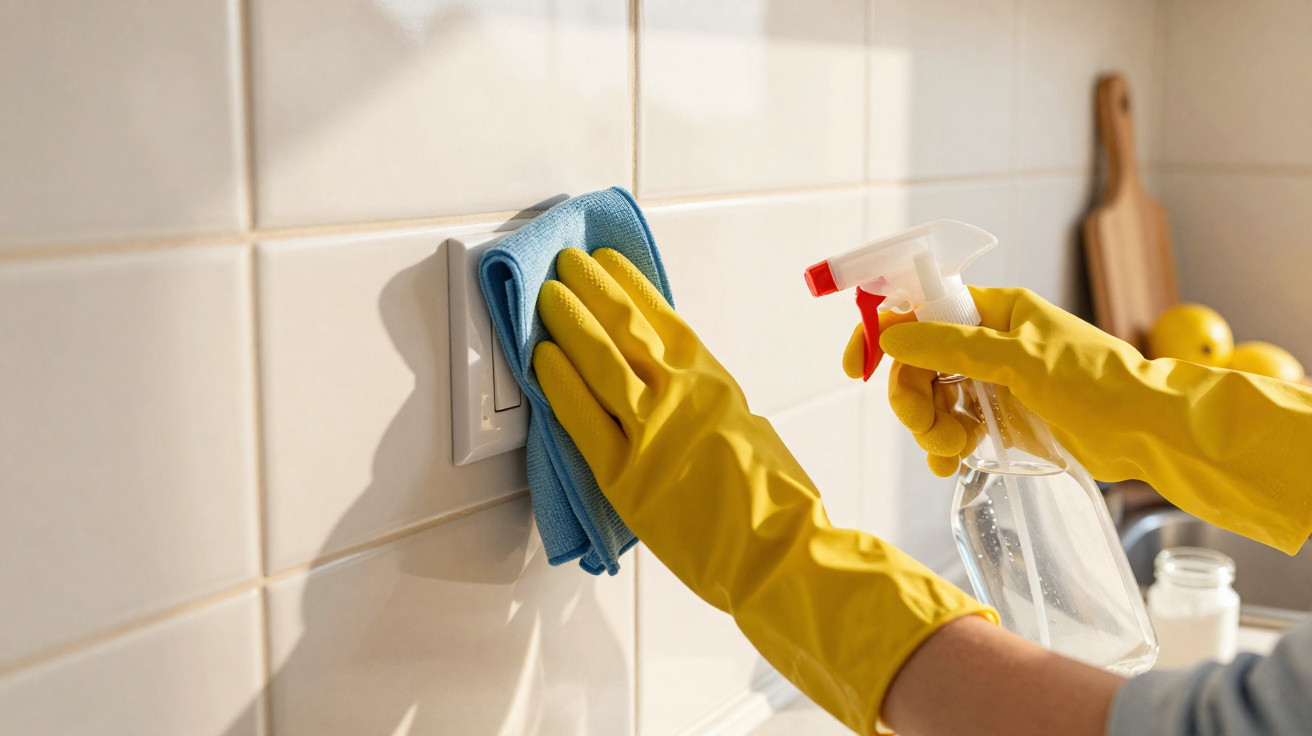
In many homes, one of the smallest spots in the kitchen is also one of the most bacteria-laden. It gets touched constantly while you cook, sits right in the middle of the action-and barely ever makes it onto anyone’s cleaning list. Cleaning it regularly can noticeably reduce the risk of stomach bugs.
The underestimated germ hotspot on the wall
The culprits are the kitchen light switches. They’re positioned exactly where people chop, fry, wash up and prep food. Every touch leaves something behind: grease, food residue, soil from vegetables, plus germs from raw meat or unwashed hands.
Kitchen light switches are among the dirtiest surfaces in the home - yet they’re cleaned the least.
The pattern is familiar: you slice raw meat, turn around and tap the switch. Or you’re kneading dough, want to check the recipe and brighten the room “just quickly” first. Each time, microorganisms transfer from your fingers onto the switch plate.
In hygiene research, these high-touch areas are referred to as “hotspots”. Studies show that frequently handled points in the kitchen can carry bacterial loads comparable to chopping boards used for raw meat. Light switches often sit right at the top of the list-alongside fridge handles, taps and oven dials.
Which germs build up on light switches
In the kitchen, the microbes you’ll most often find are those linked to food or soil. Common examples include:
- E. coli – typically from the gut and raw meat; can trigger diarrhoea
- Salmonella – commonly found on poultry and eggs; causes gastrointestinal infections
- Staphylococci – present on skin and hands; can lead to inflammation
- Mould spores – from the air, waste, or damp corners
These microorganisms don’t simply disappear. Many can survive on smooth surfaces for several days, sometimes even weeks. Warm, slightly humid kitchen air, greasy splashes from frying and tiny specks of food create ideal conditions.
If several people use the switch every day, it becomes a real circulation system: germs settle on the surface, move onto the next person’s hand, spread to other points (such as the fridge handle) or end up directly on food.
Why hardly anyone cleans there
Light switches are always in view but rarely top of mind. When wiping down worktops, your attention doesn’t naturally move to the wall. Many people simply don’t register that such a small area can become a genuine hygiene issue.
There’s also uncertainty: “Am I even allowed to use cleaner on that? What about electricity and moisture?” Out of concern about electrics, plenty of people avoid the area altogether-and the switch stays consistently uncleaned.
A fixed cleaning routine: once a week is enough
The good news is you don’t need to become a hygiene fanatic. If you give your kitchen light switches a proper clean once a week, you significantly disrupt the germ cycle.
A week is a good rhythm: just before a thick film of grease and grime has a chance to build up.
How to clean kitchen light switches properly and safely
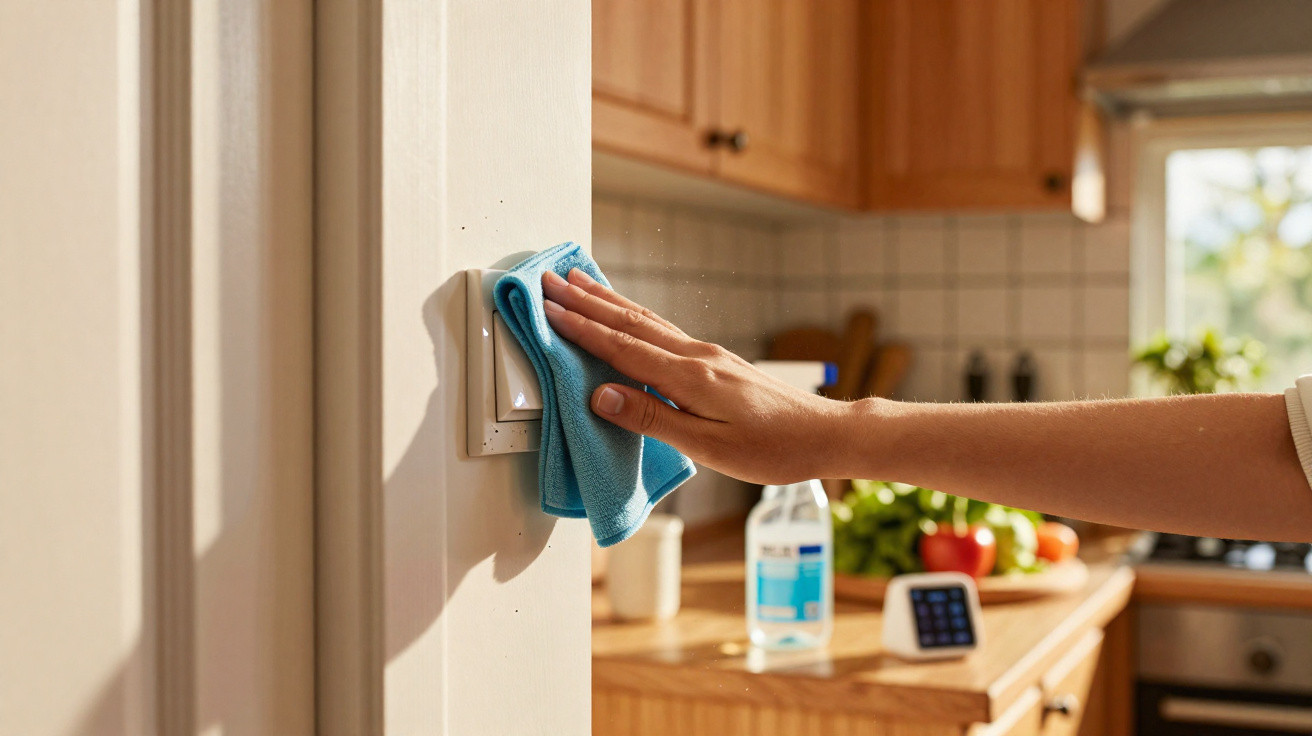
Electrical safety comes first-so never spray cleaner directly onto the switch. A safer approach works in three steps:
- Dampen a cloth: Lightly moisten a microfibre cloth with a mild cleaner or disinfectant. It should be damp, not dripping.
- Wipe the surface: Clean the switch plate and surrounding frame thoroughly, including the edges where grease tends to collect.
- Dry well: Go over it with a dry cloth so no moisture can run into gaps or towards the switch mechanism.
For corners or textured surfaces, cotton buds work well. They reach the fine grooves where grime and bacteria like to accumulate.
Natural alternative: cleaning with household basics
If you’d rather avoid harsh chemicals near food, you can use a simple mixture:
- 1 part white vinegar
- 1 part water
Apply it to a cloth and use it as described above. Vinegar is effective against many bacteria, cuts through grease and evaporates fairly quickly without leaving harmful residues.
Other surfaces that often slip through the net in kitchen hygiene
Once you’re doing the switch, it makes sense not to stop there. Germs frequently travel from one place to another when hands-or cleaning cloths-carry them around. A quick “high-touch round” once a week is therefore worthwhile:
- Fridge handles – touched for almost every meal
- Cupboard knobs and handle rails – often grabbed with dough, oil or sauce on your fingers
- Tap and mixer – typically the first thing touched with dirty hands
- Microwave control panel – pressed when reheating quickly with full or greasy hands
- Oven dials and appliance controls – used multiple times a day
If you assign these points to a fixed day-say, every Saturday morning or straight after the big shop-you build a routine that takes very little time. Once it becomes habit, it runs almost on autopilot.
Who dirty light switches put most at risk
For healthy adults, germs on light switches are usually just an extra, unnecessary risk. It becomes more concerning in households with:
- young children whose immune systems aren’t fully developed
- older people whose defences are weaker
- anyone with a weakened immune system or chronic illness
For them, even a small number of germs can be enough to trigger infection. Gastrointestinal illnesses are often brushed off-they’re unpleasant, but for vulnerable people they can have serious consequences.
Every clean contact point in the kitchen reduces the likelihood that pathogens find their way from food into the body.
What else makes a kitchen truly clean
Hygiene involves much more than washed-up plates and a cleared, wiped worktop. What matters is how the whole system works together:
- correct storage times in the fridge (for example for leftovers or dips)
- separate chopping boards for raw meat and vegetables
- regular handwashing while cooking
- clean cloths and sponges that are replaced often
- well-maintained high-touch points such as light switches and handles
Keeping this combination in mind greatly lowers the risk of foodborne infections. Interestingly, many people pay very close attention to how long certain foods keep in the fridge, yet underestimate how easily germs travel back onto food via hands and switches.
Why small habits make a big difference
A kitchen light switch can be cleaned in under two minutes. Even at once a week, that adds up to only a handful of hours over a year. In return, you reduce the germ load at a point every member of the household touches repeatedly.
Once you’ve seen the switch properly clean, you tend to notice grime there more quickly-and act sooner. That’s how a single tip becomes a lasting habit that makes the kitchen feel noticeably more hygienic.
A practical approach is to clean the switch whenever you already have a cloth in hand: straight after wiping the worktop, or just before taking the rubbish out. It adds almost no extra time, but brings a clear health benefit-especially in homes where people cook often and eat together.
Comments
No comments yet. Be the first to comment!
Leave a Comment