
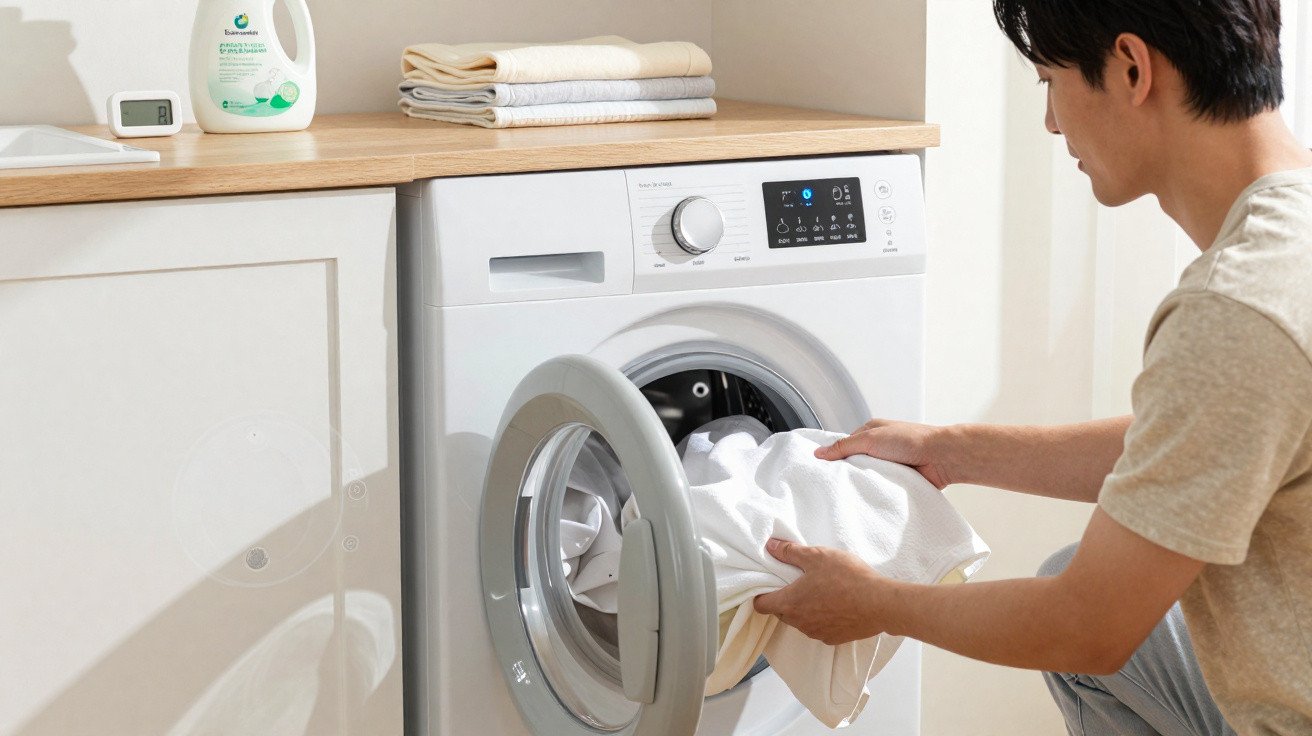
If you want to cut your electricity bill and wash more responsibly, it’s tempting to hit the Eco button every time. Less water, a lower temperature, and a drum packed with bed linen - job done. It sounds sensible, it’s easy, and it feels “green”. In real life, though, more and more people report smelly machines, grey marks on light sheets, and costly repairs. So what’s actually going wrong?
Eco programme: great for the bill, a hygiene headache
The Eco programme is designed to reduce energy use. The machine brings the water up to roughly 40 to 50 °C slowly, keeps the water level low, and compensates with a much longer cycle. That’s how the electricity consumption drops, which looks good for the household budget.
But that exact mix can also create perfect conditions for germs. Temperatures below 60 °C don’t reliably kill many bacteria and fungi. They can survive in hoses, rubber seals, and the hard-to-reach corners of the drum.
"If you wash almost exclusively in Eco mode, within a few months you turn your machine into a warm, damp habitat for bacteria and mould."
Repair technicians have been saying for some time that faults and bad odours are becoming more common in modern appliances. A frequent verdict: a heavy biofilm buildup inside the machine.
What the washing machine “biofilm” actually is
A biofilm is a slimy, often grey-black layer made up of micro-organisms and detergent residues. It clings to the inner walls of the drum, inside hoses, around the door seal, and in the detergent drawer housing.
Specialists have measured extremely high germ counts in these areas. In the rubber seal around the porthole door, up to one million colony-forming units per square centimetre have been found. That is a long way from clean.
Biofilm typically shows up as:
- a musty smell reminiscent of rotten eggs or a stagnant pond
- grey, greasy deposits on the rubber seal
- small dark spots or streaks on freshly washed laundry
- foam that’s difficult to rinse away
If the biofilm breaks away in flakes, those pieces end up on your laundry. Light-coloured, highly absorbent fabrics can look prematurely tired - even though they’ve just been washed.
Why bed linen suffers so quickly
Bed linen, especially linen (flax) bedding, reacts very quickly to these dirty conditions. Linen absorbs a lot of moisture and, along with it, residues from the machine. Stains, discolouration, and odours can settle into the fibres with ease.
On top of that, many people cram the drum to the brim when washing bed linen. A duvet cover, fitted sheet, and several pillowcases can turn into one huge, wet “bundle” inside the machine.
"A full drum of wet bed linen can quickly weigh many times more than its dry weight - for the mechanics, that’s heavy labour."
That causes several issues:
- The laundry tangles into a thick lump, so water and detergent barely reach the inner layers.
- The machine struggles to balance the load, leading to loud knocking and strong vibration.
- Components such as bearings, springs, shock absorbers, and the pump are put under severe strain.
- Detergent residues get trapped in folds, leaving pale streaks or a sticky film.
The result: even with the Eco programme and a “gentle” temperature, sheets can turn grey and smell stale surprisingly fast. At the same time, the risk increases that the machine fails much earlier than it should.
How to use Eco without wrecking your machine
There’s no need to ban the Eco programme altogether. The key is using it intelligently, without sacrificing hygiene or the appliance itself.
The 70% rule for the drum
A simple loading rule helps: aim to fill the drum to only about 70 to 80%. That means you should still have clearly noticeable space between the laundry and the top of the drum.
A practical check is the “hand rule”: once the bed linen is in, lay your hand flat on top of the pile. If your hand still fits comfortably without forcing it, the load is about right. If you have to press down, the drum is overfilled.
Preparing bed linen also matters:
- Fully unfold covers and sheets before putting them in.
- Don’t wash large terry towels at the same time as bed linen - they make the bundle even heavier.
- For large duvet covers or bedding sets, run two smaller loads instead.
Regular hot washes to slow biofilm growth
If you rely on Eco cycles almost all the time, you should regularly add a counterbalance. Many technicians recommend planning a wash at at least 60 °C after roughly three Eco washes, especially for bed linen and towels.
Even more effective is a dedicated care cycle for the machine itself:
- Once a month, run an empty cycle at 90 °C.
- Pour about one litre of standard household vinegar into the drum or the detergent compartment.
- Add no detergent and no laundry.
The high heat loosens grease, detergent buildup, and biofilm. The vinegar helps break down limescale and deposits. After this “cleaning wash”, the machine usually smells noticeably fresher.
After washing: small habits that make a big difference
It’s not only temperature and programmes that matter. Two quick actions after every wash can significantly slow biofilm formation:
- Leave the door and detergent drawer open until the inside feels completely dry.
- Wipe the rubber seal briefly with a cloth, especially any pooled water at the bottom.
This removes exactly what bacteria and mould thrive on most: constant moisture.
"A washing machine that’s allowed to ‘breathe’ after a cycle stays hygienic and odour-free for much longer."
Washing bed linen properly: temperature, detergent, frequency
Bed linen has high hygiene demands because it collects sweat, skin flakes, and cosmetic residues. If you sleep in it nightly, it’s sensible to change it every one to two weeks.
This quick guide can help:
| Material | Recommended temperature | Note |
|---|---|---|
| Cotton/flannelette | 60 °C | ideal for allergies and for house dust mites |
| Linen | 40–60 °C | check the care label; light linen often tolerates 60 °C |
| Blended fabrics | 40 °C | if there’s odour, increase to 60 °C occasionally |
In many cases, a powder biological detergent is a good choice because it usually contains bleaching agents, which helps prevent greying. Liquid detergent is more likely to leave residues that can feed biofilm, especially at lower temperatures.
Why linen sets need extra protection
Linen bed linen is considered premium, long-lasting, and good at regulating temperature. It absorbs moisture quickly, feels cool in summer, and warm in winter. Those same strengths make it more vulnerable when the washing machine isn’t clean.
Discolouration from biofilm, a grey haze, and a stiff feel can lodge in the fibres and may be difficult to remove later. If you’ve invested in high-quality linen sheets, it’s worth keeping an eye on wash temperature, loading, and machine care.
A helpful extra step: with new linen covers, it can be worth doing the first wash without Eco, using a low spin speed and plenty of water. That way the machine rinses out manufacturing residues thoroughly, and the fabric is more likely to “forgive” later mistakes.
Risks of permanent Eco use - and how to avoid them
If you always wash with a low water level and moderate temperatures, you may pay elsewhere. Many faults currently seen in workshops are linked to hoses clogged with residue, blocked pumps, and bearings stressed by heavy loads.
Dense, poorly balanced laundry combined with stubborn deposits inside the machine increases the chance of breakdowns. Then the supposed saving turns into an expensive call-out - including replacement parts or even a new machine.
A sensible mix of economical washing, occasional high-temperature maintenance, and correct loading protects both bed linen and the appliance. If you build this small routine, you can use Eco sensibly without turning your washing machine into a breeding ground for bacteria.


Comments
No comments yet. Be the first to comment!
Leave a Comment