
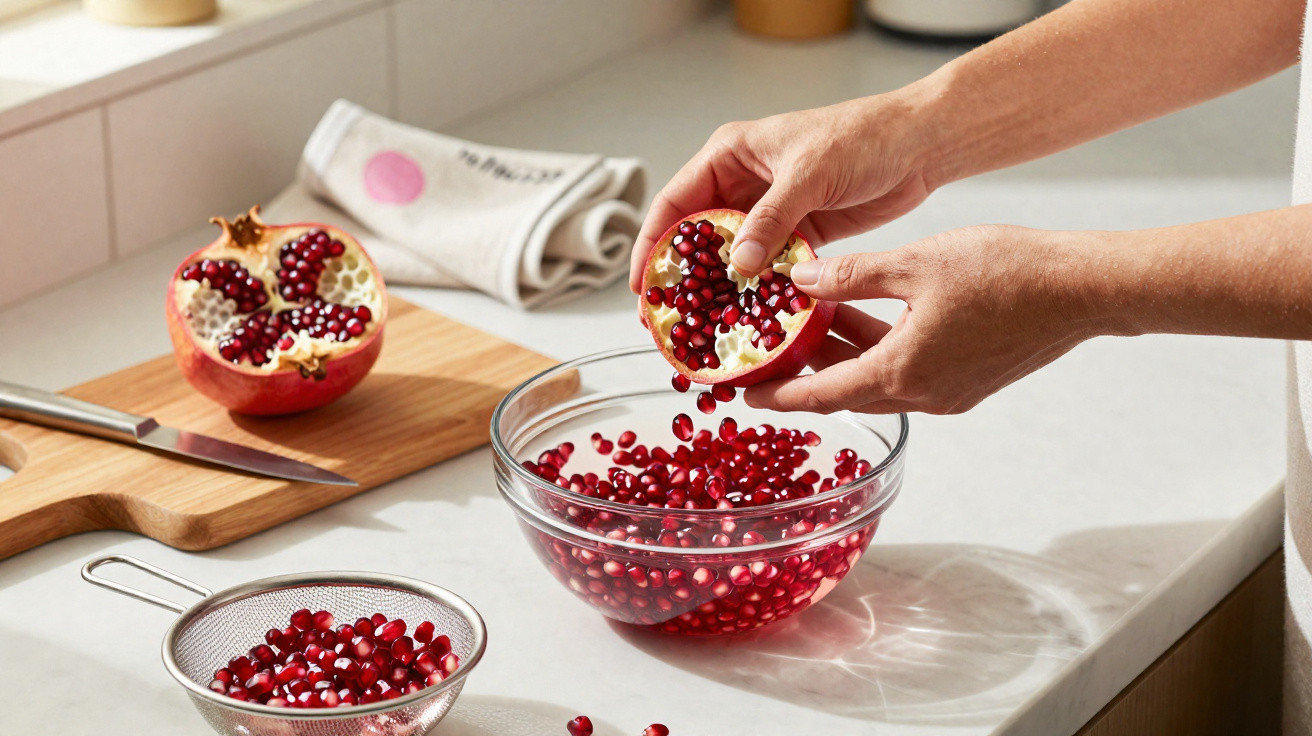
Anyone who has ever scrubbed down a kitchen after breaking into a pomegranate tends to think twice before buying one again. And yet this cold‑season favourite is packed with flavour and goodness. With the right technique, you can get the seeds out quickly and neatly - staying in control rather than wiping red splashes off walls and your shirt.
Why the pomegranate is worth the effort
Pomegranates stand out on the fruit shelf: the skin looks fairly plain, but inside sit hundreds of ruby-red seeds. They taste sweet-sharp, give a light crunch between the teeth, and add a bright tang to both savoury and sweet dishes.
Those seeds offer more than just taste. They provide plenty of fibre, beneficial plant compounds and antioxidants. Studies suggest that compounds in pomegranate may have a positive effect on fat metabolism and could help reduce levels of “bad” LDL cholesterol. That’s why many people reach for this classic fruit especially during the colder months.
"Pomegranate seeds are a small health boost - the real issue isn’t the benefit, but the route to getting them."
And that route puts many people off: if you cut into a pomegranate at random, juice can spray across the kitchen, the seeds get crushed, and the firm white membranes between them are maddening.
The clean method: deseeding a pomegranate in water
The simple answer is a controlled cut paired with a large bowl of cold water. Here’s how to do it.
These tools should be within reach
- Plastic chopping board (easier to clean than wood)
- Sharp, pointed knife
- Large bowl of cold water
- Fine sieve or food mill
- Lidded container for the finished seeds
With this basic kit, you keep the mess under control and the whole job feels far less stressful.
Step 1: Cut off the crown - don’t slice through
Put the pomegranate on the board and remove only the top, pointed “cap”. Keep the cut shallow, a bit like preparing a pumpkin: you take off the tough tip without stabbing deep into the fruit. The aim is to avoid damaging any seeds under the skin.
Once the top is open, you’ll see the pale membranes that divide the inside into sections. Those lines are your guide for the next step.
Step 2: Score into segments
Using the knife, follow the natural ridges of the skin from top to bottom. Make six evenly spaced cuts all the way around. The blade should only score the skin, not sink into the flesh.
Now hold the fruit with both hands at the sides and gently pull it apart into segments along the cuts. This is easier if you press your thumbs down into the cut lines from the top.
Step 3: Work over the bowl
Hold the segments directly above the prepared bowl so any loose seeds drop in one place rather than pinging around the kitchen. If you haven’t already, fill the bowl with cold water.
"Working over water is the game changer: the juice ends up in the bowl, not on your T-shirt or the tiled splashback."
Step 4: Remove the seeds under water
This is the key move: submerge one segment fully in the water. With your fingers, loosen the seeds from their chambers while keeping the piece under the surface. The seeds sink to the bottom of the bowl; the pale membranes and small bits of skin float.
Repeat segment by segment until all the seeds are in the water. Any red splashes stay contained, your hands stain less, and the kitchen stays clean.
Step 5: Separate, drain, store
Scoop the white membrane off the surface, or carefully pour the bowl through a sieve. The seeds will remain in the sieve, and you can briefly rinse away small bits of pulp with clean water.
Let the seeds drain for a few minutes, then transfer them to an airtight container. In the fridge, they usually stay fresh and crisp for up to five days.
What fresh pomegranate seeds are good for
Once you’ve deseeded a pomegranate properly, it’s easy to lift all sorts of dishes in both looks and flavour. Common ways to use them include:
- Salads: add to leafy salad with feta, walnuts and rocket.
- Breakfast: scatter over yoghurt, porridge or muesli.
- Savoury dishes: use as a topping for roasted vegetables, couscous or lentil dishes.
- Desserts: serve with panna cotta, chocolate cake or ice cream.
- Drinks: add to sparkling water, homemade lemonades or cocktails.
Because they’re crisp with a gentle acidity, the seeds balance rich or very sweet foods. Many chefs also like them as a vivid colour contrast on plates that would otherwise look a bit pale.
Health aspects: what’s inside the seeds
Pomegranate seeds consist of juicy pulp around a small, crunchy inner seed. Together they provide nutrients that can support the body.
| Nutrient | Effect |
|---|---|
| Fibre | supports digestion and helps you feel full for longer |
| Antioxidants | neutralise free radicals |
| Vitamin C | supports the immune system and connective tissue |
| Polyphenols | a focus of studies on cardiovascular disease |
If you eat pomegranate seeds more often, you naturally add more plant variety to everyday meals. Especially in the darker months, they bring colour to the plate and a change from the usual apple-and-banana routine.
Common mistakes when opening - and how to avoid them
A lot of the trouble comes from two typical approaches:
- Cutting the pomegranate completely in half like an orange.
- Trying to force the seeds out by squeezing or hitting the fruit too hard.
When you slice right through, many seeds burst inside, juice leaks out, and everything nearby gets stained. When people “knock” the back with a spoon over a bowl, seeds and juice often fly unpredictably, and the white pith doesn’t always release cleanly.
The water method avoids both issues: you work more calmly and precisely, and once you’ve done it once or twice, you’ll get to the seeds faster.
Practical tips on storage, varieties and stains
A whole pomegranate often keeps for several weeks in the fridge, as long as the skin stays intact. Ripe fruits feel heavy for their size and sound slightly hollow when tapped. Small cracks in the skin can indicate the fruit is fully ripe - in that case, it’s best to use it soon.
If you’re worried about juice marks: pomegranate juice stains strongly. Rinse clothing immediately with cold water and don’t rub. On pale chopping boards, washing-up liquid and a squeeze of lemon juice can help reduce discolouration.
As well as eating it raw, pomegranate is also used in concentrated form - for example as a syrup for dressings or in dishes with Middle Eastern influences. However, the way it’s processed can change the sugar content significantly, so people who are health-conscious often choose fresh seeds for everyday use.
Once you’ve practised deseeding in water a few times, you’ll pick up the fruit in the supermarket far more confidently. Instead of dreading red splashes, you’re left with just one question: is today’s pomegranate going into a salad, over breakfast, or as a bold accent on top of dinner?





Comments
No comments yet. Be the first to comment!
Leave a Comment