
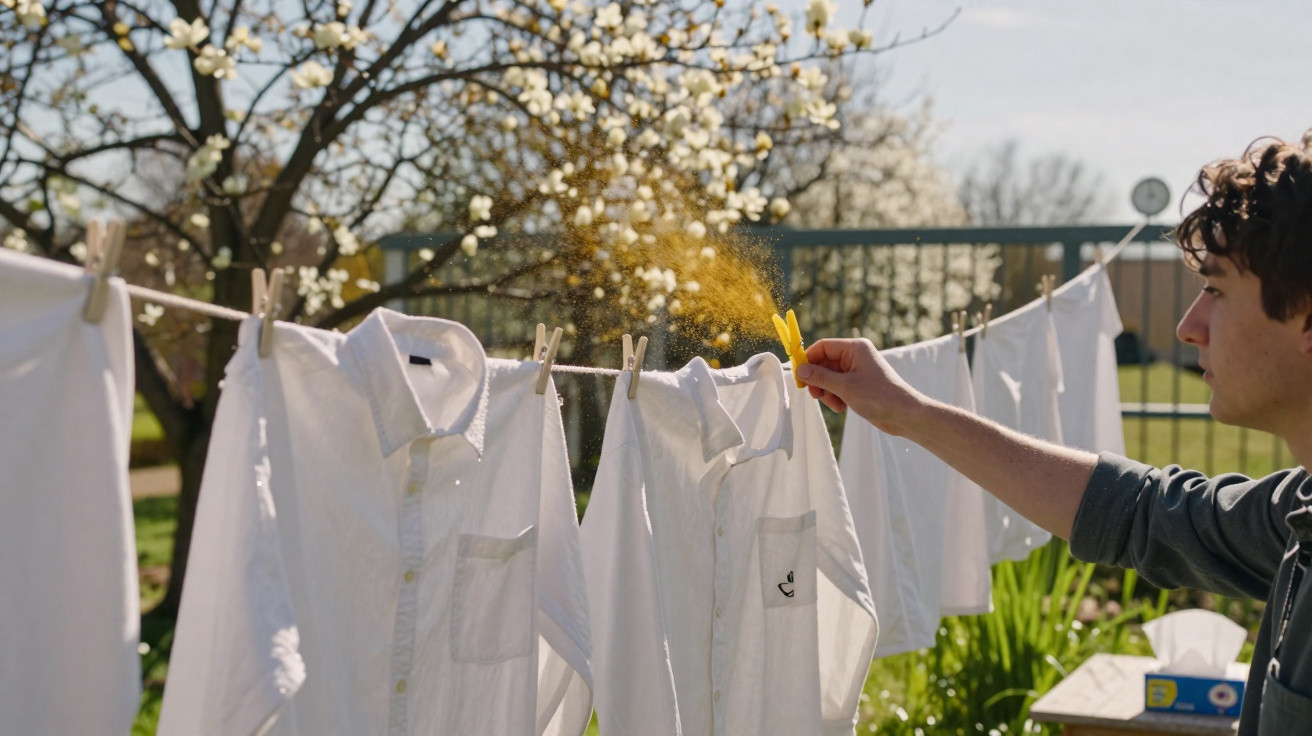
Many people adore the scent of laundry that’s been dried outdoors in the garden or on the balcony. Yet allergists issue a particular warning for March and April: hang washing outside at the wrong time of day and the clothes horse can turn into a pollen magnet-creating a real burden for the millions living with hay fever or asthma.
Bright spring days, risky air: what invisibly collects on your laundry
As soon as the first mild days arrive, we fling open the windows, move the clothes rack outside and enjoy that fresh-air feeling indoors. At the very same time, however, trees begin their peak season, releasing large amounts of pollen into the air-often well before many people start thinking about “hay fever season”.
At this point in the year, these are especially active:
- Conifers such as yew and cypress
- Alder and other early-flowering deciduous trees
- A little later, the highly allergenic birch
The result is that many areas already register a high pollen index, even when daytime temperatures are “only” around 16 to 18 °C. Roughly one in three people in Europe is sensitive to this-ranging from classic allergic rhinitis (hay fever) right through to asthma-type symptoms.
"Allergists advise in spring: it’s not the question ‘Are there pollens?’, but ‘How much of it am I bringing into the home?’ that matters."
Times to avoid drying laundry outdoors
According to specialist bodies and regional pollen warning services, airborne pollen levels rise noticeably from late morning onwards. The most problematic spell is typically from the late morning into the early afternoon.
For people who are sensitive, March-and often April as well-generally means:
- 10:00 to 15:00: a no-go period for drying washing outside
- 10:00 to 18:00: keep windows shut as much as possible when pollen levels are high
During these hours, the greatest quantity of pollen is circulating in the air, particularly on dry, sunny or windy days. If you put damp textiles outside in this window, you are effectively providing a landing strip for allergens.
Why damp fabrics attract pollen so strongly
Wet or slightly damp materials act like a filter. Their fibres create a large surface area where particles can easily cling. This includes:
- Pollen from trees, grasses and herbs
- Fine dust particles
- Components of mould spores, which can also intensify allergies
When bedding, towels or T-shirts are brought back into the bedroom or onto the sofa, that mixture is carried straight into living spaces. The textiles then gradually release those particles back into the indoor air-sometimes for many hours.
"A bed sheet that dries outside at lunchtime can act like a pollen diffuser at night-right where the airways are meant to recover."
Allergists report that sufferers often notice worse symptoms at night or early in the morning: a stubborn cough, itchy eyes, a blocked nose, or wheezing. Quite often, the cause is simply bedding that has been loaded with pollen.
How to adjust your spring laundry routine
There is no legal ban on drying washing outdoors. For allergy sufferers, people with asthma, children and older adults with sensitive airways, however, the advice is widely regarded as a clear health precaution. A few straightforward changes can make a big difference.
The best times to put your clothes airer outside
If you don’t want to give up outdoor drying entirely, timing is key:
- Early morning before 09:00: there is usually far less pollen in the air.
- Evening, once the pollen index drops: depending on the area, from about 18:00 or 19:00 can be a sensible option.
It also helps to check local pollen forecasts. Many weather services and health insurers publish daily updates-if you react strongly, it’s worth planning wash days around those figures.
How to cut down pollen on your clothes
A few quick steps can noticeably reduce the allergens you bring indoors:
- Only dry outside on days with little wind.
- If possible, use a sheltered balcony or loggia rather than an exposed garden.
- Shake laundry out vigorously outdoors before taking it inside.
- Dry items that sit directly against the skin (bedding, pyjamas, towels) indoors where possible.
If symptoms are severe, consider giving sensitive items a short spell in a tumble dryer as well. The warm airflow can dislodge some pollen from the fibres and remove it via the filter.
Drying indoors: healthier, but with a few rules
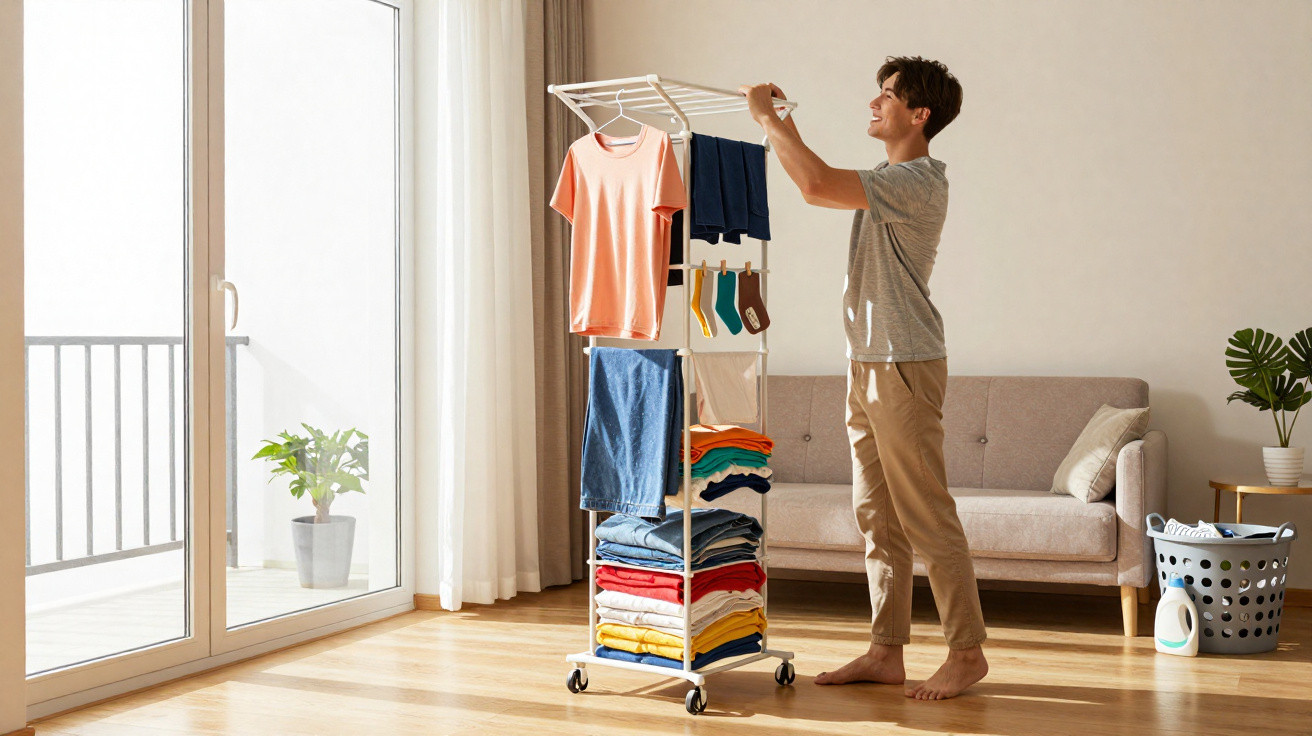
Because more experts discourage outdoor drying during peak season, many households move their clothes rack indoors. That helps keep pollen off fabrics, but it raises another issue: humidity.
To reduce the risk of mould, it’s worth keeping these points in mind:
- Dry only in well-ventilated rooms, ideally with regular, brief bursts of airing.
- Don’t place a clothes airer in the bedroom of anyone with allergies or asthma.
- If you do lots of washing in a small flat, consider using a dehumidifier.
- Keep furniture away from damp laundry so air can circulate.
| Location / method | Advantage | Springtime risk |
|---|---|---|
| Outdoors, midday | Fast drying, fresh air | High pollen exposure, problematic for allergy sufferers |
| Outdoors, early morning / evening | Some fresh air, less pollen | Still can be affected depending on the weather |
| Indoors, well ventilated | Less pollen on laundry | Higher humidity, mould risk if ventilation is poor |
| Electric tumble dryer | Hardly any pollen, quick drying | Energy use, sometimes higher costs |
How pollen builds up in everyday life-and what else can help
Laundry is only one of the many ways pollen finds its way indoors. If you’re already dealing with strong symptoms, you’ll often benefit from tackling several factors at once.
- Leave coats and shoes in the hallway, not in the bedroom.
- Wash hair in the evening so fewer pollens end up on the pillow.
- Vacuum upholstered furniture and carpets more often, ideally using a HEPA filter.
- In peak season, open windows briefly and purposefully rather than leaving them on the latch for hours.
For children with allergies, it can be especially worthwhile to pay close attention to bedding and soft toys. Many parents say that simply avoiding sheets and blankets dried outdoors significantly reduces night-time symptoms.
Why even people without allergies should pay attention
If you’ve never had hay fever, these tips can feel irrelevant. Clinicians, however, are seeing allergic conditions become more common, and symptoms often develop later in life. A persistently high allergen load indoors can further irritate the mucous membranes and aggravate other problems-from recurring sinus infections to chronic cough.
So, being a little more careful in spring about when and where you ventilate and dry your washing doesn’t just help those already affected. It lowers the overall irritant burden in the home and makes indoor spaces safer for sensitive airways-particularly on those days when everything outside is blooming and fragrant, yet the air contains more than you can see at first glance.



Comments
No comments yet. Be the first to comment!
Leave a Comment