
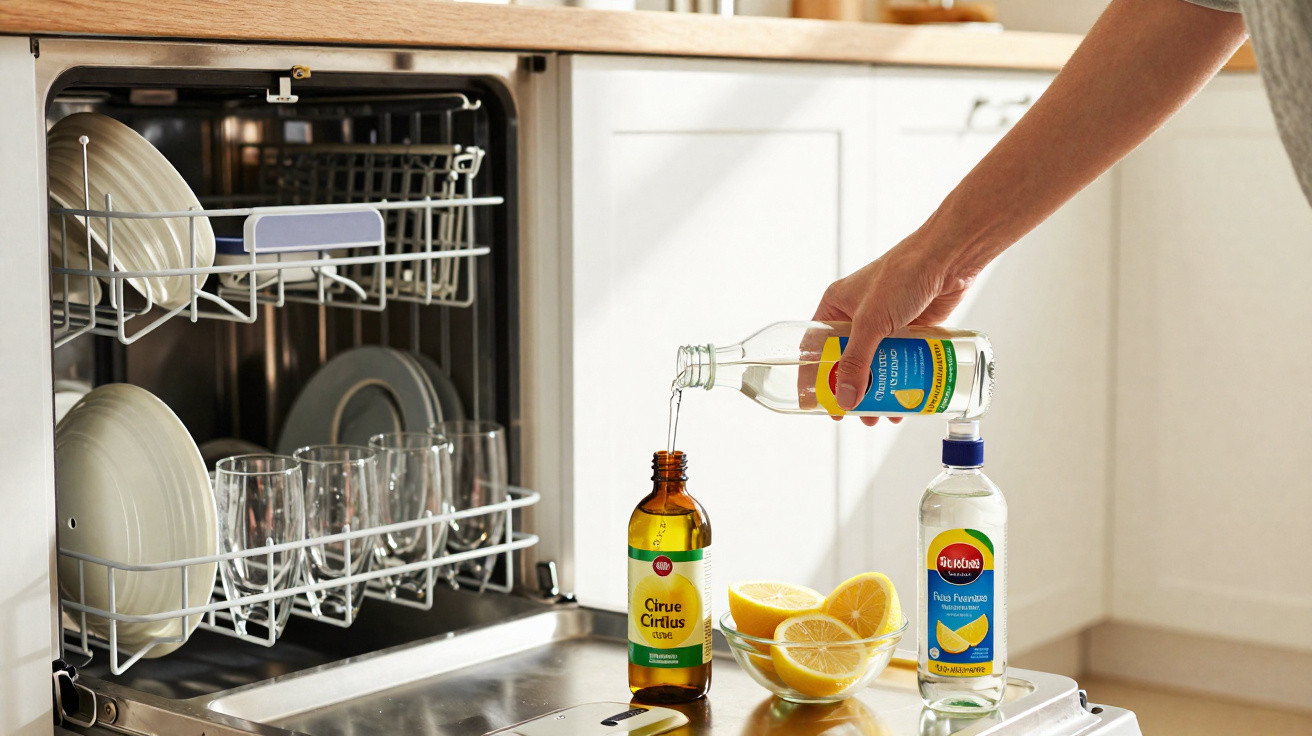
Opening the dishwasher door and finding cloudy streaks and water spots instead of sparkling glasses can feel like a rip-off. Detergent tablets, dishwasher salt and rinse aid now cost a fair bit, after all. Yet that glossy finish is rarely about high-tech wizardry - it usually comes down to straightforward, predictable chemistry you can replicate yourself in minutes.
What expensive supermarket rinse aid actually contains
Those bright bottles on the supermarket shelf look like premium lab kit, with claims such as “shine formula” and “professional drying” splashed across the label. A glance at the ingredients, however, quickly demystifies it.
"At its core, traditional rinse aid is mainly water, a little alcohol, a few additives and a generous helping of marketing."
Typical ingredients include:
- Water as the main component
- Surfactants to help water sheet off rather than bead
- Alcohol to speed up drying
- Acids to reduce limescale build-up
- Colourants and fragrances for appearance and scent
So when you buy a branded bottle, you are largely paying for packaging and advertising. The per-litre price is often between €2 and €4, while the actual raw materials cost only a few cents. At the same time, there is a lingering concern: many products can leave an invisible film on glasses and plates - which everyone then ends up ingesting, from children to people with allergies.
Simple immediate substitute: replace rinse aid with everyday vinegar
The quickest way out of the cost trap is something most households already have: plain, clear vinegar.
Household vinegar at roughly 5–8% acidity neutralises limescale in the wash water much like standard rinse aid. It is that limescale that causes the familiar white marks on glasses and the dull look on cutlery.
"Simply pour vinegar into the rinse aid compartment - and most limescale marks on glasses disappear on their own."
How to use vinegar properly
- Use only clear, colourless vinegar - not balsamic or any dark vinegar.
- Pour the vinegar neat into the rinse aid compartment; do not dilute it.
- Start with a medium dosage setting and increase if needed.
Some people worry the whole kitchen will smell of vinegar afterwards. In practice, that fear is unfounded: the volatile components evaporate with the heat during the cycle. When you open the machine, you may notice a brief whiff that fades within seconds - the dishes themselves smell neutral.
The pro option: homemade rinse aid with citric acid
If you want something more targeted and as odour-free as possible, you can mix your own rinse aid using citric acid. It sounds like a science experiment, but it takes only a few minutes at the kitchen counter.
Citric acid acts as a natural descaler. It binds the minerals in water before they can settle on glasses, stainless steel or plastics. Combined with real lemon juice, it produces a rinse aid that can hold its own against branded products - at a cost of under 30 cents per litre.
Ingredients for homemade rinse aid
- 200 ml lukewarm water (ideally demineralised)
- 50 g citric acid powder
- Juice of one lemon, freshly squeezed and carefully filtered
- A few drops of lemon essential oil (optional)
Step by step to make your own mixture
- Dissolve the citric acid completely in the lukewarm water, stirring until no crystals remain.
- Strain the lemon juice through a very fine sieve or a coffee filter so no pulp or fibres are left.
- Add the filtered juice to the citric-acid solution and mix thoroughly.
- If you like, add a few drops of lemon essential oil.
- Decant into a clean glass bottle and store in a dark place.
"Citric acid provides powerful descaling, lemon juice supports grease removal - the result is shiny glasses and dry dishes at a mini price."
Use the finished liquid in the rinse aid compartment as normal. In most cases, you can leave the dishwasher’s setting as it is. If you live in an area with extremely hard tap water, you can slightly increase the citric acid dose.
How the DIY rinse aid performs in everyday use
After a few cycles, it becomes clear how consistent the homemade solution really is. Reports from households that have switched to citric-acid blends tend to be quite clear-cut.
- Glasses: no white rings, with a clear, reflective finish.
- Cutlery: fewer limescale specks and less tarnishing, especially on stainless steel.
- Plastic containers: noticeably drier, with less pooled water in recesses.
- Inside the machine: less limescale edging around the filter and spray arms.
Beyond the visible results, cost matters. A litre of your own mixture costs only a small fraction of a branded product. You also cut down on plastic waste, because a glass bottle can be refilled again and again.
Why citric acid and vinegar work so well
The underlying issue is water hardness. Depending on the region, tap water contains varying amounts of calcium and magnesium ions. When the water dries on hot surfaces, those minerals are left behind as a white haze.
Acids such as vinegar or citric acid bind these ions into soluble compounds that rinse away with the water. Surfactants then help the water run off evenly, rather than clinging as individual droplets to the glass.
Citric acid has a particular advantage: it is odour-neutral, feels noticeably milder, and is therefore well suited to households that react to strong fragrances. In powder form it is easy to dose accurately and it stores well.
What households should watch when switching over
If you are moving away from conventional rinse aid, it helps to keep a few practical points in mind:
- Run one or two cycles with empty loads to flush out residue from the previous product.
- Check and, if necessary, clean the filter and spray arms so no citrus particles or limescale fragments get stuck.
- Adjust the rinse aid dosage on the machine gradually until the result is right.
- With very hard water, consider descaling the dishwasher regularly with citric acid as well.
For households with pets and young children, being transparent about cleaning products brings another benefit: parents know exactly what substances come into contact with dishes, bowls and bottles.
What else you can achieve with homemade cleaners
Once you start using vinegar and citric acid, you quickly notice that many traditional cleaning products rely on the same basic principles. With the same ingredients, you can also, for example:
- make a descaler for kettles and coffee machines,
- remove limescale from bathroom taps and shower heads,
- loosen build-up in washing machines by running an empty cycle.
That turns a small stock of basics into a practical household toolkit. If you are sensitive to added fragrances or want to reduce plastic waste, you gain twice over: more control over ingredients and fewer single-use bottles under the sink.
The dishwasher often delivers the first obvious “aha” moment: after just a few washes, gleaming glasses and drier dishes show that you do not need an expensive specialist rinse aid to get a polished look on the table.



Comments
No comments yet. Be the first to comment!
Leave a Comment