
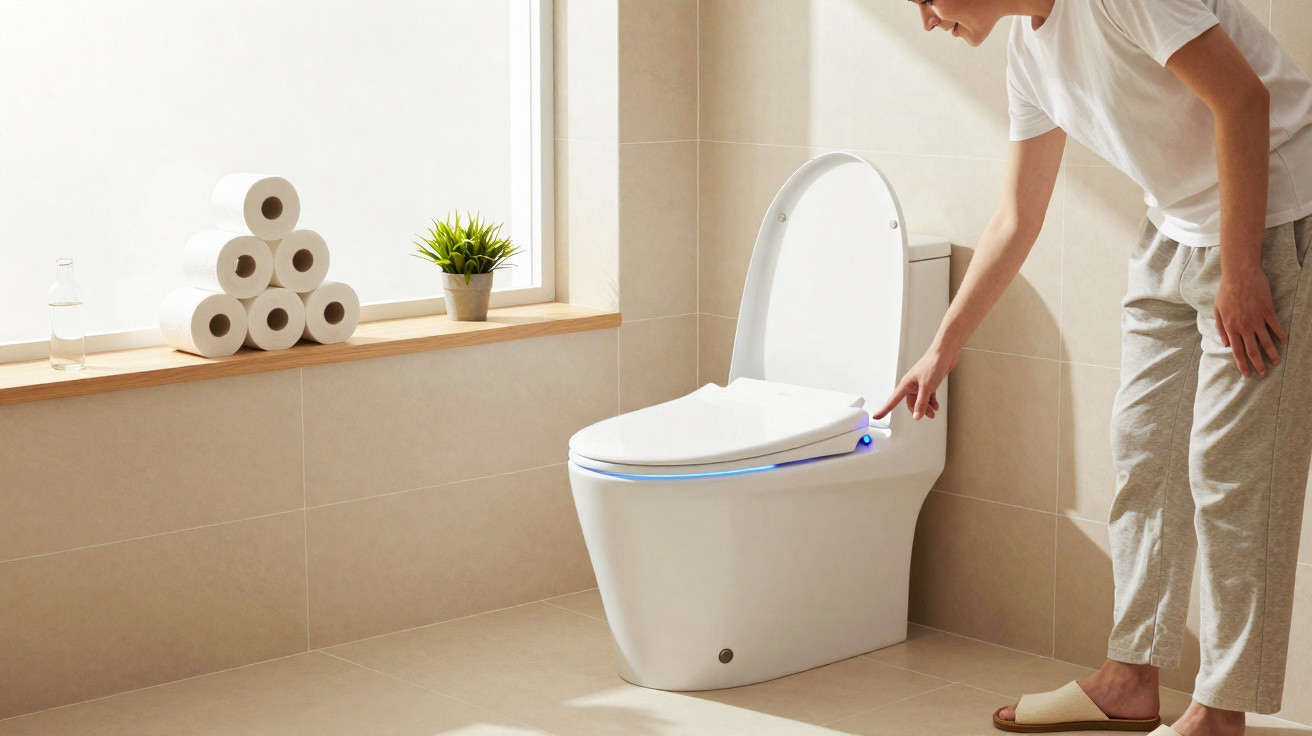
For a long time they were seen as a bit exotic, but Bidets and modern Washlet attachments are now finding their way into bathrooms across Germany. Instead of rubbing with dry paper, the latest systems use a targeted jet of water. That shift affects more than everyday cleanliness - it also has implications for health, the environment and household spending.
Why water cleans the intimate area more thoroughly than paper
If we are honest, dry cleaning with toilet paper has obvious limits. Bits of paper left behind, repeated wiping, irritated skin - for many people, that is simply part of life after using the loo.
"Water rinses dirt away; paper tends to smear it - that is the crucial difference."
Doctors have been pointing out for years that dry rubbing puts strain on the delicate skin around the anus. This is especially true for people with:
- haemorrhoids
- anal fissures
- inflamed or very dry skin
- fresh scars after surgery
For them, toilet paper often feels painful. The rough surface can intensify irritation rather than relieve it.
A gentle water jet takes that pressure out of the equation. Cleaning happens without friction, without scratching, and without tiny paper fibres sticking to the skin. Many people who switch say that itching and burning - which they had tolerated for years - disappeared within a few days of using a bidet.
Keep hands away from the “problem area” - quite literally
Another aspect is straightforward hygiene: with the traditional approach, germs inevitably end up on your hands. Even thorough handwashing lowers the risk, but it does not eliminate it completely.
Water-jet systems are usually touch-free in use. A dial, lever or button press is enough and everything else runs automatically. Your hands do not need to go anywhere near the soiled area in the first place. That reduces the likelihood of spreading bacteria or viruses around the home via light switches, door handles or smartphones.
Modern bidets: technology that genuinely makes daily life easier
The days when a bidet meant installing a separate ceramic basin in the bathroom are largely over. Today, add-on units and so-called Washlet seats do the job directly on the toilet pan. They often come with a surprising range of functions designed to make switching over easier.
"Most users get used to the new technology within a few days - and then they do not want to go back."
Typical features of modern water-jet toilets
- Adjustable water pressure: from very gentle to powerful, depending on sensitivity.
- Temperature control: lukewarm water avoids a cold shock, especially in winter.
- Warm-air drying: can replace toilet paper almost entirely.
- Self-cleaning nozzles: automatically rinse before and after use.
- Energy-saving modes: keep electricity use and running costs low.
These options may sound like luxury, but they serve a practical aim: combining cleaning, comfort and hygiene as effectively as possible - whether for children, adults or older people with limited mobility.
Who benefits most from switching
Some groups notice the advantages particularly clearly:
- Older people: less twisting, bending and wiping - kinder on backs and joints.
- People with disabilities: greater independence in the bathroom, less reliance on assistance.
- Families with young children: gentler cleaning, and no battle with metres of paper.
- People with sensitive skin or chronic issues: fewer irritations and flare-ups.
The underestimated environmental burden of toilet paper
Toilet paper seems harmless: it is in every bathroom and adverts associate it with “softness”. The supply chain behind it is far less wholesome.
| Aspect | Toilet paper | Bidet/Washlet |
|---|---|---|
| Raw material | Wood, often virgin fibre | Water, a small amount of electricity |
| Trees used | Millions per year worldwide | none |
| Water needed for manufacture | very high per roll | low per use |
| Chemical treatment | bleaching, additives | not necessary |
| Packaging & transport | plastic wrap, lorries, shipping containers | one-off delivery |
A great deal of water is already used in the factory for every roll. On top of that come chemicals for bleaching and softening. These substances end up in waterways and the air. Even recycled paper only partly improves things, because chemical processing still takes place and fibres can only be recycled a limited number of times.
By contrast, a water-jet system generally uses far less water during use than paper manufacturing consumes in the background. Anyone who cuts paper use long-term reduces not only waste, but also indirectly their water and energy footprint.
Install once, enjoy years of peace - financially too
Toilet paper feels cheap because each pack costs only a few pounds. Over a year, however, the total can add up quickly, especially for families.
"Many households recoup the purchase cost of a bidet system within a few months to a few years through the toilet paper they no longer buy."
Simple, non-electric attachments are now relatively affordable. They fit between the toilet seat and the ceramic, and they use the existing water supply. For most models, a T-piece, a little PTFE tape and a spanner are enough. Anyone who has ever replaced a tap can usually manage it without difficulty.
Comfort models with a heated seat, remote control and warm-air dryer also need a nearby power socket. Many bathrooms already offer this, for example for a hairdryer or shaver. If you are refurbishing, you can plan an extra socket by the toilet from the outset.
The biggest hurdle is in your head
The most interesting part is this: the trend is held back less by technology than by habit. Dry paper feels “normal” because it is what most of us learn from childhood. A jet of water in an intimate area can feel unfamiliar at first - sometimes even a bit odd.
Even so, users repeatedly describe the same pattern: within a few days, the new way of cleaning feels routine. After one to two weeks, the idea of going back to using only paper can seem rather unpleasant. Above all, the fresher feeling afterwards noticeably changes how people experience the whole process.
What to consider in practice when switching
If you are planning the change, keep a few practical points in mind so the transition goes smoothly:
- Check water pressure: in older properties it can fluctuate, so a model with adjustable pressure is sensible.
- Warm or cold water: cold-water units are simpler to fit; warm-water versions add comfort in winter.
- Allow for some paper at first: plan a little for drying until you get used to warm air or microfibre cloths.
- Get everyone on board: show all users how it works so nobody accidentally sprays water across the bathroom.
If you are unsure, many people start with an inexpensive manual attachment and later upgrade to a comfort model. That lowers the barrier to trying something new in the most private room in the home.
Health and social effects that are often overlooked
A cleaner intimate area can reduce the risk of recurring inflammation, fungal infections and unpleasant odours. This becomes especially relevant for people who need the toilet frequently - for example due to IBS, diarrhoea or certain medicines - where it can make a noticeable difference day to day.
In families, shared houses or multi-occupancy homes, a water-jet system may also ease friction over huge amounts of paper, blocked toilets or overflowing bins. Using less paper puts less strain on plumbing and lowers the risk of pipe blockages.
Over time, the trend may follow a similar path to dishwashers or washing machines: viewed with scepticism at first, then appreciated, and eventually hard to imagine living without. Using the toilet is one of life’s most consistent routines - and it is precisely here that an upgrade can combine health, environmental considerations and comfort in a single change.
Comments
No comments yet. Be the first to comment!
Leave a Comment