
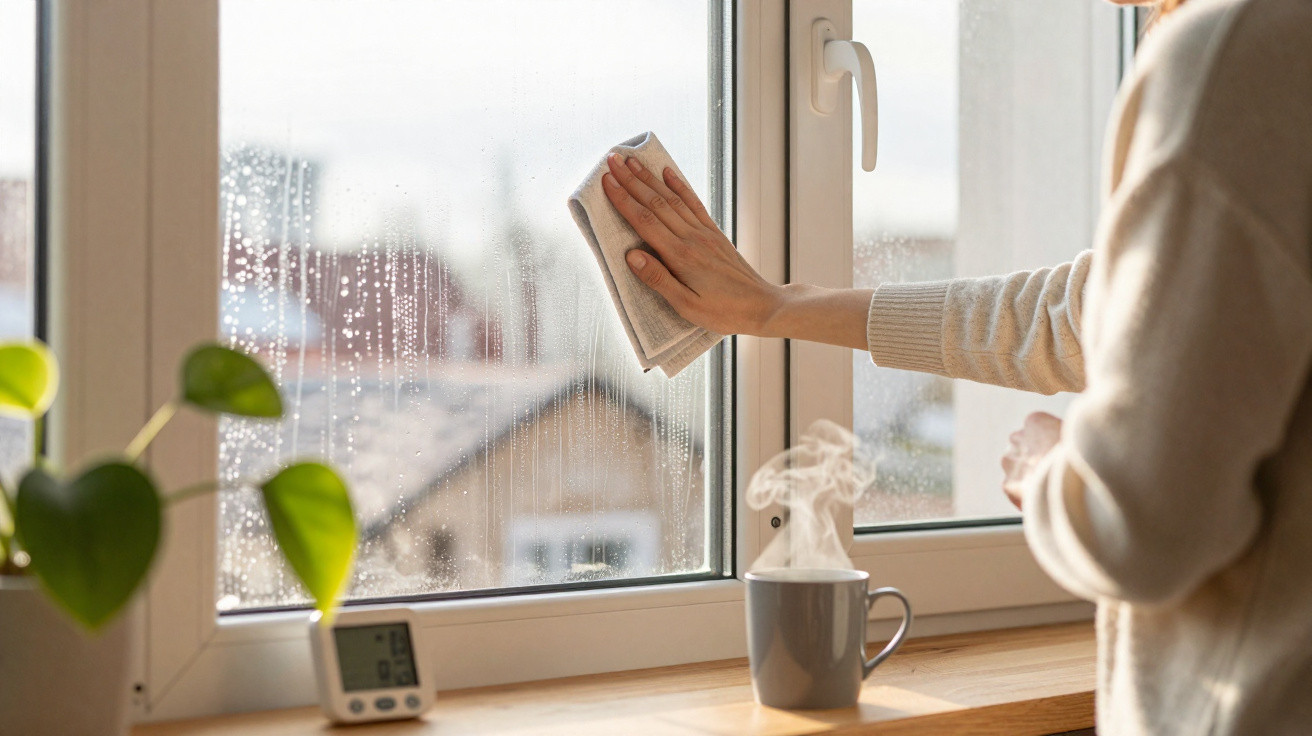
In many homes-particularly on colder mornings-it is common to find the window glass damp on the inside. What is often dismissed as simply “weather damp” is, in fact, a useful indicator of how the property manages heat and airflow. For engineers, architects, and other construction professionals, it acts as a clear visual warning sign.
Why does the window glass look wet inside in the morning?
When the glass appears fogged up or dotted with droplets on the room side, it means the indoor air is holding a lot of water vapour and has met a colder surface. As that air touches the pane-which is cooled by the outdoor temperature-its temperature drops below the dew point, and the vapour turns into tiny beads of water.
In practice, this points to inadequate ventilation: moist indoor air is not being replaced effectively with drier air. During cold spells, the habit of keeping windows shut for long periods tends to make the situation worse, especially in bedrooms and bathrooms.
How does condensation act as a technical warning sign?
When assessing a property, repeated condensation on windows is treated as a symptom of an imbalance between indoor temperature, humidity, and ventilation. Spotting it early helps anticipate problems such as thermal discomfort, staining on walls, mould growth, and gradual material degradation.
To pinpoint what is driving the issue, professionals typically review everyday use and key features of the space, including:
- Whether the room stays closed for long stretches.
- Whether there are multiple indoor moisture sources, such as hot showers and cooking without extraction.
- Whether there are trickle vents, top-hung openings, louvres, or other vents in sufficient quantity.
- Whether the window has single glazing or any form of thermal treatment.
How can a ventilation routine reduce indoor humidity?
A straightforward and effective step is to build a routine of opening windows and internal doors, even when it is cold outside. This refreshes the air, lowers the concentration of water vapour, and reduces the likelihood of waking up to window glass that is wet inside.
Alongside that, small daily changes-such as airing the room more after a hot shower, using cooker hoods or extract fans in the kitchen, and avoiding drying clothes in fully enclosed areas-can create a noticeable improvement within just a few mornings.
How can you spot signs of poor ventilation at home?
Wet window glass on the inside is only one sign that air is not moving properly. A constant feeling of stale, heavy air, a lingering damp smell, and cool surfaces that are repeatedly misted over all suggest the home needs better natural or mechanical air exchange.
By paying attention to these indicators and linking them to condensation on the windows, it becomes possible to adjust day-to-day habits, plan design upgrades in future refurbishments, and-when appropriate-seek technical guidance. What initially seems like a minor visual nuisance becomes a practical clue for understanding indoor air quality and keeping the home healthier and more comfortable throughout the year.




Comments
No comments yet. Be the first to comment!
Leave a Comment