
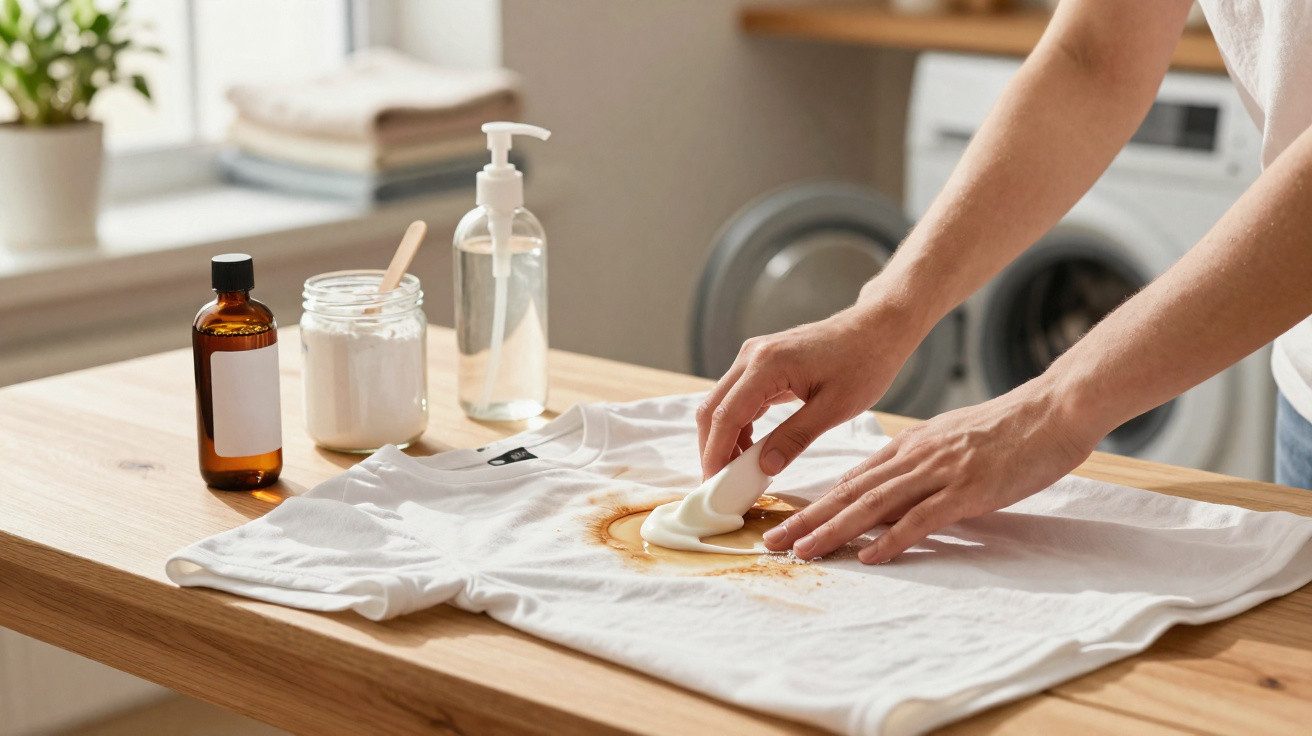
A hydrogen peroxide, bicarbonate of soda and neutral detergent paste is mainly used to tackle yellowing and concentrated stains on white or pale garments. Hydrogen peroxide helps oxidise pigments, bicarbonate provides gentle abrasion, and the neutral detergent helps lift grease from the fibres. Even so, results vary depending on the fabric, what caused the stain and how long it has been there.
What does each ingredient do when cleaning fabric?
Low-strength hydrogen peroxide acts as a non-chlorine whitener and can lighten certain organic residues. Bicarbonate of soda is a mildly alkaline powder that helps loosen dirt and cut down odours, while neutral detergent contains agents that surround oily grime so it can be removed more easily during rinsing.
Because these actions work together, the mixture can be more effective than using each product on its own. However, the paste will not remove every old stain-especially if the item has been through a tumble dryer or ironed repeatedly, as heat can set some residue into the fibres.
How do you prepare and apply the paste to stains?
The most commonly shared ratio uses two tablespoons of 3% hydrogen peroxide, one tablespoon of bicarbonate of soda and one tablespoon of neutral detergent. Mix only right before use, creating a cream that stays on the stained area without running.
- Check the care instructions on the garment label first;
- Test on a seam or an inside section of the item;
- Apply a thin layer directly over the stain;
- Spread gently using a soft-bristled brush;
- Leave it for about 15 to 20 minutes;
- Rinse thoroughly and wash the garment as usual.
Which clothes is the combination most often used on?
This stain-removing paste is most commonly used on hard-wearing white fabrics such as cotton and some cotton–polyester blends. It is often applied to T-shirts with yellowing in the underarm area, grubby collars, towels, bed linen, socks, light-coloured uniforms and tea towels with greasy residue.
On coloured clothing, peroxide can affect the dye and leave a patch that is lighter than the rest of the garment. Delicate materials such as wool and silk-as well as leather, suede, embroidery, prints and glued-on embellishments-should not be treated with this mixture unless you have specific washing guidance.
What precautions help prevent fading and wear?
Using too much product, leaving it on for too long or scrubbing aggressively can weaken fibres or create a pale mark. To reduce that risk, use the mixture only on the stained area and never store it premixed in a sealed container:
- Use only low-strength hydrogen peroxide, usually 10 volume;
- Do not apply it to the whole garment without testing first;
- Do not allow the paste to dry out completely on the fabric;
- Avoid hot water until you are sure the stain has gone;
- Do not combine the recipe with bleach, ammonia or other cleaners;
- Stop using it if you notice fading or a change in texture.
Why has the mixture become so popular for home laundry?
Its popularity is linked to the low cost of the ingredients and the paste-like texture, which makes it easier to target collars, underarms and small stains. It also brings whitening, degreasing and a mild mechanical action together in a single step before a normal wash.
When used to revive stained clothing, the mixture tends to perform best on sturdy white items, applied briefly and rinsed very well. On coloured or delicate fabrics, a hidden patch test remains the key step to prevent a cleaning attempt from turning into colour loss.



Comments
No comments yet. Be the first to comment!
Leave a Comment