
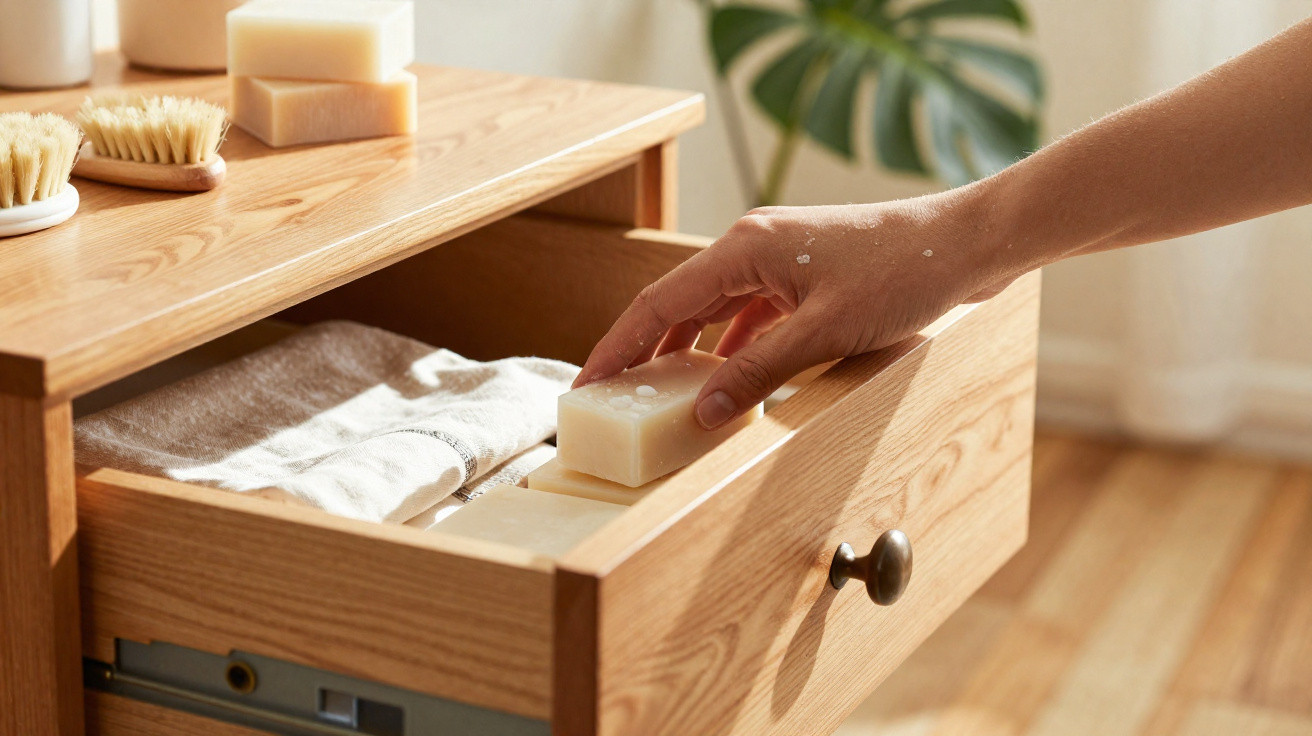
Rubbing bar soap on wooden drawer runners leaves a dry film that helps the drawer glide more smoothly and cuts down on sticking. This trick is most effective on older chests of drawers and wardrobes where the drawer’s wood slides directly against another wooden surface, with no metal runners.
Why do wooden drawers start sticking?
Wood takes in and releases moisture depending on the room conditions. In damp periods, the fibres can swell, increasing the pressure between the drawer, the cabinet sides and the runners. Built-up dust, minor warping and rough patches make the movement harder still.
At its core, this is a friction problem between two solid surfaces touching. The greater the resistance between the parts, the more force you need to open or close the drawer. The most common signs include:
- A drawer that jams at the same point every time;
- A harsh scraping sound when opening;
- Wear marks along the sides or on the runner;
- Worse performance on humid days;
- Having to pull with excessive force.
What does applying dry soap to the runners do?
Soap lays down a solid, slippery layer on the contact points. This coating fills in some of the wood’s tiny imperfections and lowers resistance as the drawer moves, so it slides with less effort without soaking the structure.
- Immediately reduces friction between the parts;
- Makes older drawers easier to open;
- Avoids using liquids on unfinished wood;
- Creates less mess than oily lubricants;
- Can be reapplied when the effect fades.
How to apply bar soap correctly
Remove the drawer fully and locate the areas that slide against the cabinet. Wipe away dust with a dry cloth, then rub a small amount of dry bar soap onto the bottom runners, the side guides and any spots showing friction marks. There’s no need to wet the soap or build up a thick layer.
Put the drawer back and open and close it a few times to spread the soap along the contact surfaces. If it still catches at one specific point, take it out again and check for splinters, loose screws, warped wood or a section that has swollen too much. Soap helps the drawer slide, but it won’t fix structural damage.
Why avoid oils and sprays on unprotected wood?
Liquid lubricants can soak into the fibres, darken the wood and leave a tacky surface that traps dust. For wooden runners, dry soap or a paraffin wax candle usually leaves fewer damp residues. When using this approach, follow these precautions:
- Choose a firm soap with no abrasive particles;
- Do not apply washing-up liquid to the runners;
- Avoid excess product on visible edges;
- Do not use this method on telescopic metal runners;
- Remove old build-up before applying a fresh layer;
- Test first on a small, hidden area.
How to stop drawers sticking again
Proper wood maintenance starts with managing humidity. Don’t place the furniture against walls with damp or leaks, avoid cleaning the runners with a soaking wet cloth, and keep some air circulation in the room. Dust, crumbs and debris should also be removed before they collect in the sliding areas.
This can be part of the routine used to refresh wooden furniture without unnecessarily wearing the surface down. If the drawer is warped, cracked or out of alignment, however, you’ll need to adjust the piece or consult a joiner, because extra layers of soap would only mask the fault temporarily.


Comments
No comments yet. Be the first to comment!
Leave a Comment