
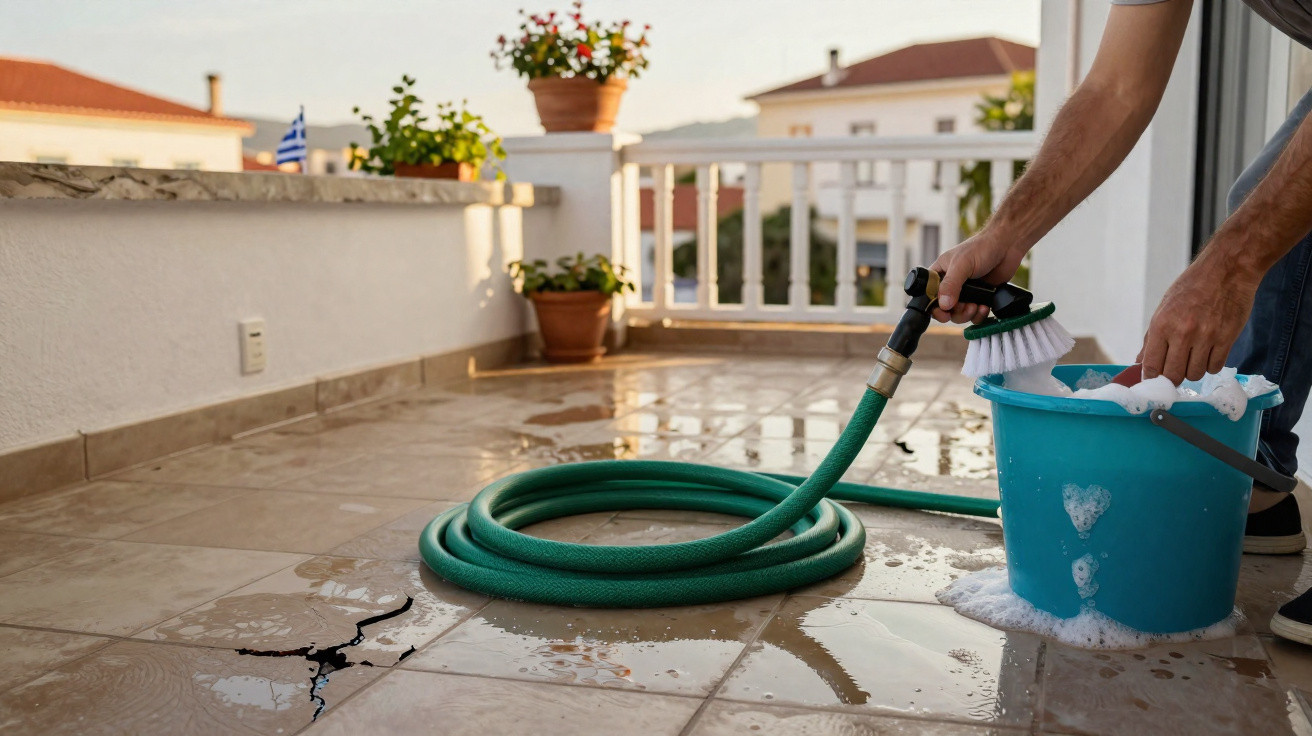
Washing the balcony with a hose can look like the quickest way to shift dust and grime, but the habit may harm finishes that have been heated by the Mediterranean sun. Cold water triggers a sudden temperature swing, while the spray forces moisture into grout lines and tiny cracks, and it typically uses more water than targeted cleaning.
Why can a hose damage a balcony floor?
In the strongest sun, ceramic tiles, stone, mortar and the subfloor soak up heat and expand. If they are suddenly hit with much colder water, they contract at different rates, creating stress-especially in older floors, poorly laid surfaces or areas with worn joints. Ceramic finishes are so affected by these shifts that there is a dedicated test used to assess thermal shock.
- Micro-cracks can appear, or existing ones can widen, after abrupt temperature changes;
- Dried-out grout can lose adhesion and start to crumble;
- Poorly bonded tiles can gradually come loose;
- Water can seep into weak points in the waterproofing;
- A powerful jet can wash dirt into drains and towards lower flats.
Is the issue the water, or the time of day you clean?
Water does not automatically damage a balcony that has been properly prepared for outdoor use. The danger increases when a very hot floor receives a large volume of cold water, particularly around midday or early afternoon. A key precaution commonly followed for Greek balconies is to avoid direct spraying while the surface is under intense sun.
You can still do a damp clean early in the morning or after the floor has cooled, as long as water can drain away and does not reach neighbouring properties. Even then, buckets, cloths and mops give far more control than leaving a hose running continuously.
What signs suggest the finish is already damaged?
Thermal shock seldom produces an obvious issue after a single wash. Problems tend to develop over time, particularly where there are already weaknesses in the installation, waterproofing or movement joints.
- A hollow sound when you gently tap a tile;
- Grout that is cracked, darkened or shedding small fragments;
- Edges of tiles or stone that are slightly raised;
- Damp patches on the ceiling of the property below;
- Water pooling in areas with poor drainage;
- Pieces that have cracked after spells of intense heat.
How can you clean a balcony without using a strong jet?
Start by sweeping or vacuuming up dust, leaves and sand. Then mix a small amount of neutral detergent into a bucket of water and apply it with a cloth, mop or a brush suitable for the surface. Work in small sections, rather than soaking the entire floor.
Remove the suds with a damp cloth or a small amount of water, and guide the liquid towards the drain without leaving puddles. Highly acidic products, abrasive cleaners or concentrated chlorine can stain stone, wear away grout and harm plants. The right approach also depends on the material, because marble, ceramic, porcelain tiles and polished concrete all require different care.
Is there a ban on washing balconies with a hose across Greece?
There is no single nationwide rule that permanently prohibits washing all Greek balconies. The guidance is a mix of protecting floor finishes, maintaining good relations with neighbours and saving water. During droughts, some areas introduce temporary restrictions on unnecessary use of potable water on patios, streets, pavements and vehicles.
For that reason, the safest option is to wait for the surface to cool and carry out waste-free cleaning, controlling how much water you use. This helps prevent water dripping onto people or lower flats, protects floors exposed to heat and reduces consumption in regions that face long, dry summers.

Comments
No comments yet. Be the first to comment!
Leave a Comment