
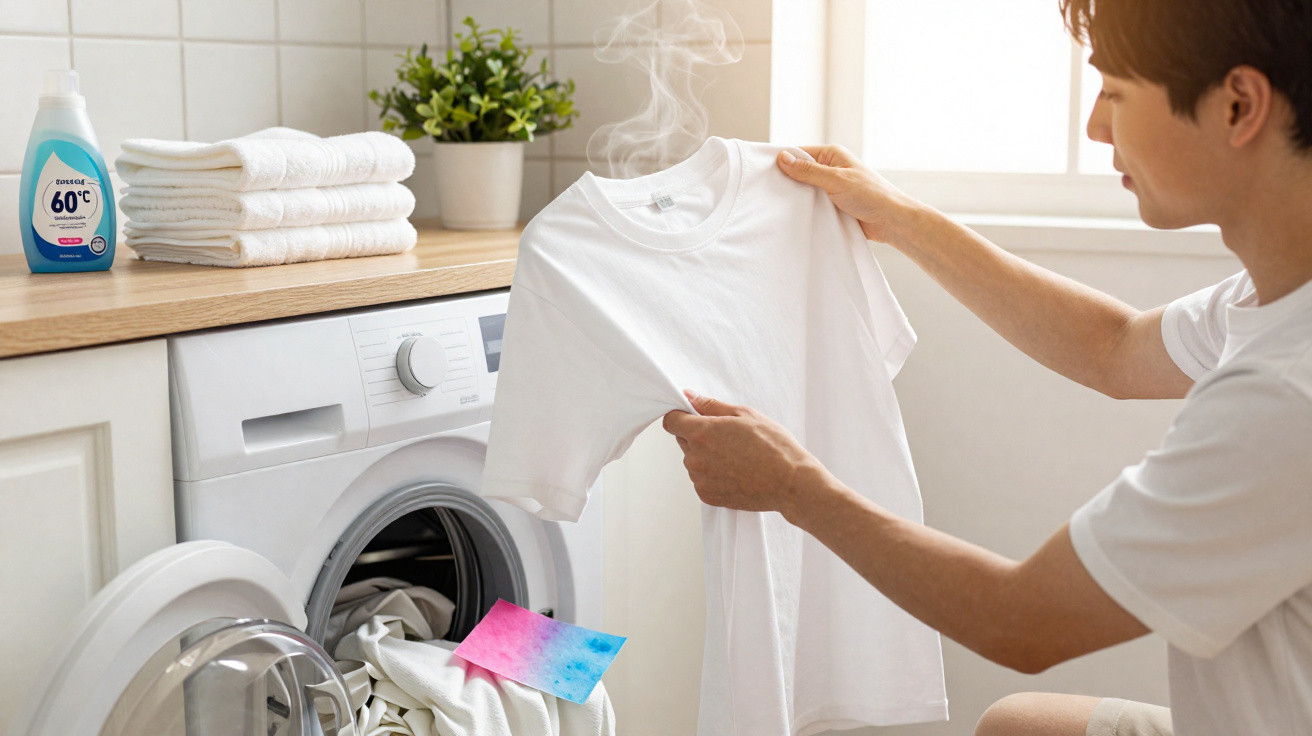
Mixing coloured garments with light pieces in the washing machine can lead to unwanted household disasters. When a white T‑shirt ends up heavily stained by released pigments, immediate sanitisation can rescue the fabric before the dye has time to set.
Why does colour transfer happen on white clothes?
Coloured fabrics can release pigment during rinsing because there is excess dye sitting in the fibres. When light fabrics come into contact with this tinted water, unwanted colour transfer occurs and the original shade of the cotton is altered.
Water at room temperature usually cannot lift pigments that have only just clung to the item. That is why using the appropriate temperature at the right moment makes all the difference, helping detach coloured particles without damaging the treated material.
Related: How to remove a stain from white clothes without bicarbonate? There is a homemade liquid mixture said to loosen any pigment embedded in fabric in just five minutes of… Read more.
How does hot water help remove dye from fabric?
A wash carried out with water heated to exactly 60°C causes the fibres of the stained fabric to expand. This controlled heat helps release loose dyes trapped on the surface, making it easier to remove them quickly during the cleaning cycle.
It is vital to do this before the item is fully dried in the sun or in a tumble dryer. Drying heat can lock stains in permanently, which is why an effective solution needs to be used straight in the washing machine drum.
Below is a video from the YTN 사이언스 channel on YouTube that explores the points discussed in this topic in more depth:
What is the purpose of a colour-catcher sheet in the wash?
Adding an anti-transfer sheet works like a magnet, capturing pigments suspended in the water. This prevents loose dye from settling back onto white clothing, helping it keep a clean, bright appearance.
When this special sheet is used alongside sodium percarbonate and a mild detergent, leftover grime breaks down more easily. Together, they deliver continuous protective action that refreshes T‑shirts, towels, and stained fabrics without wearing down the seams.
Essential Laundry Kit
Must-have items
Check the essentials you will need to remove dye-transfer stains from your white item:
- Water heated to 60°C to open the fibres;
- A colour-catcher sheet to retain pigments;
- Mild detergent combined with sodium percarbonate.
How to do the step-by-step wash in the machine
Place the stained items in the drum on their own, without adding any new laundry. Next, add the mild detergent and select a wash programme with heated water set to the stated temperature of sixty degrees.
Put the sheet in the centre of the drum before starting the full rotation. The product will absorb coloured residue in the water, ensuring a definitive removal of any bluish or pinkish tint that has built up on the light fabric.
Follow these key recommendations to get the best outcome:
- Check the care label before setting the machine to the 60°C programme;
- Add the anti-transfer sheet along with the cleaned items to prevent pigments being redeposited;
- Rinse the fabric thoroughly under running water before hanging it to dry in the shade.
What precautions help prevent new stains in future?
Prevention is the best way to keep pale garments looking original for longer. Always carry out a careful separation between white fabrics and coloured pieces before switching on your washing machine at home.
If an accident happens during the wash, act straight away before the item dries completely. Using the right treatment quickly restores the crisp look of your household clothing and helps you avoid the premature disposal of your favourite white T‑shirts.




Comments
No comments yet. Be the first to comment!
Leave a Comment