
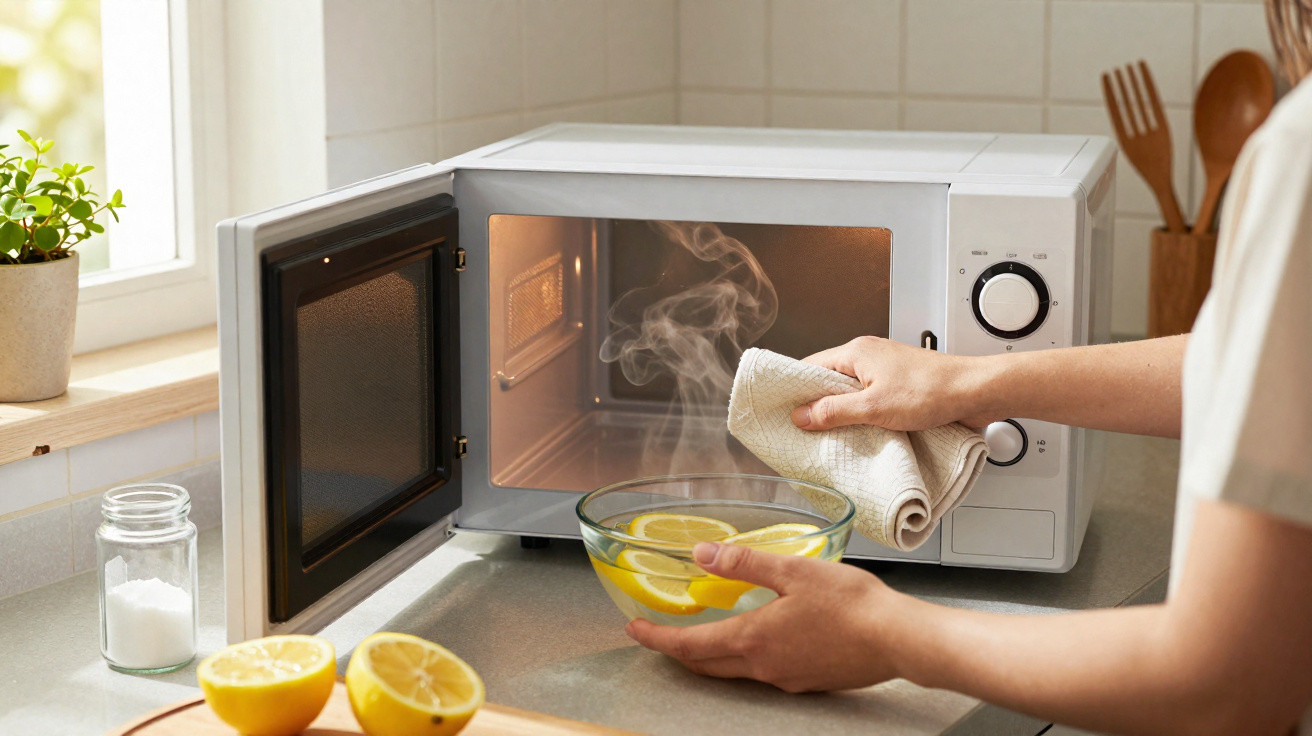
Before you start changing the microwave’s power setting in an attempt to heat food faster, it’s worth checking one detail many people overlook: the condition of the inside of the appliance. Built-up grime, splashes of grease and leftover food can directly affect how heat spreads, leaving some parts of the dish cold while others overheat-something that, in practice, matters more than simply turning up the power.
Why does internal cleaning change heating results?
Once you understand how a microwave works, it becomes easier to see why regular cleaning makes such a difference to heating performance. Microwaves move around inside the cavity and bounce off the walls, and any residue build-up can create small heat “shadows” that disrupt that circulation.
Even a microwave that seems powerful can start heating unevenly if the turntable is being held up by dirt, if there are dried-on deposits along the sides, or if the interior is greasy. In those situations, the energy doesn’t spread evenly and the food comes out with hot and cold spots, which can make it feel as though the appliance has “lost power”.
How do you clean a microwave to make better use of its power?
Cleaning the inside doesn’t require harsh chemicals or complicated steps, and careful, frequent cleaning is usually enough to keep heating efficient. Whenever you can, wipe away fresh splashes before they dry and turn into stubborn crusts-this also helps prevent lingering odours.
A straightforward method is to place a bowl of water with lemon slices or a little vinegar inside, then heat it for a few minutes on medium power to create steam and loosen splatters. After that, follow this quick maintenance routine:
- Unplug the appliance from the mains before starting any cleaning.
- Remove the turntable and support ring and wash them separately.
- Use a soft cloth or a non-abrasive sponge to avoid scratching surfaces.
- Avoid spraying water directly or leaving excess moisture inside.
- Dry all areas thoroughly before plugging the appliance back in.
How do you remove stubborn marks without affecting heating?
Older stains, especially from fatty sauces, can form hard patches that change how heat circulates and may even char with repeated use. When the inside of the microwave gets to this stage, heating tends to be uneven even with the correct time and power, and the appliance can seem less effective than it really is.
In these cases, a slightly more detailed clean is needed to lift the residue-while still avoiding wire wool or any sharp tools. A mix of steam, warm water and mild washing-up liquid is usually enough to shift most crusted-on spots without damaging the microwave’s inner coating.
How do you prepare a microwave for a more efficient everyday routine?
Many people think about replacing their microwave as soon as they notice uneven heating, but small changes to cleaning and everyday use often solve the issue. It’s worth treating this as a “reset” of habits: check the turntable, clean around the door edges, inspect the seal, and organise the inside space to stop containers sitting at an angle.
If the turntable doesn’t rotate properly, one side of the food stays exposed to microwaves for longer while the other side receives less energy. By keeping the interior clean, ensuring the turntable is seated correctly, and positioning containers in the centre, the microwave’s power is used more sensibly-producing more even heating, more predictable cooking times, and a kitchen routine that feels more practical and reliable.


Comments
No comments yet. Be the first to comment!
Leave a Comment