
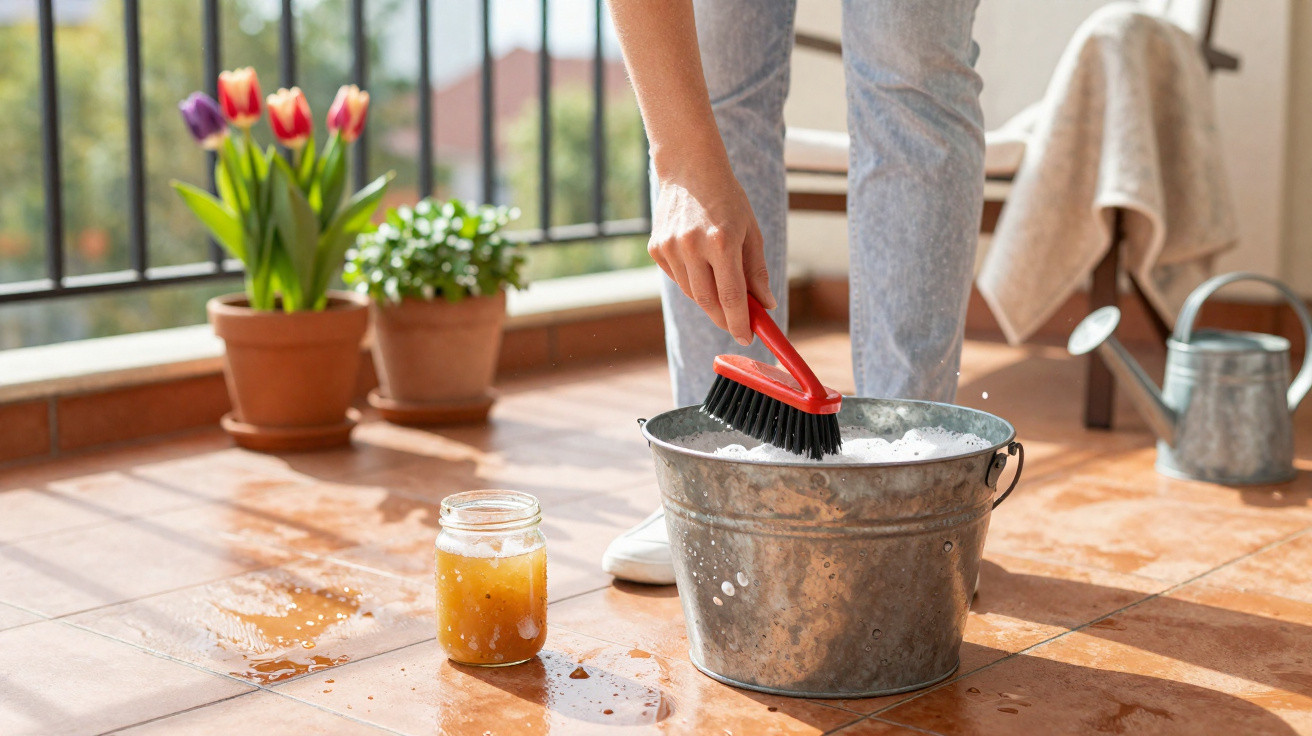
After winter, your favourite outdoor spot can look less like a cosy retreat and more like a neglected driveway. So before that first coffee outside really tastes right, the cleaning has to happen. The good news is you don’t need harsh chemicals or pricey specialist products. A simple household staple that’s been around for decades will do the job-so long as you use it properly.
Why now is the best time to clean the terrace
In early spring, most of the grime is still sitting on the surface of the slabs. The persistently damp winter air will have left its mark, but moss and algae usually haven’t yet taken over every crack and joint. If you tackle the terrace during this window, you’ll save yourself a lot more work later on.
- Dirt hasn’t yet sunk in deeply
- Temperatures are mild enough for warm water
- Longer dry spells make it easier for the surface to dry
Pick a dry day when the temperature is clearly above 0°C. That way the terrace can dry properly, the cleaning mix works better, and the whole job stays manageable.
"If you give your terrace a thorough clean in March or early April, you can often relax until summer without stubborn dirt returning."
The low-cost household cleaner that gets almost any terrace clean
Rather than reaching for heavy-duty chemicals, many professionals rely on a plant-based liquid cleaner that’s easy to find on the high street. In practice, this means liquid soft soap made from plant oils.
It cuts through grease, lifts dirt from between the joints, and removes the grey film that can build up on slabs-without putting the surrounding area under strain. Because it’s based on plant oils, it’s generally biodegradable and typically avoids aggressive solvents.
Benefits of the plant-based cleaner at a glance
- kinder to nearby flowerbeds and lawn edges
- less likely to irritate children’s hands or pets’ paws
- suitable for many surfaces: wood, tiles, concrete, and some natural stone
- concentrated-just a few tablespoons per bucket of water is enough
- inexpensive compared with outdoor specialist cleaners
A single canister often lasts for several seasons if it’s stored somewhere dry and frost-free. That brings the cleaning cost per square metre of terrace down significantly.
Step by step: how to clean the terrace with a household staple
1. Remove loose debris
Start with a stiff broom. Loose soil, leaves, small twigs and grit need to come off before any water goes down. If you wet-clean straight away, you’ll end up rubbing a layer of sludge into the joints.
Pay particular attention to:
- sweeping leaf debris out of the joints
- removing small stones and winter grit
- gently lifting loose moss pads with a scraper
2. Mix the cleaning solution
For a proper spring clean, the following ratio works well:
| Amount of water | Amount of cleaner | Use |
|---|---|---|
| 10 litres of hot water | approx. 10 tablespoons | Deep clean after winter |
| 5 litres of warm water | 3–4 tablespoons | Light in-season clean |
Make the water as hot as you can without scalding yourself. Heat loosens grease and dirt faster, helping the cleaner work at its best.
3. Scrub with a brush or deck scrubber
Apply the mix with a deck scrubber or a stiff brush. Dark patches and dirty joints need extra attention. If you go back over problem areas with a handheld brush while kneeling, the results are noticeably better-especially on:
- blackened joints between concrete or stone slabs
- marks left by plant pots
- greasy patches beneath the barbecue
On heavily soiled areas, it’s worth letting the solution sit for five to ten minutes. That gives it time to lift most of the grime without attacking the surface.
"You can usually see the difference after a thorough scrub, even before the water runs away."
4. Rinse properly
After scrubbing, rinse with a garden hose and plenty of clean water to remove foam and loosened dirt. If you skimp on rinsing, you may leave behind a slight greasy film that can make the surface slippery.
To finish, run over the area with a squeegee, a mop, or an old towel. That reduces dirty rinse water sitting on the surface and helps everything dry faster.
Dosage, protecting materials, and common mistakes
It’s easy to assume that more cleaner means a better result. Outdoors, that often backfires. Too much soft soap in the mix can leave a slick film behind-particularly on glazed tiles or smooth concrete slabs-and that’s a genuine safety issue.
For ongoing maintenance through the year, a milder mix is usually enough-around half a tablespoon per litre of water. If you’re only clearing pollen dust or light marks, you don’t need “full spring-clean mode”.
Keep an eye on sensitive materials
Not every surface tolerates every “natural” alternative. Some popular kitchen standbys can still cause damage:
- Clear household vinegar: attacks many natural stones and can leave dull patches
- Sodium bicarbonate (raising agent): can roughen fine finishes
- Chlorine-based products: bleach joints, harm plants, and irritate skin and airways
If your terrace uses higher-end stone finishes-such as marble, granite, or quartz composite-always test any cleaner first in an inconspicuous corner. You’ll quickly see whether the surface discolours or turns dull.
Take care with pressure washers and light-coloured joints
A pressure washer is tempting: switch it on, point, and you’re done. In reality, the jet can crumble jointing material if you hold it too close, or permanently roughen timber decking. It may look clean at first, but over time it speeds up wear.
If you don’t want to avoid a pressure washer entirely, make sure you:
- keep at least 30–40 centimetres away
- don’t aim the jet directly into the joints
- pre-clean with the soft soap solution rather than relying on pressure alone
On older terraces where the joints are already friable, the gentler approach-scrubbing with a brush and a plant-based cleaner-usually pays off.
How often to clean-and what else helps keep the terrace looking good
For many households, one thorough clean at the start of spring is enough, provided you do a little upkeep during the season. After heavy rain or a burst of blossom and pollen, a quick pass with a mild mix of warm water and a small amount of cleaner can be all that’s needed.
Helpful routines include:
- Don’t leave leaves sitting in autumn-they stain slabs and clog joints.
- Use saucers under plant containers to reduce dark rings.
- After barbecuing, blot grease marks immediately with kitchen paper and wipe the area again soon after.
If you keep on top of these small habits, the main spring clean becomes noticeably quicker. The terrace stays brighter for longer, and the joints don’t green up as fast.
What causes green films and black joints
Many homeowners are alarmed to find greenish or near-black films on their slabs after winter. Most of the time, it’s a mix of algae, fungi, fine dust and organic residue-ideal food for microorganisms.
The plant-based cleaner helps lift this build-up mainly through mechanical action, supported by its grease-cutting properties. Combine it with warm water and firm scrubbing and you get a relatively gentle yet surprisingly effective method-without resorting to specialist outdoor chemicals.
If you also improve airflow-by cutting back dense planting around the edges, for example-you’ll reduce long-term dampness on the slabs. The drier the surface, the harder it is for algae and moss to take hold.




Comments
No comments yet. Be the first to comment!
Leave a Comment