
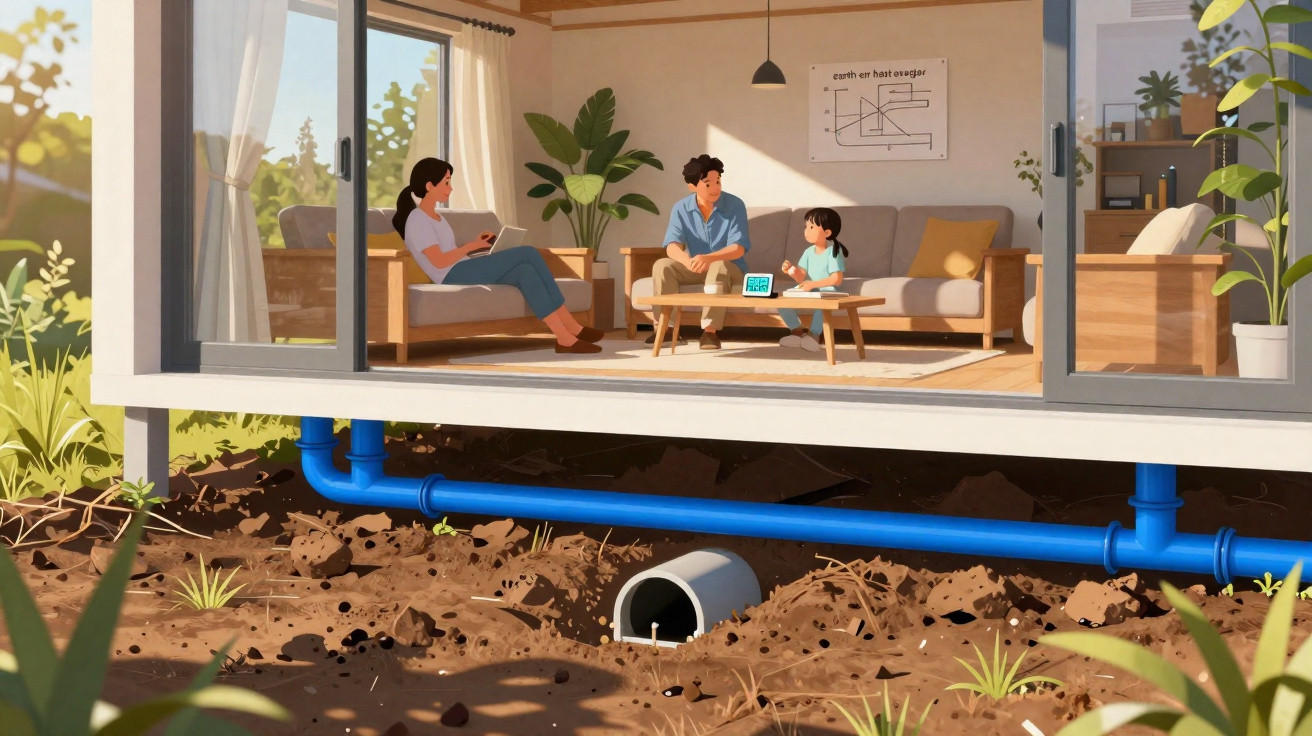
Families looking for more sustainable ways to take the edge off indoor heat have increasingly turned to passive cooling ideas. One inventive approach uses pipes buried underground to cool living spaces without relying on air-conditioning compressors or heavy electricity use.
How does the Canadian well geothermal system work?
Also called a Provençal well, this long-established technique makes use of the subsoil’s steady temperature throughout the year. Outdoor air is channelled through buried pipework before it reaches the bedrooms, releasing heat into the ground and lowering the indoor temperature.
The specialist Martín Santiago Schmull built an earth-to-air heat exchanger in his home in 2022. With this set-up, the indoor airflow can be refreshed while keeping the space comfortable, without using refrigerant gas that harms the environment.
What makes your house get far too hot in summer?
Heat trapped in the walls and roof prevents cool air from circulating, but a small adjustment can help… Read more
What are the benefits of cooling a house with buried pipes?
The standout advantage of this system is a steep drop in energy demand compared with conventional air conditioning. Passive ventilation can feed a constant stream of cool air into the rooms, significantly improving the quality of the indoor air.
As well as reducing monthly bills, the geothermal approach helps keep relative humidity at healthy levels. It avoids overly drying the lungs and can help prevent respiratory issues often associated with electric appliances running for long periods.
Below, watch the video from the Permacultura Holistica YouTube channel, which goes into more detail about this home project:
What is needed to install an earth-to-air heat exchanger?
Installation requires digging in the garden to place the ducts at suitable depths in the soil. It is essential to calculate the pipe diameter and design an effective condensate drainage system to prevent a build-up of water and unwanted dampness inside the channels.
Durable, non-toxic materials should be prioritised to ensure the underground structure lasts and remains safe. A small, low-power fan can also be fitted to help with air intake and speed up recirculation through the property.
Essential Geothermal Kit
System components - key items to assemble an underground heat exchanger:
- Buried polyethylene pipes or washable PVC;
- A system with a condensate drainage point;
- A quiet micro-fan to draw in outdoor air.
How does passive ventilation improve residential thermal comfort?
Natural movement of cooler air currents refreshes enclosed spaces without producing irritating noise. This smart approach lowers the heat stored in the building fabric, creating a pleasant, stable feel during a harsh summer.
By combining sustainable measures with bioclimatic design, the project reaches a well-balanced home environment. Residents benefit from cooler air with fewer pollutants, supporting health while protecting the household budget from high energy costs.
See the essential elements for improving thermal flow in your home:
- Fit intake filters to stop dirt and dust from getting through;
- Use pipes with the correct slope to make fluid drainage easier;
- Size the airflow rate correctly based on the area of the space.
Why is this solution viable for hot regions?
Areas exposed to extreme temperatures face serious challenges in managing electricity demand during the hottest months. Using the ground as a thermal buffer is a valuable strategy, providing a consistently cool refuge for urban or rural buildings.
Straightforward maintenance and the long service life of the components make this type of engineering achievable for many kinds of construction. Investing in passive cooling brings greater energy independence and supports family wellbeing with maximum respect for the planet.

Comments
No comments yet. Be the first to comment!
Leave a Comment