
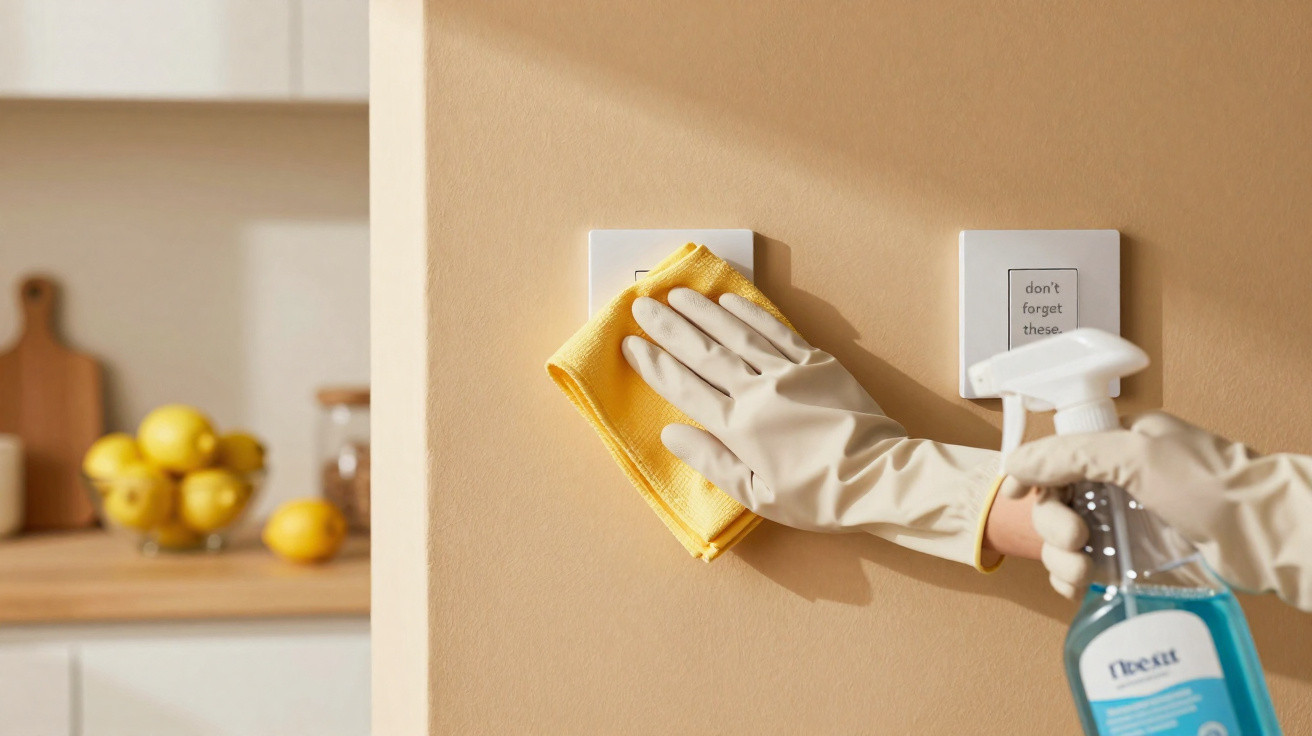
Even in kitchens where the stainless-steel sink gleams, the ceramic hob shines and the mop comes out regularly, there’s often one place where grime quietly builds up. It’s exactly the spot we touch dozens of times a day without a second thought. The result is a small area turning into a kind of transfer point for germs, right between the saucepan and the fridge.
The most forgotten germ collection point in the kitchen
It’s the kitchen light switches and buttons. Those small wall plates we operate constantly-when we walk in, while cooking, and during the quick evening trip to the fridge. They sit right at the junction between food preparation and day-to-day rush, yet they don’t even make it onto most people’s cleaning checklist.
Picture a typical evening cooking at home: you’ve been handling raw meat, you turn around and brighten the lights. Or you rinse vegetables that still have soil on them, dry your hands half-heartedly on the tea towel, and then touch the switch straight away. Each contact leaves microorganisms behind-and usually no one wipes them off.
"The kitchen light switch is often touched several times an hour, but only cleaned a few times a year."
That combination is exactly what makes the surface so problematic. It’s used constantly, it’s close to food, and it’s hardly ever disinfected. Over days and weeks, a film develops: grease, skin particles, tiny traces of food-a perfect breeding ground for bacteria.
Why light switches get so dirty
Research into kitchen hygiene shows that frequently touched surfaces can carry a similar number of germs to a used chopping board for raw meat. Alongside handles, this includes switches and control panels. In the kitchen, several risks come together:
- a warm, humid indoor climate from cooking
- grease splashes and steam that settle on surfaces
- hands that are unwashed or only quickly rinsed
- multiple people using the same switches
Germs such as E. coli or salmonella don’t simply disappear because they land on a hard surface. They can survive for a while there-depending on conditions, even for quite some time. If children’s hands or older people are part of the household mix, the risk of stomach bugs and other complaints rises noticeably.
There’s also the everyday reality that several family members often touch the same switch one after another. If someone operates it while handling raw meat and the next person presses it shortly afterwards, potential pathogens are passed directly to the next hand. That’s how a quiet cycle of re-contamination can develop.
Why weekly cleaning makes such a difference
The good news is you don’t need to walk around the kitchen every day with disinfectant. Many hygiene researchers consider a simple, fixed weekly routine completely sufficient to keep germ levels under control-provided you stick to it.
"Clean all switches and handles once a week-and the most dangerous germ bridges in the kitchen lose their threat."
Wiping the switch once a week stops grime and greasy layers from building up in the first place. The bacterial load is repeatedly reduced, which lowers the chance that invisible contamination turns into real symptoms.
Cleaning safely: how to clean switches without risk
Electrical components need careful handling. The key rule is simple: never spray directly onto switches or sockets. Liquid must not run inside.
The simple step-by-step guide
- Check the power situation: switch the light off and avoid wet hands.
- Prepare a cloth: dampen a microfibre cloth with a little cleaning solution or disinfectant-moist, not dripping.
- Wipe the surface: rub the switch plate and the surrounding area thoroughly, including the edges.
- Clean the corners: for grooves or textured areas, lightly dampen a cotton bud and run it gently along.
- Dry properly: wipe again with a dry cloth so no moisture remains near the electrics.
If you’d rather avoid harsh chemicals in the kitchen, you can use a mix of equal parts water and white vinegar. This solution helps against many bacteria, leaves no problematic residue and is well suited to surfaces near food. One thing to bear in mind: plenty of people dislike the vinegar smell-so open a window briefly after cleaning.
These areas should be cleaned at the same time
It helps to do more than just the light switch-include all the most-touched surfaces in one go. That creates a small “hygiene circuit” that usually takes barely ten minutes.
| Area | Why it’s critical |
|---|---|
| Fridge handle | touched at almost every meal, often with dirty hands |
| Cupboard knobs and drawer handles | contact with traces of flour, dough, oil and raw foods |
| Tap lever | often operated before proper handwashing begins |
| Microwave buttons | quick presses with greasy or dirty fingers |
| Oven and hob knobs | constantly used surfaces right next to the cooking area |
If you choose a fixed day-Saturday morning after breakfast, for example-you build a routine that runs without much thought. Many people find they end up reaching for the cloth almost automatically once the bin has been taken out or the dishwasher has been loaded.
Long-term effects on health and wellbeing
Regularly cleaned switches and handles don’t just look better in the short term. They develop far less stubborn build-up and can be cleaned with much less effort. Instead of scrubbing away tough, yellowish edges, a quick wipe is enough-which ultimately saves time.
For children and older people, the difference can be noticeable. Stomach bugs that seem to come “out of nowhere” often have their origin in the kitchen. When key contact points such as switches, handles and taps are cleaner, the overall number of germs the body has to deal with each day drops.
Commercial kitchens have shown for years how effective consistent surface management can be. In restaurants, regular disinfection rounds are treated as just as important as fridge temperatures and cooking times. Applied to the home kitchen, that means it’s not only about how long you keep chilli, hummus or sliced meats-hand hygiene, and the hygiene of the surfaces those hands touch, matters too.
Hands, air, surroundings: how it all works together
To keep a kitchen hygienic, it’s worth watching two factors alongside surfaces: hands and the indoor environment. Frequent, thorough handwashing breaks many infection chains before they even start. At the same time, cooking releases airborne fat and water vapour that settles as a film on surfaces-including switches.
A good extractor fan, regular burst ventilation and a clean filter can reduce that film significantly. Some houseplants may modestly improve air quality, but they don’t replace a cloth. What matters is the combination: less sticky residue, plus a simple, fixed wipe-down routine.
How to make the new cleaning habit truly stick
Many people don’t fail at the cleaning itself-they fail because they forget to do it. One simple trick is to tie the task to something that happens every week anyway, such as laundry day or the big food shop. If, after unpacking the groceries, you automatically wipe the handles and switches, you don’t need extra motivation.
Time-wise, the effort is tiny: one to two minutes a week for the switches, plus a few more minutes for all the handles. Over a year, that adds up to less than two hours. In return, the germ load drops significantly-and you also get the reassuring feeling of standing in a kitchen that’s genuinely clean.




Comments
No comments yet. Be the first to comment!
Leave a Comment