
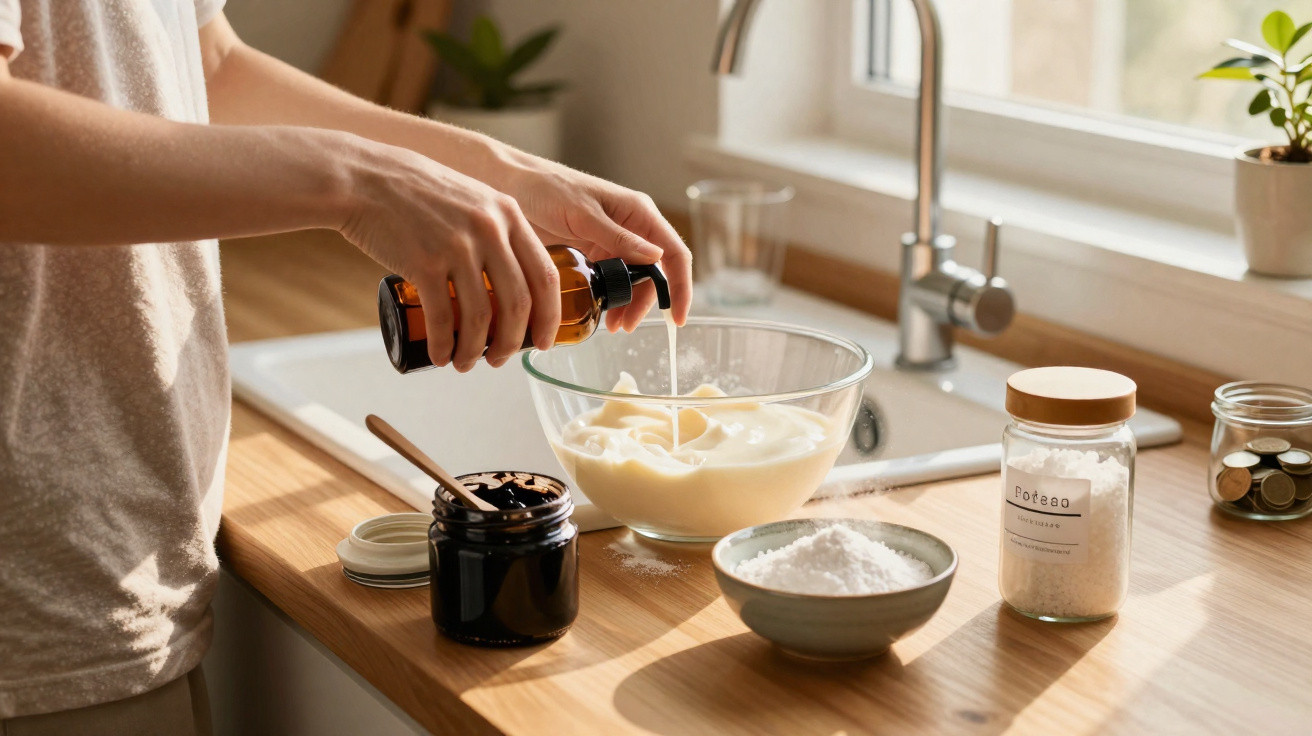
Washing up every day can mean pouring litres of brightly coloured chemicals down the sink and piling up empty plastic bottles in the bin. Plenty of people are fed up with that, but they do not see an obvious alternative. A straightforward blend of three inexpensive ingredients shows there is another way - clean results, kinder on skin, and noticeably cheaper.
Why conventional washing-up liquid becomes a problem
Supermarket washing-up liquid does the job, no question. It cuts through grease, foams well and smells “clean”. The trade-offs are often easy to miss:
- harsh surfactants that can dry out your skin
- fragrances and dyes that may trigger allergies
- preservatives that end up in rivers and lakes
- plastic bottles that are difficult to recycle properly, or not recycled at all
Anyone who does a lot of washing up by hand will recognise the pattern: cracked fingertips, tight skin, redness. At the same time, the pile-up in the recycling bin can bring a nagging sense of guilt. That is exactly where this homemade blend comes in.
“A simple mix of three basic ingredients replaces the entire washing-up liquid shelf - without toxic additives and without a new plastic bottle every time you restock.”
The base: three ingredients that can handle almost everything
Black soap as a gentle grease cutter
The key component is liquid black soap. It is usually made from olive oil or linseed oil combined with plant-based potassium lye. That gives it strong cleaning power while still being relatively gentle on hands. When you wash up with it, it does not leave a greasy residue, and it can even be used on more delicate surfaces such as wood or non-stick pans.
Sodium bicarbonate as a mild “scouring pad”
Sodium bicarbonate - often thought of simply as “baking powder without additives” - has a light abrasive action without scratching. It helps lift dried-on food, neutralises odours in glasses, tins or plastic containers, and can shift tea and coffee stains.
Washing soda for greasy film and sluggish pipes
Washing soda boosts the degreasing effect noticeably. It helps bind fats in the washing-up water so they do not cling as a thin film to dishes or the sink. Its alkaline nature can also help keep waste pipes clearer for longer, because fewer deposits build up.
How to mix your own washing-up liquid in just a few minutes
To make a bottle of roughly half a litre, you only need a quick moment in the kitchen. Gather:
- 1 tablespoon sodium bicarbonate
- 1 tablespoon washing soda
- 2–3 centimetres of liquid black soap in the bottom of the bottle
- hot tap water
- an empty, rinsed washing-up liquid bottle or pump bottle
- Add the powders: Using a funnel, tip the sodium bicarbonate and washing soda into the empty bottle.
- Add the soap: Pour in enough black soap to cover the base of the bottle to a depth of two to three centimetres.
- Top up with hot water: Fill the bottle, leaving a small gap of air at the top.
- Shake thoroughly: Close the bottle tightly and shake hard until the crystals have dissolved.
After a few minutes, it is ready to use. Give it a quick shake before each use, as the mixture can settle slightly if left to stand for a while.
How well does the mixture clean in real life?
Households that have tried the blend for several months report unexpectedly clear outcomes: plates, glasses and pans come up visibly clean, and even frying grease disappears without endless scrubbing. The lack of a towering “foam mountain” can feel odd at first, but it says little about actual cleaning performance.
“Anyone who has been taught for years that ‘more foam = more cleanliness’ needs to rethink: what matters is the ingredients, not the bubbles.”
A welcome side effect is that hands often feel less dried out after washing up. Many people find they can even skip hand cream afterwards. In the drain, fewer greasy clumps seem to collect - something that can be particularly noticeable in older kitchens.
A calculation with a real wow factor: how much you actually save
A litre of homemade washing-up liquid costs only a few cents if you buy the base ingredients in larger packs. In many chemists or zero-waste shops, the prices are well below those of ready-made branded products.
| Product | Estimated cost per litre |
|---|---|
| Classic branded washing-up liquid | 1,50–3,00 € |
| DIY washing-up liquid made from three ingredients | around 0,20–0,40 € |
If you run a household that does a lot of washing up by hand - for example, without a dishwasher or with lots of pans and pots - it is easy to reach a double-digit saving over the course of a year.
Even stronger: a version with added soap flakes
For anyone who really wants more foam and a thicker, gel-like feel, the base recipe can be adapted. You can add finely grated pure soap (soap flakes) or a traditional vegetable-based hard soap.
The approach:
- mix grated soap with washing soda and sodium bicarbonate
- add liquid black soap
- pour over very hot water and stir thoroughly
- leave overnight, then dilute a little with cold water the next day if needed
This produces a washing-up liquid that is denser, foamier and still designed to be readily biodegradable. If you have sensitive skin, it is sensible to go easy on the amount of hard soap - start small and adjust.
Tips for everyday use and storage
How to use homemade washing-up liquid properly
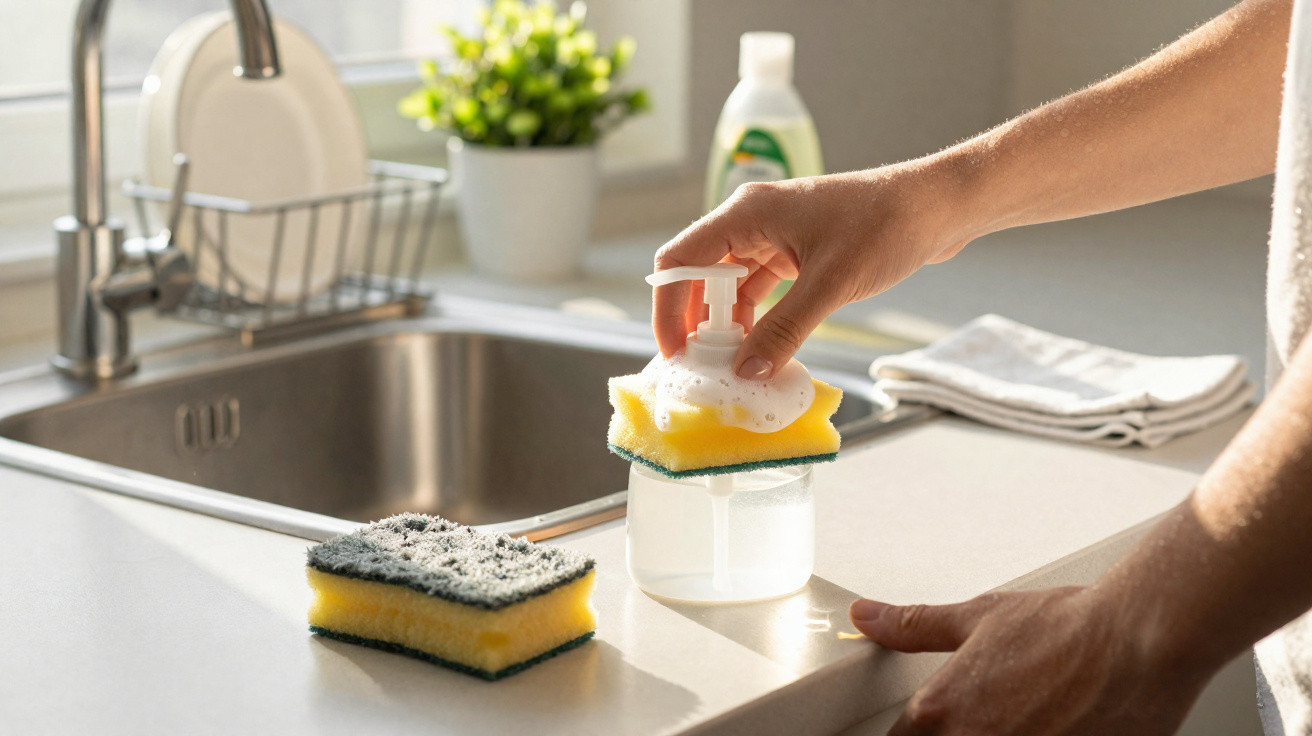
Using it is as familiar as ever: a squirt into the bowl, add warm water, and you are off. For baked-on dishes or stubborn pans, a quick soak makes a big difference:
- add a little of the mixture directly to the dish
- pour in hot water and leave for 10–20 minutes
- then finish with a brush or soft sponge
For very delicate glassware or non-stick cookware, you often need less than you would with a shop-bought product, because the grease-cutting action can be more concentrated.
How long does the mixture last?
Because it contains no harsh preservatives, many users recommend making smaller batches. Half a litre often lasts several weeks in an average household. If the bottle sits for a long time, ingredients can settle or the liquid may thicken slightly. If that happens, shake well and add a little water if required.
What to watch out for - safety and limitations
Washing soda and sodium bicarbonate are generally considered comparatively low-risk in small amounts, but they still deserve care. Keep the powders out of children’s reach, and use a spoon and funnel when decanting to avoid spills. If you have very sensitive skin or eczema, it is best to trial the homemade washing-up liquid briefly while wearing gloves.
For natural stone worktops, speciality coatings, or very old and delicate enamel, test a small, hidden area first. Washing soda is alkaline, and some surfaces do not tolerate that well.
More than clean dishes: what genuinely changes
Once you start mixing your own washing-up liquid, you often become more aware of routine household habits. Many people notice that if this step is so simple, other cleaners can be swapped out too - glass cleaner, all-purpose spray, sometimes even oven cleaner. The same three basic ingredients appear again and again across countless recipes.
Over time, that can turn into a small cupboard stocked with a few clear, multipurpose materials rather than a jumble of bright bottles. It reduces shopping stress, frees up storage space, and cuts down on waste. And, almost as a by-product, it lowers the amount of questionable substances going down the drain each day.


Comments
No comments yet. Be the first to comment!
Leave a Comment