
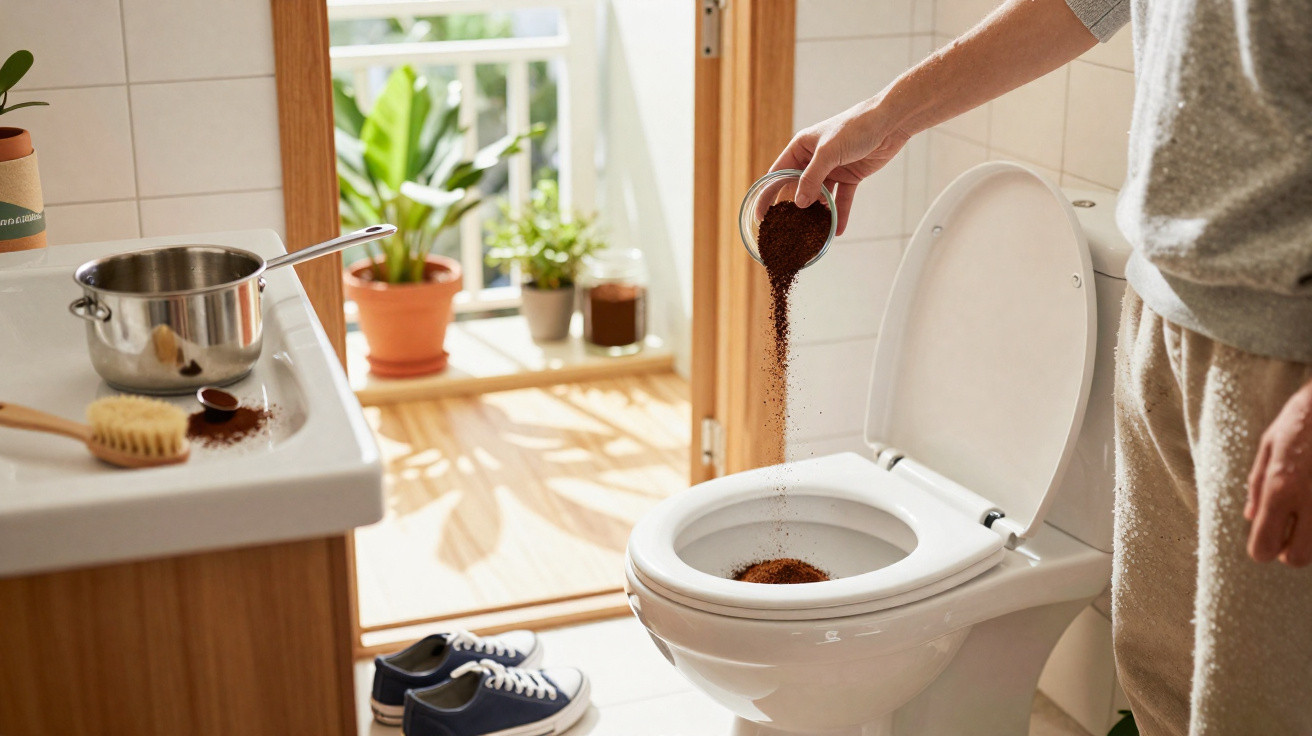
A spoonful of coffee grounds in the toilet sounds like an internet fad, but in some homes it has been a habit for years. The leftover grounds are said to trap odours, loosen light grime and even cut down on cleaning products. At the same time, experts warn about blocked pipework. Here’s what’s true - and when the trick is (and isn’t) worth using.
Why coffee grounds are suddenly going into the toilet
Coffee grounds are made up of fine particles that don’t dissolve in water, but do cling well to surfaces. That is exactly why they have become appealing as a household hack. In the toilet, used coffee can act a bit like a gentle abrasive cleanser and an odour catcher.
"A heaped tablespoon of coffee grounds is enough to lightly clean the toilet bowl and reduce musty smells from the drain."
The method is straightforward: put fresh or slightly dried grounds straight into the bowl, work them around with the toilet brush, leave briefly, then flush. If you use a silicone brush, the grounds spread particularly evenly without scratching the surface.
A gentle cleaning effect instead of harsh chemicals
Coffee grounds feel fine-grained, yet still slightly gritty. When you scrub, they can shift light deposits and the beginnings of limescale/urine-scale marks, without being as aggressive as traditional scouring products. For quick, regular in-between cleans, this can be enough to keep the bowl looking presentable.
There is also a secondary effect: coffee grounds carry natural oils and aroma compounds. These can mask unpleasant toilet odours for a short time. At the same time, the grounds can bind odour molecules in the water and around the outlet.
A pre-holiday trick: coffee grounds against stagnant-water smells
Many households use the coffee-grounds trick before being away for a longer period. The idea is that adding a few spoonfuls of grounds before leaving - and not flushing straight away - helps reduce the typical “stale” smell from water that has been sitting.
This is how it’s supposed to work: in still water, components slowly leach out of the grounds and bind unpleasant smells. When you return after a few days or weeks, the water may look brownish, but it can smell less strong.
- Before you leave: add coffee grounds to the bowl
- Don’t flush immediately; simply close the lid
- After you return: flush well once and, if needed, give it a quick brush
Important: this does not replace a proper deep clean. If the toilet won’t be used for a while, clean it thoroughly before you go, and treat coffee grounds as an extra - not the main measure.
Why the trend is controversial
As practical as coffee grounds can seem at first, specialist sources in the agriculture and environmental space are already warning: drainage systems aren’t designed for larger amounts of solid particles. That is where the risk lies.
"Coffee grounds can settle in pipe bends, clump together and, in older pipework, genuinely increase the likelihood of blockages."
When combined with soap residue, limescale and toilet paper, it doesn’t take much for a thick, stubborn deposit to form. In modern, smooth plastic pipes, it may pass through more easily; in older cast-iron or vitrified clay pipework, that kind of mixture can build up and stick.
When coffee grounds in the toilet become a risk
It becomes particularly problematic when:
- coffee grounds are tipped into the toilet frequently and in larger quantities,
- the home’s pipework is old or already partly restricted,
- the household has generally hard water with lots of limescale,
- fats, food scraps or sanitary items also end up in the toilet.
Drain unblocking and CCTV drain surveys are expensive. So if you live in an older property or you have had repeated drainage issues, it is wise to be very cautious with the coffee-grounds trend. In those cases, the used grounds are better suited to the garden, the compost, or the general waste.
Alternative places to use coffee grounds: where they work much better
Away from the toilet, coffee grounds have long been seen as a small all-rounder. In the kitchen, bathroom and garden, the brown leftovers can be used far more safely - and often more effectively.
Odour remover in the kitchen and in shoes
After chopping onions or garlic, smells can cling stubbornly to hands and chopping boards. Rubbing in a teaspoon of damp coffee grounds briefly, then rinsing off, can remove that film surprisingly well.
Coffee grounds can also help in the fridge: place slightly dried grounds in an open bowl on a shelf, and replace them regularly - many people report noticeably less food odour. The same principle can be used with shoes: leave a small bowl of grounds nearby overnight to reduce sweaty, musty smells.
A natural abrasive for pots and pans
When cleaning burnt-on frying pans, crusted pots or barbecue grates, coffee grounds really come into their own. They scour without attacking metal or enamel as aggressively as harsh scouring pads.
Simply mix a little coffee grounds with a splash of water or washing-up liquid and rub over the dirty area with a sponge. Then rinse thoroughly so no brown residue is left behind.
Coffee grounds in the garden: free fertiliser and a deterrent
In the garden, coffee grounds are now almost standard practice for many hobby gardeners. The leftovers contain nutrients such as potassium, phosphorus and nitrogen - exactly what edible plants can benefit from in moderation.
Coffee grounds are especially popular with:
- tomatoes
- cucumbers
- courgettes
- some ornamental plants that prefer slightly acidic soil
Dry the grounds well first so they don’t go mouldy. Then you can scatter them loosely over the soil or lightly work them in. Used in moderate amounts, they can help loosen the soil and support soil life, such as earthworms and microorganisms.
"Sprinkled around beds, coffee grounds can keep ants, slugs and even the neighbour’s cats at a distance."
The rougher texture and the scent put off many animals. It’s not guaranteed, but in plenty of gardens the effect is at least helpful - especially alongside other measures such as slug barriers or mulch.
When plants suffer from coffee grounds
Not every plant appreciates what comes out of the filter. Some species react sensitively to the slightly acidic pH or to too much nitrogen. If you drink several cups a day and spread the leftovers generously, you can even over-fertilise your beds.
Typical signs include yellowing leaves, stalled growth, and soil that looks compacted and stays damp. In that case, the only fix is to reduce the coffee grounds, loosen the soil and, if appropriate, mix in sand or compost.
How much coffee grounds is still sensible?
Whether you’re using coffee grounds in the toilet, the kitchen or the garden, the amount is what matters. An occasional spoonful in a toilet is unlikely to block modern pipework straight away. But if you tip several portions into the toilet every day over the course of a year, you significantly increase the risk.
| Location | Recommended amount | Note |
|---|---|---|
| Toilet (cleaning) | 1 tablespoon occasionally | Only use where pipework is unproblematic |
| Kitchen (odours, scouring) | 1–2 teaspoons per use | Rinse well and remove any residue |
| Garden (fertiliser) | A thin layer, 1–2 times per month | Let it dry first |
Sustainable use instead of waste - in moderation
Not throwing coffee grounds away fits neatly with the times: less waste, fewer chemicals, more reuse. Particularly in the bathroom and kitchen, it can partly replace some cleaning products.
Even so, it’s worth staying realistic: a spoonful in the toilet is not a miracle cure - at best, it’s a small everyday helper, with possible side effects in the pipes. If you’re unsure or your pipework is older, use the grounds for pots, pans and garden beds instead.
The practical bit is that every new cup of coffee creates more supply. That means you can test calmly which option works best in your own home: an occasional spoonful in the toilet, a gentle scrub for pans, or a nutrient boost for tomatoes on the balcony.



Comments
No comments yet. Be the first to comment!
Leave a Comment