
A simple household trick can stop the chaos.
Many people know the moment: you wheel the bin to the kerb, lift the lid for a second - and first you get the smell, then a cloud of flies and tiny midges right in your face. And that’s despite the bin having only just been emptied. The reason is the dampness at the bottom of the bin. That’s exactly where an unexpectedly easy trick helps - and from April onwards it can save a lot of hassle.
Why the rubbish bin suddenly smells in spring
As soon as the thermometer sits consistently around 15 °C, flies really get going. They look for warm, dark, slightly damp corners - in other words, precisely the conditions that develop inside a bin. Modern plastic bins in particular heat up quickly in the sun and can end up acting almost like a small greenhouse for germs and larvae.
Liquid gathers inside bin bags: juice from fruit, blood and meat scraps, washing-up water, sauces, coffee grounds. These residues seep through tiny holes or thin plastic and run downwards. At the bottom, the notorious “bin juice” forms - a combination of moisture, bacteria and food for insects.
“Flies can smell bin juice from a distance. Wherever it’s damp and nutrient-rich, they lay their eggs - and shortly afterwards, maggots are writhing around on the bottom of the bin.”
Lots of people try to blast the bin clean with a strong jet of water. It feels fresher, but it barely solves the issue. The liquid spreads out, seeps into every groove, and the base stays wet. That ongoing dampness is exactly what turns the bin into a perfect incubator.
The cardboard trick: how to keep the bin base dry
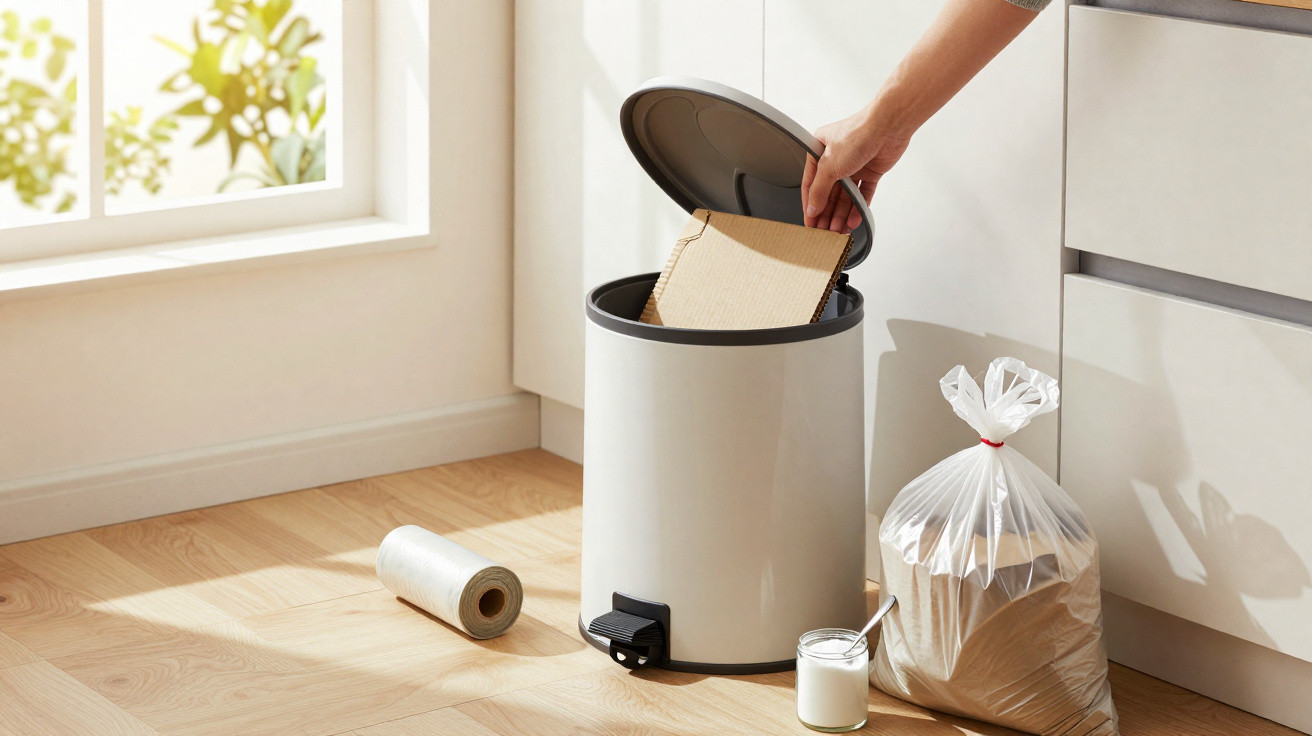
The fix is something most households already have lying around: plain cardboard. Waste-container experts recommend lining the base of the bin regularly with cardboard. It works like an absorbent sponge, soaking up bin juice before it can pool on the bottom.
Suitable options include, for example:
- packaging from online deliveries
- empty cereal boxes
- small cardboard boxes from food or toiletries
- flattened shipping boxes, cut to size
Compared with ordinary newspaper, cardboard has a clear advantage: it’s thicker, sturdier, and still more or less holds its shape after a few days - whereas newspaper becomes soggy very quickly.
What to do, step by step
- On collection day, let the bin be emptied completely.
- Afterwards, quickly check whether anything is stuck to the bottom. If it is, do a rough clean with a little hot water and a mop.
- Leave the bin open until the inside is genuinely dry.
- Flatten one or two pieces of cardboard and cut them so they fully cover the base of the bin.
- From then on, place bin bags only on top of the cardboard - never throw loose waste straight in.
- At the next collection, the dirty cardboard simply comes out with the bags and goes into the refuse lorry.
- Then put in fresh cardboard straight away.
“The key point is this: the base of the bin stays dry. Without moisture, maggots and bacteria have a much harder time.”
Other small tricks to stop flies and maggots in the bin
Cardboard is the foundation, but it becomes even more effective when you add a few extra habits. They take hardly any time, yet they prevent a lot of nuisance in summer.
Pack damp kitchen waste more carefully
Very wet leftovers or anything high in protein are particularly risky. Tip these straight into the bin bag and you greatly increase the chances of smells and maggots. It’s better to wrap such waste first:
- put meat and fish scraps into a small bag or wrap them in paper
- pack very mushy fruit and veg (for example, rotten tomatoes) separately
- let cat litter or small-animal bedding dry out properly
- don’t pour sink leftovers into the bin as liquid - let them drain first
If you don’t want to use special bags, you can use old bread-roll bags, paper bags, or even paper that’s already dirty. The important thing is that wet scraps don’t sit directly against the inside of the bag.
Seal bin bags properly
Bin bags often hang half open because they “still have room”. That’s exactly what attracts flies. Better: tie each bag up once it’s nicely filled. Before tying, squeeze out as much air as possible - that leaves less space for gases and odours.
If the waste is particularly wet, a second bag is worth it: fill and tie the first one as normal, then put it into another bag and seal again. That way, almost nothing escapes.
Put the bin in the right place
Where the bin stands matters more than many people realise. If it sits in full sun, it heats up, the bin juice ferments faster, and flies multiply rapidly.
Instead, it’s better to place the bin:
- against a shaded wall
- under a canopy or in a carport
- or behind a hedge where it won’t get direct midday sun
Even a few degrees less inside the bin noticeably reduces how quickly odours develop.
Use simple household staples to reduce unpleasant smells
If you’re particularly sensitive to smells during hot summer weeks, you can support the cardboard layer with a few basics from around the house that are proven and inexpensive.
- A thin layer of salt: binds moisture, has a mild disinfecting effect, and draws water out of many germs.
- Bicarbonate of soda (baking soda): neutralises odours and helps stop acids and rotting smells from spreading strongly.
- A little cat litter on the cardboard: absorbs liquid, clumps, and can be disposed of at the next emptying.
The key is to use these very sparingly. A light dusting is enough so you don’t end up with a wet paste at the bottom.
Regular mini-cleaning instead of a big pressure-washer job
Many people put off cleaning their bins for months - until things are so bad that only a pressure washer will do. That’s tiring, annoys the neighbours, and tends to spray grime onto walls and clothing.
A far nicer approach is a small routine:
- After every second or third emptying, take a quick look inside.
- If you can see residue: add a little hot water and a squirt of washing-up liquid, then give it a quick once-over with an old mop.
- Wipe the lid and rim with a cloth - lots of bacteria and odour particles collect there.
- Then leave it open until everything is dry, and put in new cardboard.
“If you manage to keep the bin largely dry inside, you’ll need to scrub it thoroughly far less often - and you’ll have fewer flies in summer too.”
Why starting in April makes such a difference
Many people wait for the heat and only react once the maggots are already there. It’s smarter to start the cardboard trick in April. That’s when temperatures rise and flies become active, but the big insect surge hasn’t arrived yet.
If the base of the bin is already staying dry at that point, the insects simply won’t find a suitable breeding site. That massively reduces the chance of a maggot population developing at all. Start early and you’ll have far less “firefighting” to do in high summer - and you can wheel your bin to the kerb without dreading the lid.
This prevention is especially worthwhile in households with children, pets, or limited space outside the front door. A bin without maggots, with a tolerable smell and without a swarm of flies at the entrance improves day-to-day comfort noticeably - and it costs nothing more than a few pieces of old cardboard that would otherwise go in the recycling.

Comments
No comments yet. Be the first to comment!
Leave a Comment