
How healthy and safe is it, really?
Reaching for aluminium foil in the kitchen often happens on autopilot: a piece of meat, leftover bake, a few bread rolls - wrap it up and put it in the freezer. In that moment, hardly anyone stops to consider whether the material reacts with cold, salt or acid, or how well the food is actually protected. It’s time to take a more critical look at everyday freezing habits.
Aluminium foil in the freezer: technically fine, but often not in practice
From a purely physical standpoint, aluminium copes very well with low temperatures. The usual sub-zero conditions in a domestic freezer - around –18 °C - do not harm the metal. That is why health authorities and many kitchen guides generally list aluminium foil as a possible wrapping material for freezing.
The issue is less the foil itself and more how it tends to be used. A single thin layer tears easily, develops tiny holes, or lets air reach the food. The result can be freezer burn, dry edges and a noticeable loss of flavour.
"Aluminium foil can work in the freezer - but only if it’s used properly and not for every type of food."
For genuinely long storage, sturdy containers have a clear advantage. Tightly sealing tubs or thicker freezer bags provide better protection from air, moisture and unwanted odours inside the freezer.
When aluminium foil is a sensible option for freezing
There are situations where aluminium foil is genuinely handy in the freezer and works well. What matters most is the food’s texture, salt level and moisture content.
Foods that suit aluminium foil in the freezer
- firm, relatively dry baked goods (bread, rolls, plaited yeast loaf, dry cakes without lots of cream)
- raw meat without marinade and not heavily salted
- raw fish without strong seasoning or brine
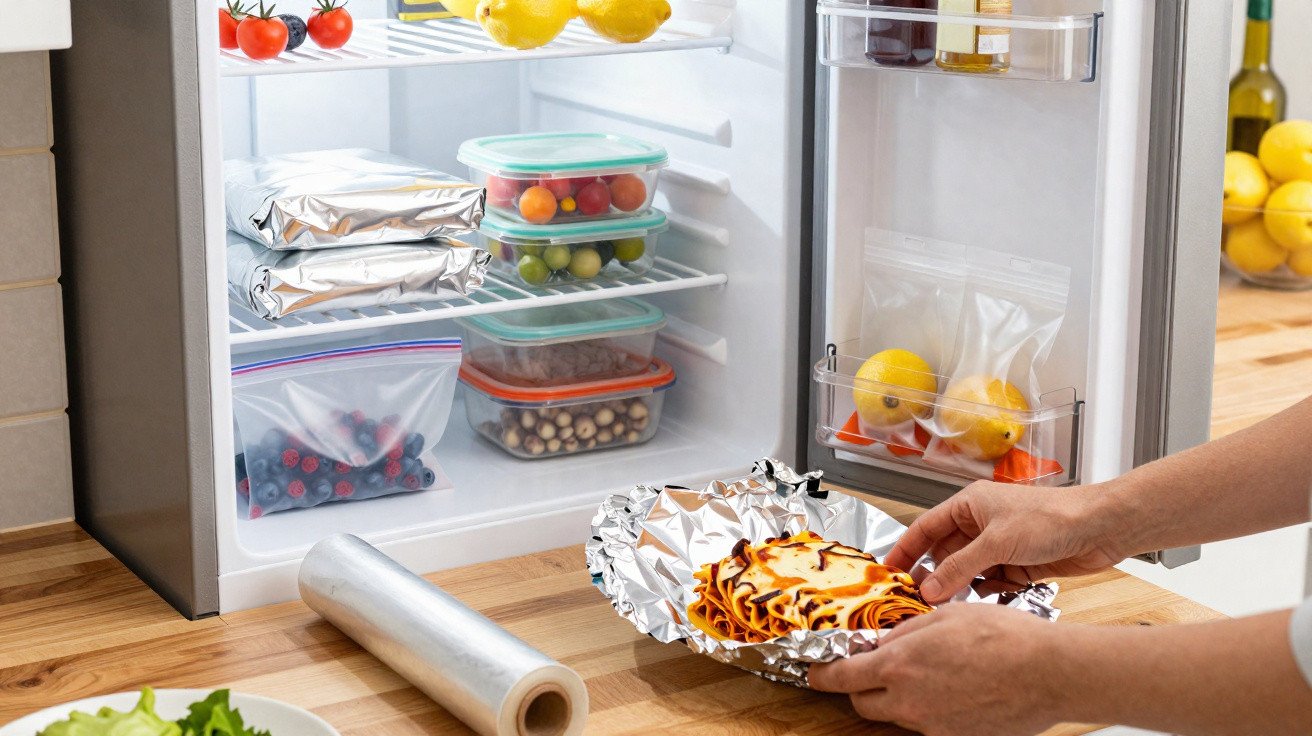
- leftovers of oven-baked dishes with moderate salt levels (e.g. potato gratin, lasagne, pasta bake)
- firmer pieces of cheese with normal salt content that will only be frozen for a short time
In these cases, the foil helps prevent drying out and keeps flavours intact. It works best when the storage period remains manageable - a few weeks to a few months, not years.
How to wrap so freezer burn has little chance
With a few simple steps, aluminium foil can be used far more reliably for freezing:
- Let food cool completely. Never wrap hot or still-warm dishes in foil. Doing so drives condensation into the packaging.
- Wrap very tightly. Press the foil smoothly against the surface with as few creases as possible, so there is minimal air between the product and the wrap.
- Use a second layer of protection. Put the foil parcel into a freezer bag or a container. This reduces the risk of tearing and limits odour transfer.
- Add a label with contents and date. Plain foil parcels all look the same - without a label, they are easily forgotten.
This double-wrapping approach combines the mouldability of aluminium foil with the seal of a bag or box - a practical compromise when nothing else is to hand.
When aluminium foil becomes a risky choice for freezing
It becomes problematic wherever the metal can react chemically. Certain foods may draw aluminium from the foil, potentially transferring tiny particles into what you eat.
Avoid aluminium foil with very salty or acidic foods
Salt and acid can attack aluminium. The stronger the seasoning or the more acidic the marinade, the more likely a reaction becomes. The risk is largely inferred from research into heating food in aluminium packaging, but many professionals advise taking the same cautious approach for cold storage.
These foods should not be frozen in direct contact with aluminium foil:
- tomatoes and tomato sauces
- dishes with lots of citrus (e.g. lemon chicken, orange marinade)
- foods with a high vinegar content (e.g. salads in vinegar dressing, pickled vegetables)
- heavily salted or cured meats (e.g. ham, bacon, salami, sausages)
- very salty cheeses (e.g. feta, halloumi, certain hard cheeses in brine)
For these, airtight containers made of glass or plastic are the better option by far. If you want to be extra cautious, use aluminium foil only as an outer layer around an already suitable lidded container.
Never put aluminium foil in the microwave
A second critical point is how you defrost. In a conventional oven, you can bake or reheat frozen foods in aluminium foil if the dish is suitable. In a microwave, however, it is clearly forbidden: metal and microwave radiation do not mix, and you risk sparks, damage to the appliance and, in extreme cases, a fire.
"If you freeze food in aluminium foil, you should defrost it later in the fridge - or remove the foil completely before reheating."
Better everyday alternatives
Many households want to use aluminium foil less often anyway - for health reasons, but also because of its environmental footprint. In the freezer, there are robust alternatives that can be reused again and again.
Practical alternatives with added benefits
| Packaging | Advantages | Typical uses |
|---|---|---|
| Glass container with lid | flavour-neutral, reusable, also suitable for the oven | bakes, portions of stews, pre-cooked meals |
| Sturdy plastic container (freezer-safe) | lightweight, stackable, seals well | soups, sauces, vegetable portions, prepared meals |
| Thick freezer bags | mould to shape, save space | meat, fish, bread, fruit, mixed vegetables |
| Reusable silicone bags | reusable, flexible, often leak-resistant | leftover portions, marinades, chopped fruit and vegetables |
If you batch-cook regularly, you’ll benefit from a consistent set of stackable containers in clear sizes. It saves time and space, and significantly reduces single-use packaging.
Food safety: what matters when freezing in general
Regardless of whether you choose aluminium foil or not, hygiene is what determines the safety of frozen food. Freezing temperatures stop most germs from multiplying, but they do not eliminate them completely. If you freeze food that has already gone off, it will still be off when you take it back out.
Avoid common freezing mistakes
- freezing too slowly: putting large portions or warm food straight into an overfilled freezer - the centre cools far too late
- breaking the cold chain: leaving big shops sitting in the car for a long time and only then freezing
- keeping food too long: even with good packaging, quality and flavour eventually decline
- poor labelling: missing contents and date - no one knows how old it is
Freezing in good time, working cleanly and choosing airtight packaging helps you keep food usable for longer and waste less.
How to limit aluminium contact day to day
Most people encounter aluminium in several places now: cookware, drinks cans, deodorants, and ready-meal packaging. Even though the precise health effects are still being researched in detail, specialist institutions advise avoiding unnecessary contact where possible.
In practical kitchen terms, that means:
- do not cook acidic or salty foods directly in foil
- in the freezer, use aluminium foil only for suitable, more neutral foods
- where it makes sense, switch to glass, stainless steel and reusable containers
- use aluminium grill trays sparingly, or replace them with other options
Following these points lets you keep aluminium foil as a targeted tool, rather than the default for every dish. For an impulsively frozen leftover slice of pizza, foil remains an option - just not the only one.

Comments
No comments yet. Be the first to comment!
Leave a Comment