
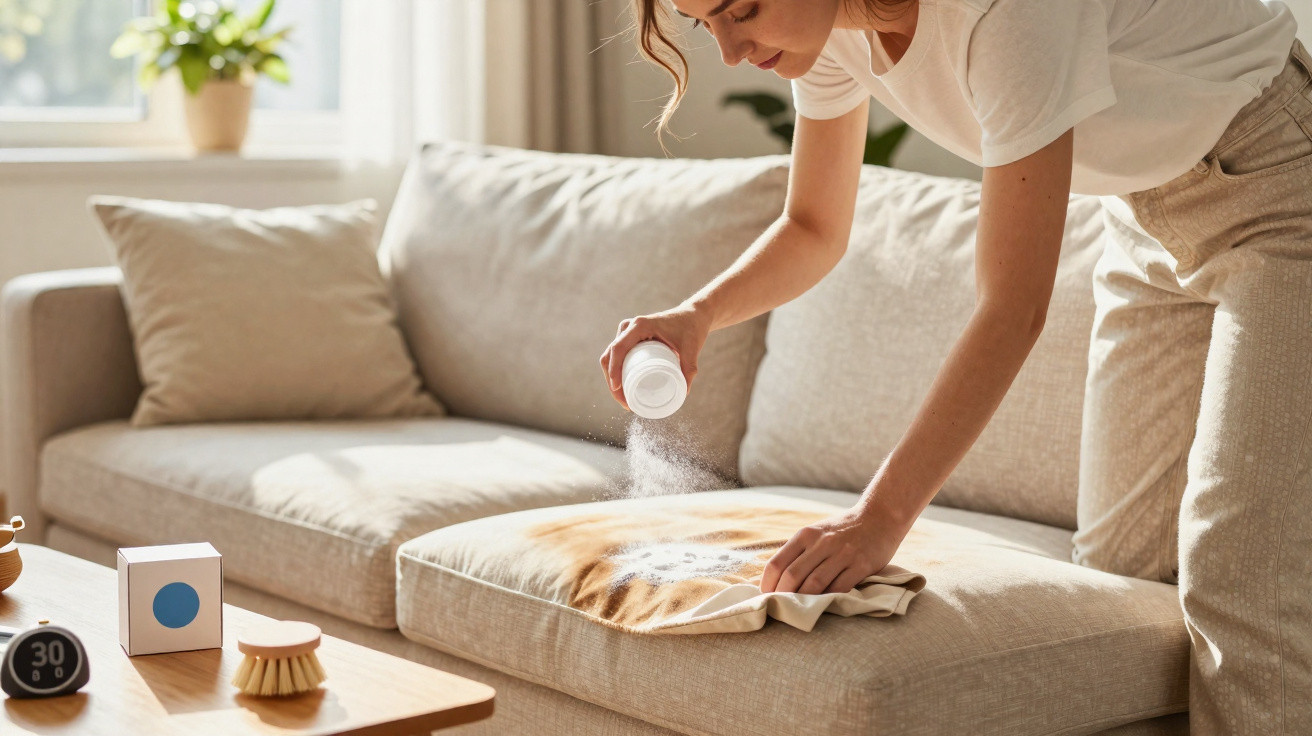
Many people instinctively reach for a room spray or a scented candle and hope it will mask the pong. The trouble is that the smell clings to the fabric, while the air ends up loaded with artificial fragrances. In fact, one simple kitchen staple is enough to neutralise upholstery odours right down in the fibres.
Why fabric sofas start smelling so quickly
In day-to-day life, a fabric sofa behaves a bit like a sponge. It absorbs almost everything that happens in the room and lingers in the air - and in open-plan kitchen–living spaces you usually notice it clearly after a few months.
Common sources include:
- Cooking smells, especially grease and frying
- Coffee steam and spilled drinks
- Damp from rainy weather brought indoors or wet clothing
- Pet hair, saliva and tiny urine splashes from cats or dogs
- Cigarette smoke or e-cigarette vapour
- Sweat, especially if the sofa is often used as a guest bed
All of this works its way into the cover and the padding. Over time you get that familiar “stale home smell” that the people living there often stop noticing - but visitors pick up on almost immediately.
Before you start cleaning, do a quick sniff test. Is it only one cushion? A corner where the dog always lies? The side nearest the open kitchen? Once you know the source, you can treat it more precisely and usually with less effort.
Basic clean before the odour killer
Before you use the actual home remedy, it’s worth doing a little prep. Otherwise dust, crumbs and hair can end up gripping the fabric even more.
- Remove throws and scatter cushions: Take off plaids, covers and loose cushions; wash any removable covers according to the care label.
- Vacuum thoroughly: Use a brush attachment on the seats, backrest, crevices and the undersides of cushions.
- Pre-treat stains: Dab fresh marks with a slightly damp cloth and a little mild washing-up liquid; don’t scrub.
“The cleaner the sofa is beforehand, the better the powder can bind the odour molecules later.”
The kitchen powder that neutralises musty smells in 30 minutes
The real hero of this method is already in many cupboards: sodium bicarbonate, better known in everyday life as bicarbonate of soda. Its fine, porous crystals work in two ways: they bind odour-causing acids and draw excess moisture out of the fibres.
Benefits of bicarbonate of soda on upholstered furniture:
- works without added fragrance - it neutralises rather than covering up
- used dry, so it won’t leave water marks
- biodegradable
- in normal household amounts, generally safe around children and pets
If your sofa fabric is very dark or delicate, test a small amount in an inconspicuous spot first. That way you can quickly check whether the colour shifts or the material looks dulled.
Step-by-step: get rid of odours in under 30 minutes
For a standard three-seater sofa, you’ll usually only need:
- about 150–200 g bicarbonate of soda
- a soft upholstery brush or a clean hand brush
a vacuum cleaner with a brush attachment
Check the sofa is dry: The cover needs to be properly dry. Let any damp areas air-dry first.
Sprinkle on the bicarbonate of soda: Scatter it generously over the seats, back and into the gaps until there’s a light white layer.
Work it in gently: Massage it in with your hand or brush so it can reach the fibres.
Leave it to sit: For everyday mustiness, let it rest for around 15 to 30 minutes. During this time, the powder binds the smells.
Vacuum carefully: Finish by vacuuming the whole sofa thoroughly, including edges and seams.
“Many users report that the typical stale home smell is noticeably weaker - or completely gone - after half an hour of bicarbonate-of-soda treatment.”
If it smells really bad: variations for special cases
Some odours are so embedded that one round isn’t enough - especially pet urine, vomit or stale smoke. For these tougher situations, a slightly adjusted approach works better.
Pet urine on the sofa
With fresh puddles, every minute matters. Once liquid soaks into the padding, it’s much harder to shift.
- Blot carefully with kitchen paper; don’t rub.
- Put a mix of water and clear household vinegar (roughly 1:1) on a cloth and dab the area gently.
- Then cover the entire patch with a thick layer of bicarbonate of soda.
- Leave it for several hours - ideally overnight.
- The next day, vacuum thoroughly and air the room.
The vinegar reduces the typical ammonia note; the bicarbonate of soda binds remaining odour and pulls moisture out.
Vomit on a fabric sofa
Here, cleaning and deodorising have to go together - otherwise a sweet-sour lingering smell can remain.
- Remove solid matter carefully with paper and a spoon.
- Dab with lukewarm water, a little mild washing-up liquid and a splash of vinegar.
- Let the area dry well; if needed, help it along with a towel and a hairdryer on a cool setting.
- Then apply bicarbonate of soda as in the basic method and leave it for several hours.
- Finish by vacuuming and airing again.
Stale smoke in the fabric
If a sofa has been heavily exposed to smoke, a single treatment rarely does the job. A short series of cleaning rounds is usually more effective.
- Vacuum and dust the sofa thoroughly.
- Sprinkle bicarbonate of soda generously, work it in, leave it for several hours and vacuum.
- Optionally, mist a very fine spray of diluted vinegar water sparingly over the dry fabric.
- Once fully dry, repeat the bicarbonate-of-soda step a second or third time if necessary.
“Smoke settles not only in the cover, but also deep in the foam - several cleaning cycles are normal here.”
A smell-free sofa as a regular routine
If you look after your sofa routinely, odours are far less likely to build up in the first place. Many fans of so-called “slow cleaning” deliberately schedule small cleaning rituals rather than only reacting when dirt is visible.
This rhythm has proven effective:
- Daily: Air the room briefly, plump up cushions, lay out or hang up throws.
- Weekly: Vacuum the sofa, focusing on crevices and under cushions.
- Every 2–3 months: Do a bicarbonate-of-soda treatment as described above.
- After accidents: Act immediately before anything soaks into the foam.
Washable throws or plaids can go straight into the washing machine and catch a large share of everyday odours. If you have pets, setting up a dedicated “pet spot” with a washable blanket helps keep hair and smells out of the main upholstery.
When to call in a professional - and what they do differently
If you’re still left with a strong musty smell after several bicarbonate-of-soda rounds, the cause may be deeper down - for example moisture in the padding, mould forming inside, or old liquid damage. In that case, only a professional upholstery clean may solve it.
Specialist companies use spray extraction or steam vacuuming, sometimes with dedicated products targeting bacteria and odour molecules. The cost puts many people off, but it can be worth it if the sofa is high quality or replacing it would be far more expensive.
Why bicarbonate of soda works so well against odours
The effect comes down to small-scale chemistry: many unpleasant smells come from acidic compounds or breakdown by-products. Bicarbonate of soda is mildly alkaline and reacts with these substances, making them less odour-active. On top of that, the grainy crystals provide lots of surface area for odour molecules to cling to.
The same trick works elsewhere in the home too - in the fridge, the bin, sports shoes or on carpets. What matters is giving the powder enough time to contact what’s causing the smell, and then removing it completely.
If you treat your sofa this way, everyday comfort noticeably improves: the air feels clearer, textiles seem fresher, and you’re no longer desperately airing the room in winter with the balcony door open simply because the sofa has picked up the wrong scent.


Comments
No comments yet. Be the first to comment!
Leave a Comment