
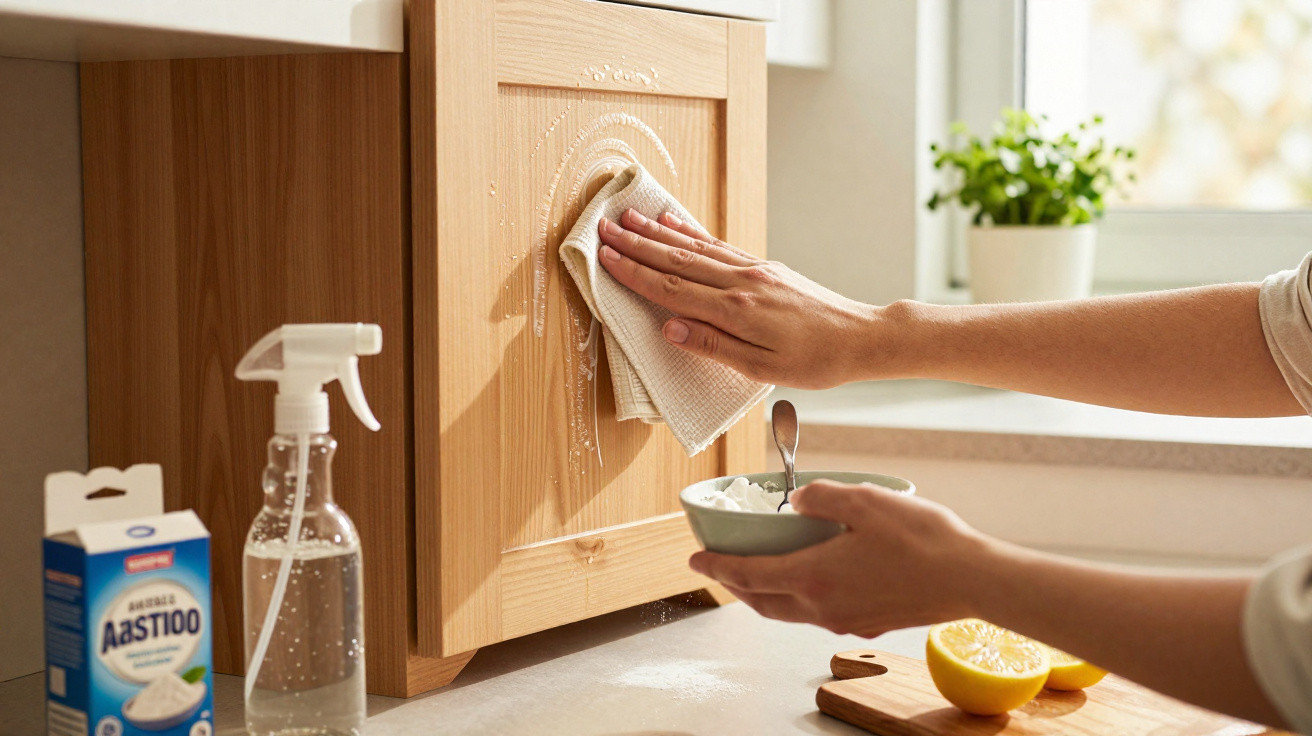
Anyone who fries, bakes and cooks a lot will know the issue: sooner or later, the fronts of your kitchen units start to feel slightly greasy, even when they look clean at first glance. That dull film is more than “a bit of dirt”. The good news is that you can break down this mix of fat and dust with an inexpensive powder from your cupboard - without needing a specialist cleaner.
Why grease builds up so stubbornly on kitchen cupboards
When you cook, tiny droplets of fat rise with the steam. They drift around the kitchen, pick up dust particles on the way, and then settle on cupboards, handles and trim. Once there, they dry out and form a tough, slightly sticky layer.
These areas tend to be worst affected:
- Wall units directly above the hob
- Fronts beside the extractor hood
- Handles that are touched frequently with slightly greasy hands
- Open shelving with no protection from doors
If you wipe with plain water, you usually just smear the film around. Grease needs something that can lift and bind it - and that is where a classic from the cleaning and baking shelf comes in.
Bicarbonate of soda: the straightforward powder for stubborn grease marks
“One teaspoon of bicarbonate of soda, a little warm water - that’s often all you need to get dull kitchen cupboards clean again.”
Bicarbonate of soda (also called baking soda) is mildly alkaline and has a gently abrasive texture. That combination helps it break down grease, absorb odours and remove light grime at the same time, without scratching most surfaces.
How to mix the bicarbonate paste correctly
You only need a small amount for an effective clean. The following ratio works well:
| Ingredient | Amount | Note |
|---|---|---|
| Bicarbonate of soda | 1–2 teaspoons | depending on how dirty it is |
| Warm water | 2–3 teaspoons | stir into a thick paste |
| Optional: washing-up liquid | 1 squirt | for heavy, baked-on grease |
The paste should not be too runny, otherwise it will slide off vertical surfaces. You’re aiming for a creamy consistency that clings to a sponge.
Step by step: getting cupboard fronts clean again
- Remove loose dust first, for example with a dry cloth.
- Pick up a little bicarbonate paste with a soft sponge or microfibre cloth.
- Work it onto greasy patches using circular motions.
- Leave it for 1–3 minutes so the grease can loosen.
- Wipe thoroughly with a damp cloth until no residue remains.
- Finish by rubbing the surface with a dry cloth to prevent water marks.
For particularly stubborn areas, a second pass is often worthwhile. Important: don’t scrub with too much pressure, so you don’t scratch delicate coatings.
Vinegar, lemon and more: other household options that also help
Bicarbonate of soda isn’t the only budget-friendly way to tackle greasy build-up in the kitchen. Many homes have other cupboard staples that cut through grease and reduce bacteria.
Vinegar for grease - but take care with delicate surfaces
A mix of warm water and vinegar is degreasing and mildly disinfecting. On hard-wearing surfaces such as tiles, glass or stainless steel, it works very well.
How to use it:
- Dilute one part household vinegar with three to four parts warm water
- Apply with a cloth and leave briefly
- Wipe with clean water and dry
With sensitive materials such as real wood, high-gloss fronts or painted surfaces, test the mixture on an inconspicuous spot first. The acidity can dull the finish or damage the paint.
Lemon juice for shine and a fresher smell
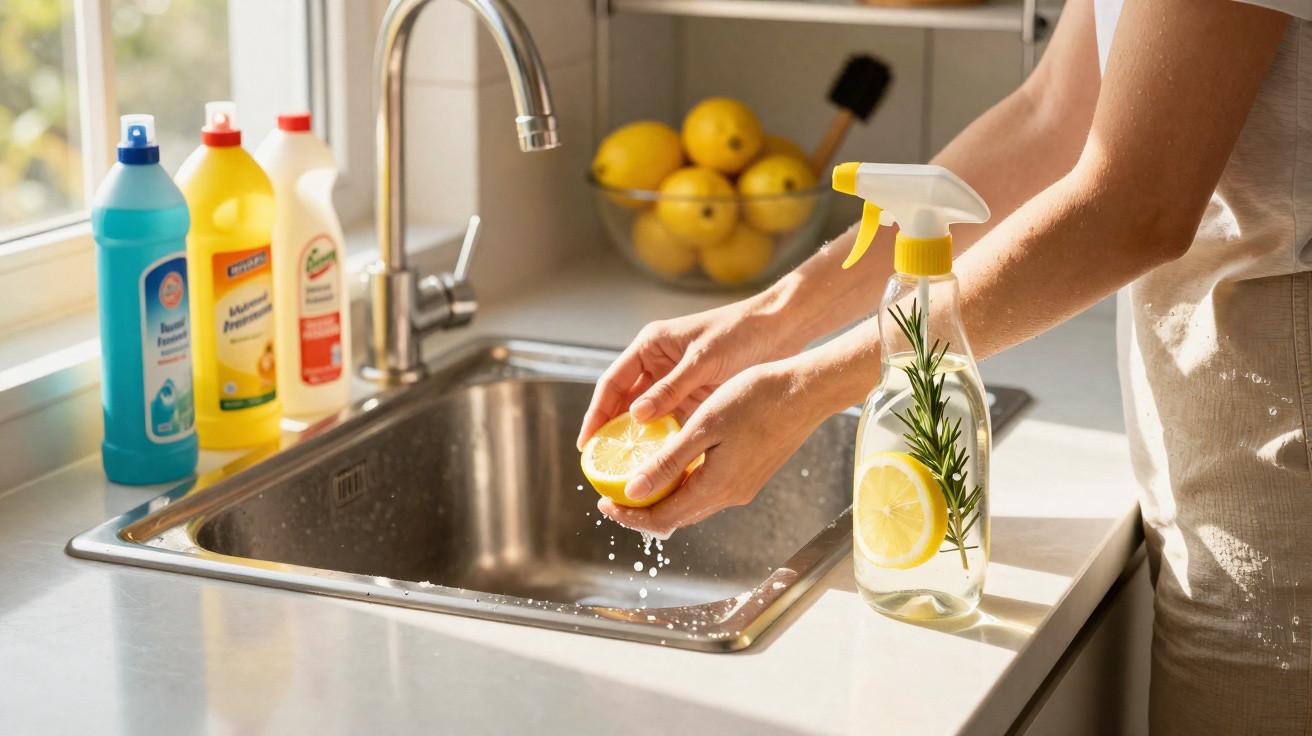
Lemon juice has a similar effect to vinegar, but the scent is usually more pleasant. Mixed with warm water, it can lift lighter grease films and leaves the kitchen smelling fresh.
A spray bottle is particularly handy here. It lets you apply the solution precisely to smaller areas, such as around handles or under wall units.
How to keep cupboards cleaner for longer
“Regular mini cleaning routines save hours of deep cleaning later.”
If you slow down the build-up of new greasy films, you won’t need to reach for bicarbonate and other helpers as often. Small habits can make a big difference:
- After cooking, quickly wipe the fronts with a damp microfibre cloth
- Switch the extractor hood on early and let it run on for a little while afterwards
- Ideally fry under the hood or with a lid on
- Wipe open shelves regularly, as they attract grease more readily
One interesting tip: on very smooth, robust surfaces, a whisper-thin layer of cooking oil on the cleaned surface can reduce how much new dirt sticks. Put a little neutral-tasting oil on a cloth, spread it evenly, then buff thoroughly. The surface won’t feel greasy afterwards, but it will often wipe down more easily next time.
Which surfaces can handle bicarbonate of soda - and which cannot?
Bicarbonate of soda is generally fairly gentle, but it still isn’t suitable for every finish. Its mildly abrasive action works well on:
- Melamine and plastic fronts
- Painted wooden doors with a durable coating
- Tiles and grout
- Handles made from metal or hard plastic
You should be cautious with:
- Very delicate high-gloss fronts
- Soft plastics
- Real wood with an open-pore surface
In these cases, test in a hidden area first to check whether the shine or colour changes. If in doubt, use a very diluted bicarbonate solution and clean without any scrubbing motion.
Why microfibre cloths are so useful in the kitchen
Microfibre cloths have tiny fibres that trap dirt particles and lift grease more effectively than standard cotton cloths. Used with bicarbonate of soda or a mild washing-up solution, they remove many marks mechanically - through friction - before you even need much cleaning product.
Important: wash these cloths separately from fabric softener, otherwise they lose their absorbency. For the kitchen, it’s worth keeping a few cloths just for unit fronts and worktops, so old greasy residue isn’t spread around.
How often should you really clean kitchen cupboards?
The ideal frequency depends heavily on how you cook. If you fry or deep-fry every day, it’s best to give the fronts a quick wipe at least once a week. In homes where cooking is only occasional, a thorough clean every few weeks is often enough.
A good rule of thumb:
- Handles and areas near the hob: wipe weekly with a damp cloth
- Wall units further away: every two to four weeks
- Major deep clean with bicarbonate of soda or other household remedies: one to three times per year
Keeping to these intervals helps prevent thick, baked-on layers that are hard work to remove later. Then bicarbonate of soda stays a quick back-up - rather than the last resort after years of neglect.





Comments
No comments yet. Be the first to comment!
Leave a Comment