
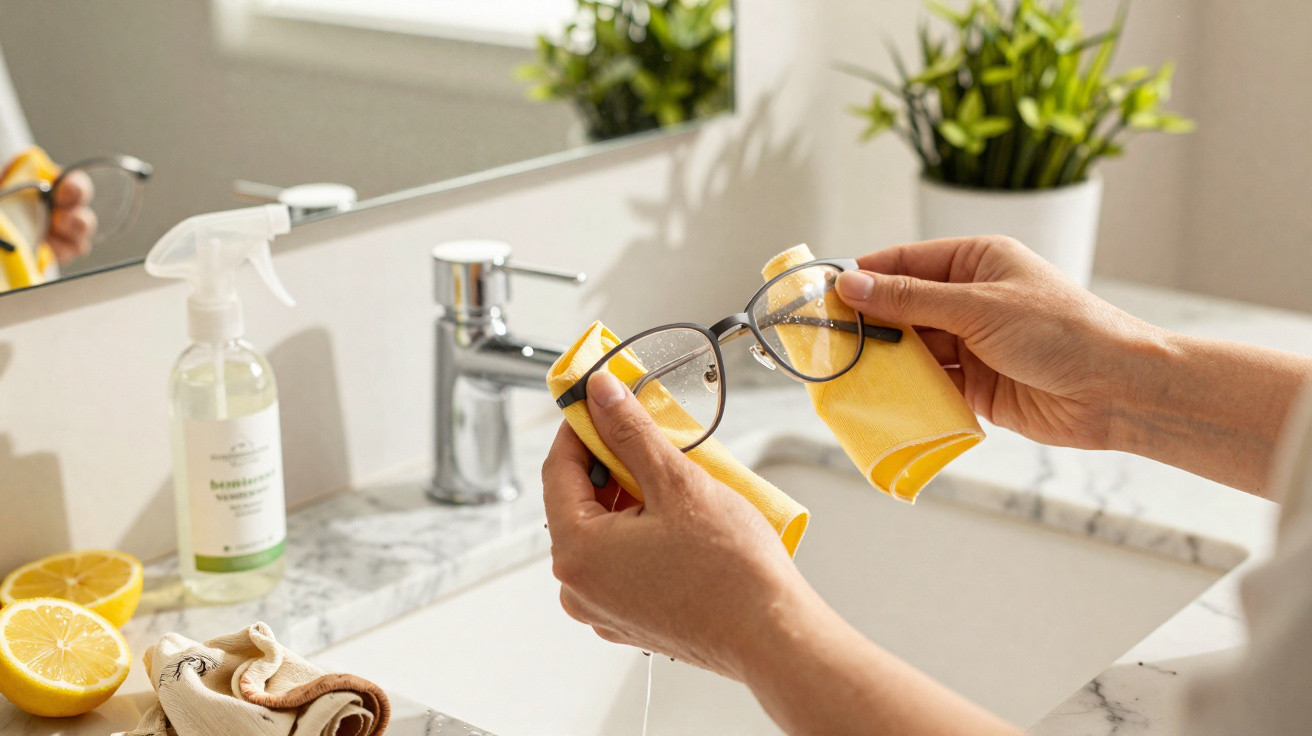
A pair of glasses can easily cost several hundred pounds, you rely on them every day, and yet many people clean them in ways that damage the lenses, their coatings and even the frame. This guide tackles that exact problem: five straightforward, everyday methods that get lenses genuinely clean without ruining them.
Glasses care: why cleaning the wrong way can get expensive
Modern glasses are high-tech. Anti-reflective coating, blue-light filtering, UV protection and a hard coat all sit on the lens as delicate layers. If you use water that’s too hot, kitchen roll or your jumper sleeve, you can wear those coatings away.
"What starts off feeling like a tiny scratch can end up reducing your vision overall - and make a new pair of glasses necessary."
The same everyday mistakes crop up again and again:
- Cleaning under hot water from the tap
- A quick rub with kitchen roll or a paper tissue
- Dry-rubbing with a T-shirt, jumper or scarf
- Cheap multi-purpose cleaners or household glass cleaner
The issue is that paper and fabrics contain stiff fibres and microscopic particles. Combined with dust and grime on the lenses, they act like very fine sandpaper.
1. Rely on water and mild soap - the basic clean
Opticians are surprisingly consistent on this: for day-to-day cleaning, cool or lukewarm water plus a mild cleanser is usually enough. Pricey specialist sprays are convenient, but they’re not essential.
Gentle hand-washing, step by step
- Wash your hands thoroughly with soap and rinse well, so no grease transfers to the lenses.
- Hold the glasses under cool or at most lukewarm water. Hot water can damage coatings.
- Put a tiny drop of mild, non-moisturising liquid soap or gentle washing-up liquid on your fingertips.
- Carefully rub the lenses and frame with your fingers - don’t forget the bridge and the arms.
- Rinse everything thoroughly until there’s no soap residue left on the surface.
- Dry with a clean, soft cloth, ideally microfibre.
Used regularly, this approach removes not only dirt but also skin oils and cosmetic residue. Many glasses wearers report that lenses fog up less for a while after cleaning this way.
2. Why microfibre is non-negotiable
Most people get a small cloth from their optician - and underestimate what it’s for. Microfibre is woven to lift and trap particles rather than drag them across the lens surface.
"Microfibre absorbs dust and grease without scratching the lens surface - something kitchen roll and many items of clothing simply can’t do."
Wiping correctly with microfibre
For a quick clean during the day, it’s often enough to:
- Lightly dampen the glasses with a little water, or use a spray recommended by your optician
- Lay the microfibre cloth flat and wipe both sides of the lenses using small circular movements
- Finish with a light pass over the bridge and arms, as sweat builds up there quickly
If you don’t have a microfibre cloth to hand, a smooth, lint-free cotton cloth can work in a pinch. Coarse fabrics, wool jumpers or denim should stay off-limits, even if it feels like the fastest option.
3. The problem many people forget: dirty cleaning cloths
Over time, every cleaning cloth collects grease, dust and tiny particles. If it’s never washed, you eventually end up cleaning with a dirty tool - and that’s when scratches appear.
How often should the cloth go in the wash?
| Use | Recommended washing |
|---|---|
| Daily use, several times a day | Once a week |
| Occasional use | Every two to three weeks |
| Heavily soiled, greasy smears | Wash immediately or replace |
Microfibre cloths can go in the washing machine without fuss. A gentle cycle at a low temperature is best, and avoid fabric conditioner because it clogs the fibres. By the time a year has passed, replacing the cloth is often worthwhile - the fibres lose their structure gradually.
4. Shine and hygiene with clear household vinegar
A familiar cupboard staple works surprisingly well on glasses: clear household vinegar. When diluted, it cuts through grease, removes streaks and leaves lenses with a subtle shine.
"A simple mix of water and clear household vinegar can replace expensive specialist cleaners - as long as it’s diluted correctly."
A simple vinegar mix for clear vision
To make a gentle cleaning solution:
- Pour one part clear household vinegar and one part water into a small spray bottle
- Give it a light shake
- Apply one or two sprays to the lenses
- Wipe with a clean microfibre cloth
A water rinse afterwards is usually unnecessary, provided the mix isn’t too concentrated. What you should avoid, however, are harsh glass cleaners, multi-purpose cleaners, methylated spirits or acetone. These can attack coatings and leave dull patches or marks around the edges.
5. A pro method for perfectionists: an ultrasonic cleaner
What opticians often use behind the scenes is now available for home use: compact ultrasonic devices where you place the glasses inside completely. In a water bath, sound waves create tiny bubbles that reach into hidden corners.
What an ultrasonic cleaner can do
A small unit typically works like this:
- Fill the small tank with water and, if needed, add a dedicated cleaning solution.
- Place the glasses in the basket, making sure they’re not sitting directly on the metal base.
- Start the device; the run time is usually under a minute.
- Remove the glasses, briefly rinse with clean water, then dry with a microfibre cloth.
The benefit is that it’s not only the lenses that come up spotless - hinges, nose pads and tiny gaps where grime and skin oils accumulate are cleaned too. Many devices also work for jewellery, watch straps or small metal parts, which is a practical bonus at home.
What you should consistently spare your glasses
Some habits are convenient but cause long-term damage. If you want to protect your glasses, remove these methods from your routine for good:
- Cleaning with hot water from the tap
- Rubbing with kitchen roll, paper tissues or napkins
- A quick "wipe over" with a jumper, scarf or T-shirt
- Using glass cleaners, harsh all-purpose cleaners or solvents
How you put your glasses down matters too: always place them with the lenses facing up, and carry them in a case rather than loose in a handbag or rucksack.
Why sunglasses and screen glasses need care as well
Non-prescription glasses are often neglected when it comes to cleaning. But sunglasses and dedicated screen glasses have the same sensitive coatings as prescription lenses. If you clean them carelessly, you risk scratches and cloudy patches too.
Sunglasses in particular often live in the car, at the beach or in a rucksack. Sand, suncream and sweat can then become embedded. That’s when it’s worth doing the full routine with water, mild cleanser and a microfibre cloth - and, if necessary, finishing with a cycle in an ultrasonic cleaner.
When a visit to the optician is worth it
If you notice deep scratches or feel your vision has worsened, cleaning at home isn’t the only step. Many opticians offer a free or very low-cost deep clean, including ultrasonic cleaning and a check of the frame.
It’s also the best place to confirm exactly which coatings your lenses have and which products are suitable. Some specialist coatings are more sensitive than others - a quick question can save an expensive replacement.
With a few consistent habit changes, a good microfibre cloth and a little patience, you can noticeably extend the life of your glasses. Clean lenses aren’t just about appearance; they also support day-to-day safety - whether you’re driving, working at a screen or cycling.






Comments
No comments yet. Be the first to comment!
Leave a Comment