
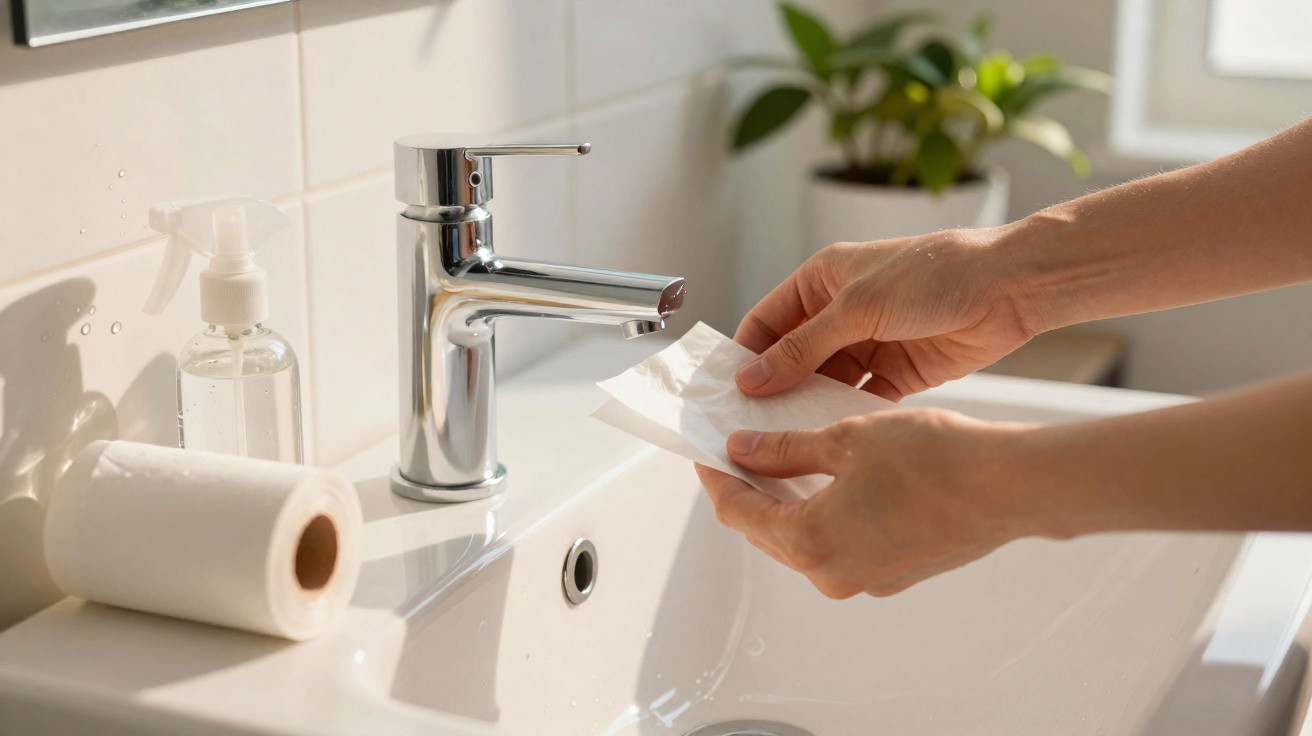
If you live in an area with hard water, you will know the routine: you finish a proper bathroom clean, and before long the taps and sink are back to showing white marks and dull patches. Many people reach for harsh limescale sprays, only to end up with a strong smell and lots of extra wiping. A surprisingly simple kitchen staple can help here, keeping surfaces looking shiny for several days.
Why limescale ruins our taps so quickly
Limescale (also called scale or kettle scale) is made mostly of calcium carbonate. It forms when water containing lots of calcium and magnesium ions evaporates or is heated. Because hard mains water carries plenty of these minerals, fresh build-up appears in bathrooms and kitchens again and again.
On taps, this usually shows up as:
- tiny white dots around the base,
- a dull film on chrome and stainless steel,
- clogged aerators at the spout, which weakens the flow.
Regularly using strong limescale removers will remove deposits, but over time it can also leave surfaces looking flat and tired. High-gloss chrome fittings are particularly vulnerable: they can scratch quickly if you use abrasive powders or overly rough sponges.
"The best strategy against limescale consists of two steps: descale thoroughly – and then prevent new spots from taking hold."
Many households already rely on home remedies such as vinegar, citric acid, or bicarbonate of soda. They work, but they need time to act and must be rinsed off carefully. For day-to-day use, lots of people therefore look for a faster approach that does not require any extra cleaning products.
The unexpected helper from the kitchen
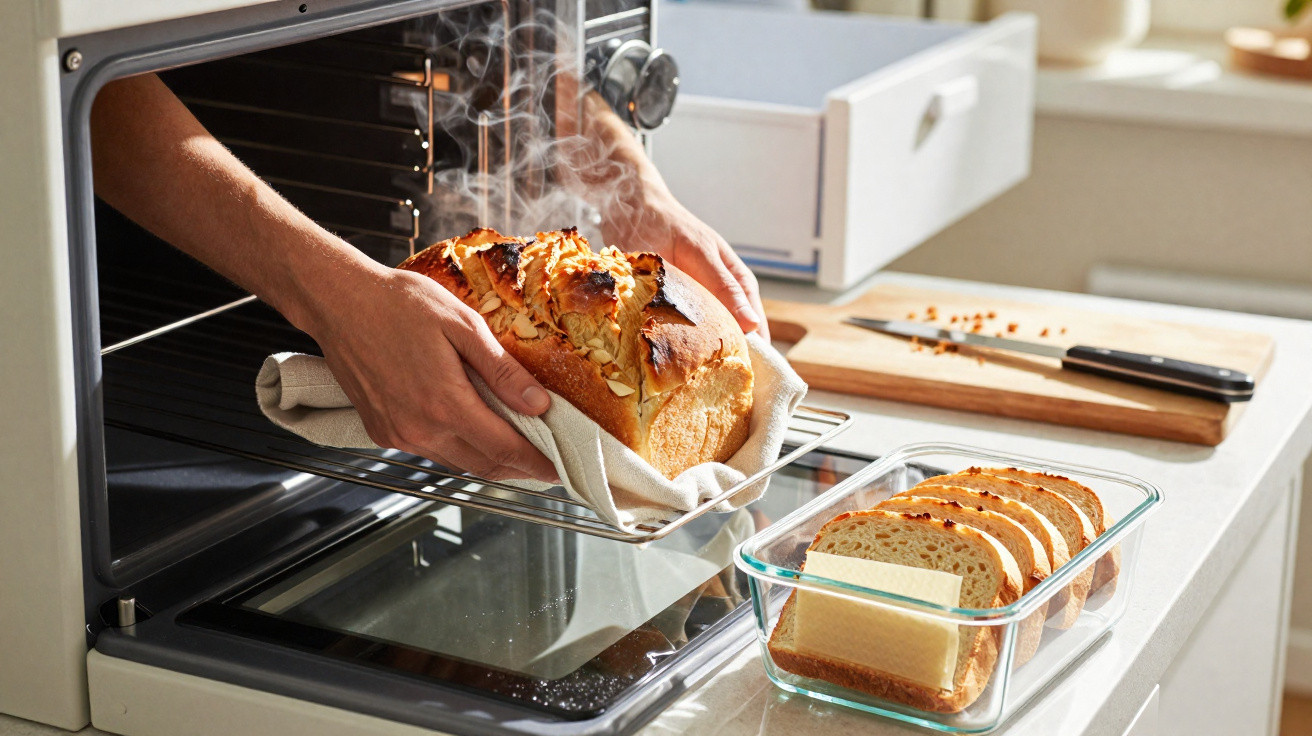
A product at the heart of current cleaning hacks is something most homes already have: baking paper (also called baking parchment). Its surface has a thin non-stick coating so dough and vegetables do not stick in the oven. That same quality can be put to use in the bathroom.
Used on dry chrome or stainless-steel taps, this lightly slippery surface does two things:
- It lifts light limescale haze and fresh water marks without scratching.
- It leaves an ultra-thin, water-repellent film that slows down new spotting.
Afterwards, water beads more readily, spreads less into a flat sheet, and dries faster. That means far fewer of the familiar white rings and streaks that make metal look dull. Many users report that, with this trick, fittings keep a cared-for look for around five to seven days.
How the method works, step by step
Preparation: dry the tap completely
The key point is that the tap really must be dry before you start. A soft microfibre cloth works best. Quickly wipe over the spout, handle, base and-if you have one-the hand shower until no droplets remain.
Using baking paper
Next, you only need a small piece of baking paper, roughly the size of half an A4 sheet. Loosely scrunch it into a ball so it sits comfortably in your hand and fits around small curves.
Now for the polishing part:
- Work the paper ball over the spout in circular motions.
- Then move across the handle, base and all shiny areas.
- Do not use much pressure; treat it more like polishing glasses.
- After about one minute, you are done.
Finally, it is worth giving everything a quick buff with the microfibre cloth. This helps spread the invisible film evenly and removes any tiny paper crumbs.
"The combination of light abrasion and an ultra-thin, water-repellent layer makes baking paper a simple but effective limescale shield."
Which surfaces suit the trick-and where to be careful
The method works particularly well on:
- glossy chrome taps,
- stainless-steel taps,
- smooth metal areas on sinks and basins.
More sensitive surfaces include:
- black or coloured fittings with a matte finish,
- textured surfaces that are not smoothly polished,
- materials such as brass with delicate specialist coatings.
In these cases, test it first in an inconspicuous spot. The trick is not suitable in direct contact with natural stone such as marble, limestone, or travertine around the tap, as the non-stick coating can settle into pores and cause staining.
What baking paper cannot do: properly remove heavy limescale
This is a maintenance method, not a replacement for a proper descaling treatment. If the spout and base are already heavily crusted, baking paper on its own will not be enough. At that point, a classic deep clean is needed.
Thorough descaling in a few steps
For a badly scaled tap, a short intensive routine works well:
- Unscrew the aerator (perlator) and soak it in warm vinegar or vinegar essence (diluted).
- Leave it to work for one to several hours, depending on how heavy the limescale is.
- Wrap the outer surfaces with a cloth soaked in vinegar or citric acid, and leave it on briefly.
- Go over it with a soft brush or cloth, then rinse thoroughly with water.
- Dry everything completely-only then use baking paper for ongoing care.
Once that base clean is done, treating the tap with baking paper about once a week is usually enough. This noticeably delays the next major descaling session.
Everyday habits that slow limescale before it starts
Alongside the baking paper approach, a few small routines can make a clear difference without taking much time:
- After showering or washing up, quickly wipe over the tap and sink.
- Clean the aerator regularly so the water stream stays smooth, splashes less, and fewer droplets land on surrounding surfaces.
- In very hard-water areas, consider water filters or specialist anti-limescale aerators.
Fast drying in particular removes the conditions limescale needs. When there is no standing moisture left behind, fewer minerals can settle out. That also reduces streaks on glass screens and tiles.
Why this trick shines in hard-water areas
In places where the limescale content of mains water is high, deposits can show after just one or two days. That is where baking paper is especially worthwhile, because it is easy to build into a weekly cleaning routine. Keeping a small supply in the bathroom or kitchen is enough, and one sheet lasts for several uses.
At the same time, you can cut down on specialist cleaning products. That is good for the household budget and for your airways, as many sprays are irritating because of their smell. Anyone who reacts sensitively to chemicals, or who has children and pets at home, often appreciates any option that involves fewer added substances.
Practical tips for a tap that stays glossy
For a clearer view of how the individual measures work together, this quick reference table can help:
| Measure | Aim | Frequency |
|---|---|---|
| Dry with a microfibre cloth | Remove fresh droplets | After using the sink or shower |
| Baking paper polish | Slow light limescale, maintain shine | About once a week |
| Thorough descaler treatment | Remove thick deposits | As needed, usually every few months |
| Clean or replace the aerator | Improve flow, reduce splashing | Every 1–3 months |
Combining these building blocks means far less hassle with marks around the edge of the basin and on the sink. Fittings keep their shine for longer, and even older taps look better cared for.
It is also worth understanding what is happening chemically: the water-repellent effect works a bit like an impregnation treatment-it does not change the metal itself, only how water sits on the surface. It will not prevent limescale forever, but it does push back the point at which the next big clean becomes necessary. For many households, that is enough to keep the bathroom and kitchen looking presentable with much less effort.

Comments
No comments yet. Be the first to comment!
Leave a Comment