
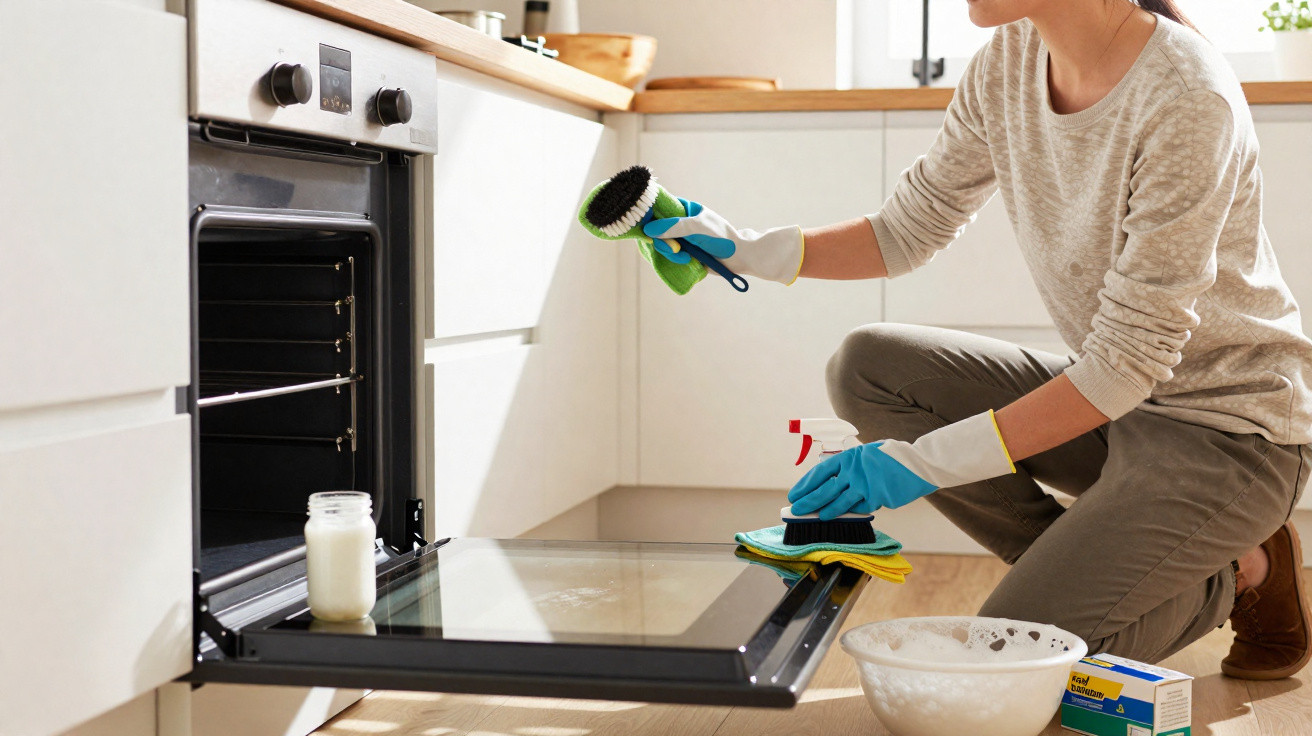
A greasy frying pan, a guilty close-up of a grimy oven door, then a helpful hand dusting baking soda like fairy powder and misting vinegar in slow motion. White foam. A pleasing fizz. Cheerful music. Thirty seconds later, the pan is gleaming. The comments howl: “Game changer!” and “Where has this been all my life?”
Then you look at your own kitchen: a roasting tin crusted from Sunday, a tacky halo round the hob, dull grey scuffs on a baking sheet that used to shine. You follow the hack to the letter. Vinegar, baking soda, foam. You scrub. And scrub. The grease just sits there, unbothered.
Somewhere between the glossy clip and the mess in front of you, the story stops making sense.
The myth of the magic fizz
Spend more than a couple of minutes on cleaning TikTok or Instagram Reels and vinegar and baking soda turn up like a celebrity double act. They’re sold as the natural power couple for everything: ovens, drains, showers, even burnt lasagne welded to glass. The instructions barely change: scatter bicarbonate of soda (baking soda), spritz on white vinegar, enjoy the “volcano”, then stroll off feeling triumphant.
That fizz feels like progress. It sounds as if the hard work is happening on your behalf. Foam creeps across the grime and it’s strangely satisfying on a small screen - the same itch scratched by pressure-washing videos and oddly hypnotic “before and after” clips. Only this time, the promise is a spotless kitchen without harsh chemicals, sweat, or time.
On your phone it passes for alchemy. In a real kitchen, it’s largely performance.
A 2023 survey of British households by a large cleaning brand found that over 60% of respondents had tried at least one “viral hack” with vinegar and baking soda. Almost half said the outcome was “disappointing” or “no better than regular washing-up liquid.” Another 18% admitted they had to redo the job with a proper product after filming their own attempt.
A London renter I spoke to, Emma, tested the famous oven-door trick ahead of her end-of-tenancy inspection. She spread on baking soda, sprayed vinegar, left it overnight and got up expecting a transformation. The baked-on brown fat was paler in places, patchy, and still clinging stubbornly. In the morning, she panic-bought a strong commercial oven cleaner to finish the job.
Those viral videos rarely include that part. They’re cut, styled and shot under flattering light - often on surfaces that were already partly clean. The sparkle you’re admiring? In many cases, it existed before the first sprinkle.
The bigger problem is basic chemistry. Vinegar is an acid. Baking soda is alkaline. Put them together and they largely neutralise each other, producing mostly water plus carbon dioxide. The bubbles look dramatic, but you’ve effectively wiped out the main cleaning strengths of both ingredients. Separately, each can be genuinely useful in the right situation. Combined - particularly against thick, oxidised kitchen grease - they’re feeble.
And grease on ovens and pans isn’t “just oil”. It’s oil that’s been heated, oxidised, carbonised, and often bound up with sugars and proteins. The result is a sticky, polymerised layer that grips like varnish. To break that down you typically need heat, time, abrasion, and often a proper degreaser or surfactant. A cute kitchen volcano doesn’t deliver that kind of force.
So when someone says, “vinegar and baking soda cleaned my entire oven,” there’s usually an off-camera chapter: far more elbow grease than you were shown, or a history of earlier cleaning that made the final wipe look effortless.
What actually works on stubborn kitchen grease
If you want baking soda to pull its weight on grease, don’t pair it with vinegar. Use it dry, or mix it into a thick paste with a small splash of water. Used this way, it acts as a gentle abrasive - a fine scouring aid rather than a potion. Smear the paste over greasy metal, leave it for 15–30 minutes to soften dried-on residue, then work it with a non-scratch pad.
Very hot water is the unsung hero. Heat softens fats and helps surfactants do their job. So instead of a quick rinse, soak greasy trays in very hot, soapy water with a light sprinkle of baking soda - not for five minutes, but for an hour or longer. The waiting is dull; it’s also the point where most of the “magic” actually occurs. After that, a metal scraper or razor blade (kept flat and used carefully) can lift the loosened film without wrecking your hands.
For ovens, purpose-made products still outperform most DIY chemistry. A proper degreasing spray, left on for the full time stated on the label, will do more than layers of impressive-looking foam that never truly bites into the grime.
Everyone knows a person with a gleaming hob who insists they “just wipe as they go.” Most lives don’t look like that. Plenty of people only deal with the oven when it starts smoking, or when guests are coming at Christmas. Grease has months to harden. By that stage, gentle pantry tricks are like trying to chip concrete with a feather.
A lot of professional cleaners rely on a routine that’s almost boring in its simplicity. They wipe fresh splashes fast with hot, soapy water. For older build-up, they apply a strong degreaser, let it sit, then scrub with the right tool for the material: microfibre on glass, stainless-safe pads on metal, and a scraper for the worst caramelised patches.
Let’s be honest: hardly anyone does this every single day. That’s exactly why “realistic maintenance” matters more than pretending your kitchen is a showroom. A monthly deep clean with the right kit is safer and more efficient than chasing viral “miracles” that claim to deliver a spotless oven in ten minutes using cupboard staples.
From a chemistry point of view, vinegar is best as a limescale remover, not a grease cutter. It tackles mineral deposits in kettles, on taps and around shower heads. Baking soda is more useful for odours and as a mild scouring powder. When you combine them on fat, they spend their energy reacting with each other rather than with the mess.
There’s also a safety issue lurking behind the friendly editing. Some people mix vinegar and baking soda in sealed containers to “blast” blocked drains. Gas pressure can build up, crack pipes, or force dirty water back into the sink. Others add vinegar to bleach-based cleaners, assuming they’re boosting performance, and end up producing chlorine gas.
The let-down isn’t only about an oven door that’s still dirty. It’s the wasted time, the extra effort, and the misplaced trust in advice that looks simple, natural and harmless - but doesn’t match what happens in a real, chaotic kitchen.
Safer, smarter ways to deal with grease (without the lies)
Start with a straightforward principle: fresh grease is a spill, not a stain. When something splatters, keep a damp microfibre cloth nearby and wipe while the surface is still warm - not piping hot. Warm fat lifts far more easily than cold, set fat. At that point, even plain hot water and washing-up liquid can do serious work.
With pans, resist the urge to attack them under cold water straight away. Tip out excess fat, add hot water and a drop of washing-up liquid, then return the pan to the hob and bring it to a gentle simmer for a few minutes. Once it cools enough to handle, wash as normal. That small “deglaze” loosens the brown film so you’re not scraping for ages. It feels old-fashioned because it is; cooks have relied on versions of this for generations.
Save heavy-duty oven cleaners and strong degreasers for occasional deep cleans rather than weekly use. Gloves, ventilation and reading the label take a lot of the fear out of them. You’re using chemistry designed for baked-on fat, instead of hoping a fizzing mixture will do a job it was never built to do.
Most grease disasters aren’t caused purely by laziness - they’re caused by haste. People spray and wipe immediately, without giving the product time to penetrate. Or they attack delicate enamel with the wrong pad, scratch it, and blame the cleaner rather than the method. Metal scourers on glass doors, aggressive scraping on non-stick pans, using undiluted products on aluminium: all familiar regret.
Another common mistake is insisting on one favourite spray for every surface. That citrus cleaner that smells “fresh” might barely touch your oven roof. A thick, foaming degreaser that melts oven fat may be too aggressive for painted cabinets. Matching product to surface sounds tedious, but it prevents peeling finishes and slow damage that no hack video warns you about.
There’s an emotional undercurrent too: guilt. You watch someone online “reset” their kitchen nightly - white worktops, perfect grout, spotless extractor - then you look at your own sticky extractor fan and feel behind before you even reach for a sponge.
“The most common sentence I hear from clients isn’t ‘my house is dirty’, it’s ‘my house is embarrassing’,” says one professional cleaner who specialises in family homes. “They’re not lazy. They’re overwhelmed by unrealistic standards and bad advice.”
So what does a sensible, honest grease plan look like in everyday life? Something like this:
- Daily or “when you can”: wipe obvious splashes on the hob and worktops with hot, soapy water.
- Weekly-ish: wash pans and trays properly; soak the stubborn ones rather than attacking them cold.
- Monthly or per season: deep-clean the oven and extractor using a product intended for baked-on grease, with gloves and good ventilation.
Some days you’ll only manage the first line. That still beats pinning your hopes on a miracle mix that was never going to rescue you.
A different way to look at that dirty oven door
Once you understand what the vinegar-and-baking-soda trick really is, those slow-motion fizz clips land differently. The foam starts to look less like “power” and more like a distraction from the labour that still has to happen. The truth isn’t that the two ingredients are useless. It’s the claim that they can replace proper products, time and effort for every kind of grease.
There’s another, quieter reality as well: a kitchen with a bit of patina is usually a kitchen that’s being used. The cloudy patch on oven glass, the faint ring on a favourite pan, the slightly tacky handle you now wipe more often because you’ve noticed it - these are signs of meals made, not personal failure. The aim is hygiene and function, not museum-level shine at all hours.
When you step away from the pressure to solve everything with “non-toxic hacks”, you can choose tools that fit your actual life. Maybe that means one bottle of strong degreaser used monthly, plus washing-up liquid and the hottest water you can manage on the nights you do cook. Maybe it means replacing one ruined tray instead of punishing yourself over it.
The next time a video insists vinegar and baking soda will erase years of baked-on grease in 10 minutes, pay attention to what’s missing: the scrubbing that happens off camera, the edits, the context. You’re allowed to want cleaning to take less out of you. You’re also allowed to refuse pretty lies that waste the energy you do have.
Grease isn’t a moral failing; it’s chemistry colliding with daily life. Respect both, and your kitchen feels less like a battleground and more like what it really is: the messy, working heart of your home.
| Key point | Details | Why it matters to readers |
|---|---|---|
| Vinegar & baking soda cancel each other out | When combined, they mostly neutralise into water and carbon dioxide, so you lose vinegar’s acidity and baking soda’s alkalinity. The big fizz is largely gas escaping, not dirt being dissolved. | It explains why “miracle” hacks so often fall flat in real kitchens - and why you end up spending extra time and effort repeating them. |
| Use baking soda as an abrasive, not a potion | Use it dry or as a thick paste with a little water on pans, trays and oven bases. Leave it to sit, then scrub with a pad that suits your surface. | It offers a practical, low-cost way to add scrubbing power without damaging most metals or paying for specialist powders. |
| Heat and dwell time beat quick sprays | Very hot, soapy water and a 30–60 minute soak softens baked-on fat. Degreasers need several minutes on the surface before you wipe or scrub. | It moves your focus from instant results to the two levers professionals rely on, reducing how much brute force you think you need. |
FAQ
- Does vinegar and baking soda ever work together for cleaning? They can help in drains where the fizz loosens hair and soap scum, but even there, hot water and a proper drain cleaner or a mechanical tool usually work better. For grease on ovens and pans, using them separately is far more effective than mixing them.
- Is vinegar actually good for cutting kitchen grease? Vinegar has a mild degreasing effect, but it’s far stronger against limescale and mineral deposits. For typical kitchen fat, hot water, washing-up liquid and a proper degreaser beat vinegar on most surfaces.
- What’s a safer alternative to viral “grease hacks”? Use very hot, soapy water for fresh splashes, soak stubborn pans, and keep a dedicated oven or hob cleaner for occasional deep cleans. Pair that with the right tools: microfibre cloths, non-scratch pads and, when needed, a scraper on appropriate surfaces.
- Can vinegar damage my oven or hob? On stainless steel and glass, diluted vinegar is usually fine, but it can dull certain stones, grout and some rubber seals over time. On enamel, long soaks aren’t ideal. Always test a small area first and avoid soaking electrical parts.
- How often should I really clean my oven? For most busy households, a proper deep clean every one to three months is realistic, with quick wipe-downs of fresh spills when you have the energy. Waiting until the oven smokes only makes the job harder and can push you towards harsher methods.

Comments
No comments yet. Be the first to comment!
Leave a Comment