
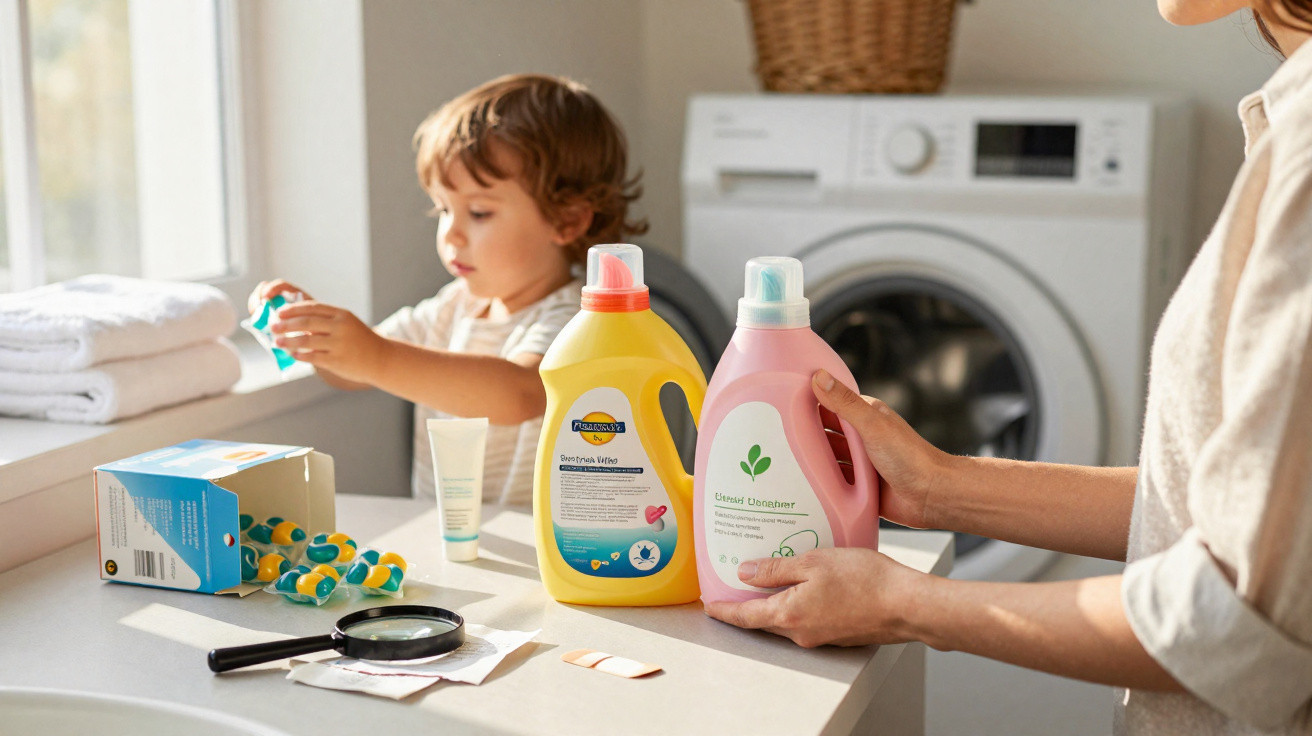
And somewhere at the back of your mind, the question lingers: what can you actually rely on?
Your eyes go to the ingredients list, but marketing claims drown out the technical terms. A recent French test is a wake-up call: not every bright white finish feels kind on the skin.
What’s really behind that “perfect” foam
Today’s laundry detergents are complex blends of surfactants, enzymes, optical brighteners, preservatives and powerful perfumes. A lot of it cleans extremely well. Some of it can irritate skin and airways. People who are sensitive may notice itching at cuffs, redness around the neck, or a scratchy throat when the machine is running.
Isothiazolinones are under particular scrutiny. Preservatives such as MIT, CMIT, BIT or OIT are effective at keeping products stable, but they can worsen contact allergies. Many users don’t react straight away; symptoms can appear only after several washes. On top of that, there are fragrance ingredients from the EU list of recognised allergens. For some people, even small amounts are enough to trigger discomfort.
Optical brighteners bind to fibres. They make fabrics look brighter, yet they remain on T‑shirts and bed linen after rinsing, extending skin contact. Heavy perfume loads also spread through the room. If you have asthma or sensitive mucous membranes, you tend to notice it quickly.
“Laundry should be clean - not noticeable. Less fragrance, fewer additives, more comfort for skin and airways.”
What 60 Millions de Consommateurs reports
The French consumer magazine highlights four specific brands for formulations it considers irritating or otherwise problematic. The editorial team points to combined allergens, preservative isothiazolinones and very intense fragrance profiles as the main reasons. Manufacturers change formulas frequently. Something that stands out “today” does not necessarily remain identical tomorrow. If you are affected, it is wiser to focus on the recipe rather than the name on the front.
In practice, your body’s response and the warnings on the pack matter more than brand reputation. If the home smells strongly after a wash, if children scratch at the back of their necks, or if wrists itch under jumpers, it is worth switching formulation and using a lower dose.
How to choose better without overhauling your routine
Run a simple at-home comparison. Use two products: a neutral, fragrance-free option and your current detergent. Wash T‑shirts and towels that sit directly on the skin. Wear them for two days. Pay attention to how your skin feels and what the room air is like. If the neutral option keeps things calmer, stick with it for three weeks - skin tends to respond well to consistency.
Treat the ingredients list as a tool, not an advert. Red flags include: Parfum/Fragrance, colourants, the isothiazolinones listed above, and “optical brighteners”. Where water is hard, many people end up overdosing, which increases residues left in fabric. Instead, dose according to water hardness and, from time to time, use an extra rinse cycle.
Capsules look convenient, but they concentrate active ingredients. That can increase exposure for both skin and nose. In homes with children, take extra precautions: always store them child-safe and out of sight.
- If you have sensitive skin, avoid: MIT, CMIT, BIT, OIT (isothiazolinones).
- Choose fragrance-free or “for sensitive skin”, ideally with a short, clear ingredient list.
- Reduce the dosage and check results; clothes often stay clean regardless.
- Try an additional rinse, particularly for bed linen and baby textiles.
- Store capsules only in child-safe conditions; close the pack immediately every time.
Understanding label language
The EU sets rules for labelling and safety statements. Packs often list ingredient groups, while more detailed breakdowns are typically available online. A QR code or a customer service number often leads to the full disclosure. If you are prone to allergies, check these details regularly because recipes can change over the course of the year.
“Rule one: if your skin reacts, your experience matters more than the advertising message. Switch, dose lower, rinse longer - and observe.”
Comparing formats
| Format | Characteristic | What to watch for |
|---|---|---|
| Powder | Strong on stains, can be lower in fragrance | Dose accurately to avoid residues and grey film |
| Liquid | Dissolves quickly, often more strongly scented | Check perfume allergens; extend rinsing |
| Capsules | Convenient, pre-dosed, highly concentrated | Child-safe storage; be mindful of potential irritants |
| Laundry strips | Minimal packaging, easy dosing | Check ingredients; test real-world performance |
How to spot risky formulations
Certain patterns show up again and again. A strong, long-lasting scent often points to fragrance capsules that release perfume gradually. Some of these capsules rely on polymers that are slow to break down in the environment. Optical brighteners rarely get much attention, but they do appear in technical information. If you are waking up scratching, it can be worth trying products without brighteners.
Claims such as “disinfection”, “hygiene boost” or “ultra-concentrated” usually mean more active ingredient per dose. That can be useful, but it also makes precise dosing more important. If you routinely add “a bit extra”, you increase the risk of skin contact and inhalation via the room air.
“More active ingredient does not automatically mean more cleanliness. It is often simply more residue on the fabric.”
Practical steps for everyday life
- Maintain the washing machine: schedule 60°C cycles, let the seal dry, and clean the detergent drawer.
- Prioritise high-contact items: wash bed linen, underwear, sports tops and baby textiles with neutral products where possible.
- Ventilate the room while the machine runs to dilute fragrance and irritants in the air.
- Pre-treat stains locally and reduce the overall dose; this helps cut residues.
- Trying a new product? Start with a small load and watch for skin reactions for two days.
What 60 Millions de Consommateurs means for Germany
France’s testing culture often surfaces trends early. Many brands and formulations resemble the German versions. If you shop in border regions or use international brands, these findings can be directly useful. The key message still applies everywhere: recipe over reputation. And your body provides data every day.
A quick skin test that takes little time
Wash a plain cotton T‑shirt with the detergent in question. Wear it for 24 to 48 hours. Focus on the neck, the inner elbows and the waistline. If you notice itching, burning or redness, switch products and reduce the dose. If symptoms persist, seek medical advice - ideally with photos documenting the reaction.
Children, capsules and emergencies
Brightly coloured pods can look like toys. Store them up high and locked away. If they get into the eyes, rinse immediately with lukewarm water. If swallowed, or if there is severe coughing, get medical help at once and keep the packaging to hand. Smell is not a safety signal; many irritants have little or no odour.
Extra knowledge that helps when buying
Water hardness drives dosing. Soft water needs noticeably less product. Your supplier lists hardness levels, often on your bill. Adjusting the dose saves money and reduces residues on textiles.
Quality marks can help you navigate. Eco labels often favour lower fragrance loads and stricter ingredient criteria. Even so, check the ingredient list, as certified products may still allow certain substances in small quantities. For sensitive skin, fragrance-free remains the plain but sensible option.
FAQ
- Which four brands does the magazine criticise? The test names specific products and batches. Because formulas change, it is worth checking the current publication and reviewing the ingredients list at the point of purchase.
- Why can a laundry detergent irritate skin? Most commonly due to fragrance allergens and preservatives such as isothiazolinones. Not everyone reacts, but sensitive people often notice symptoms quickly.
- Does “hypoallergenic” always help? It can reduce risk, but it guarantees nothing. Short lists, fragrance-free products and an adjusted dose usually deliver the best outcomes.
- Are capsules inherently problematic? They are convenient, but concentrated. Extra caution is advisable in households with children and sensitive skin.
- How do I know a product suits me? Calm skin, no moments of scratching, and less smell in the home. If the opposite happens, switch formulation, reduce the dose and increase rinsing.






Comments
No comments yet. Be the first to comment!
Leave a Comment