
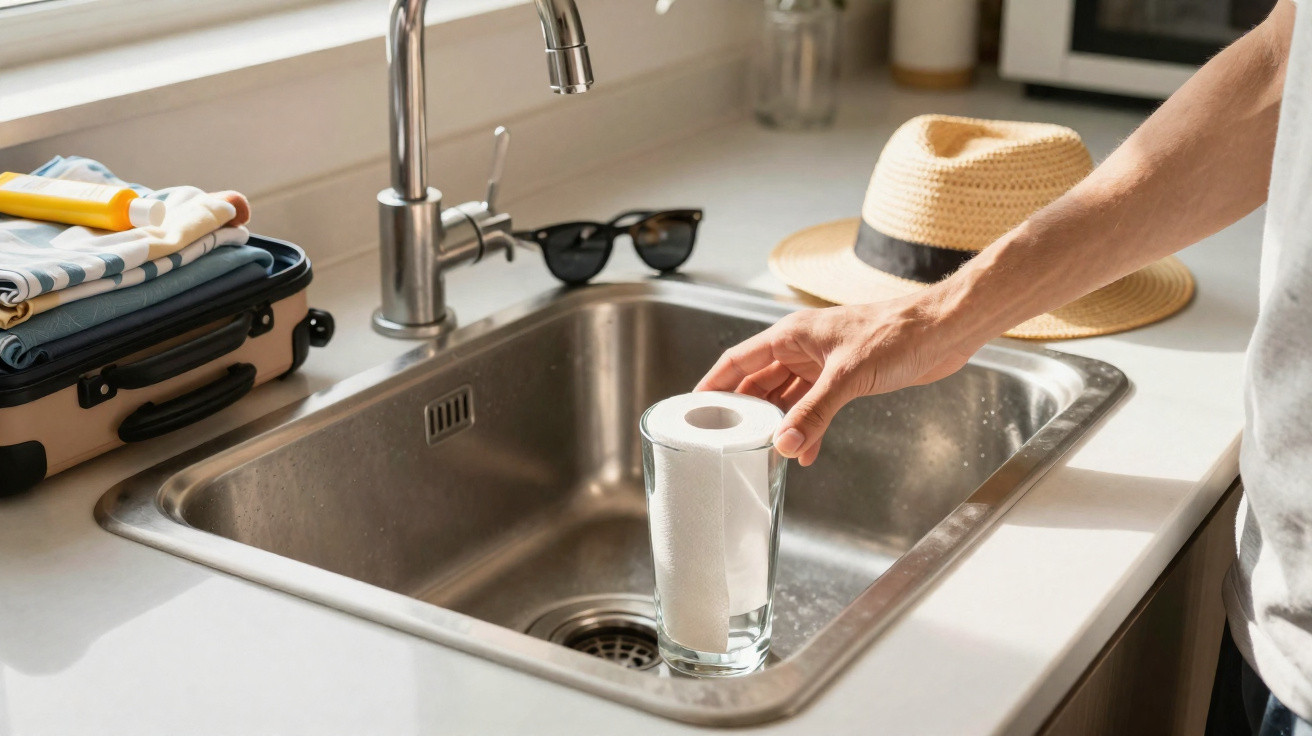
The final thing you do before you head off on a summer holiday tends to reveal a lot. Some of us re-check the passport three times; others give the houseplants one last drink. Recently, another pre-trip ritual has slipped into the frantic packing routine: setting a glass of water with a rolled-up sheet of paper in the kitchen sink, supposedly “to keep the house fresh” or to “catch bad smells”.
Chances are you’ve watched it flash by on your feed, wedged between packing checklists and beach-ready “life hacks”. Soft voiceover. Sparkling worktops. A neat little promise that one odd trick will keep your home safe while you’re away.
Then reality turns up with sandy shoes and a pile of washing-up.
That innocent-looking glass can become something far less harmless.
The TikTok sink trick everyone is copying – and why it backfires
The “hack” itself couldn’t be easier. Grab an everyday drinking glass, fill it about halfway with water, roll a sheet of paper into a loose tube, and stand it in the glass. Pop the whole thing in the sink before you leave for the airport, feeling strangely smug about your cleverness.
Depending on who’s selling it, it supposedly “absorbs odours”, works as a homemade bug trap, controls humidity, or even acts like a magical fix for smelly pipes.
On camera, it has a certain calm, minimalist charm. In a real kitchen in mid-July, it’s a different story.
A reader I spoke to, Claire, tested it before a two-week trip to Greece. She’d spotted it on Instagram Reels straight after a video about folding clothes to save space in a suitcase. It sounded harmless - even a bit smart. She left the glass and paper in her stainless-steel sink, emptied the bin, pulled the blinds down, and stepped out into the heat.
When she returned, it wasn’t the “fresh, clean” feeling from the video that greeted her. Instead, she walked into a flat, sour waft of old dishwater. The glass had picked up a greenish film, the paper had collapsed into a soggy clump, and a few determined fruit flies were circling the rim.
The sink - which should have been the least dramatic part of coming home - ended up being the most irritating part of unpacking.
There’s an unexciting explanation: still water plus cellulose plus warmth is a miniature science experiment. The paper begins to break down, the water slowly evaporates and re-condenses, and dust along with tiny traces of food gets drawn into the mixture. In a warm, shut-up kitchen, your “hack” becomes a lukewarm breeding ground for bacteria and small insects.
And the sink is already a prime spot: lingering food particles, coffee residue, soap scum, maybe a forgotten crumb near the plughole. Add one more stagnant item and you’re effectively putting out a “Holiday Let” sign for the exact smells you’re trying to avoid.
The blunt reality? This hack doesn’t neutralise odours – it feeds them.
What actually protects your kitchen while you’re on the beach
Skip the glass and paper. If you’d like to come home to a kitchen that doesn’t greet you with a warm, bin-like embrace, the best move is far simpler - and far less Instagrammable.
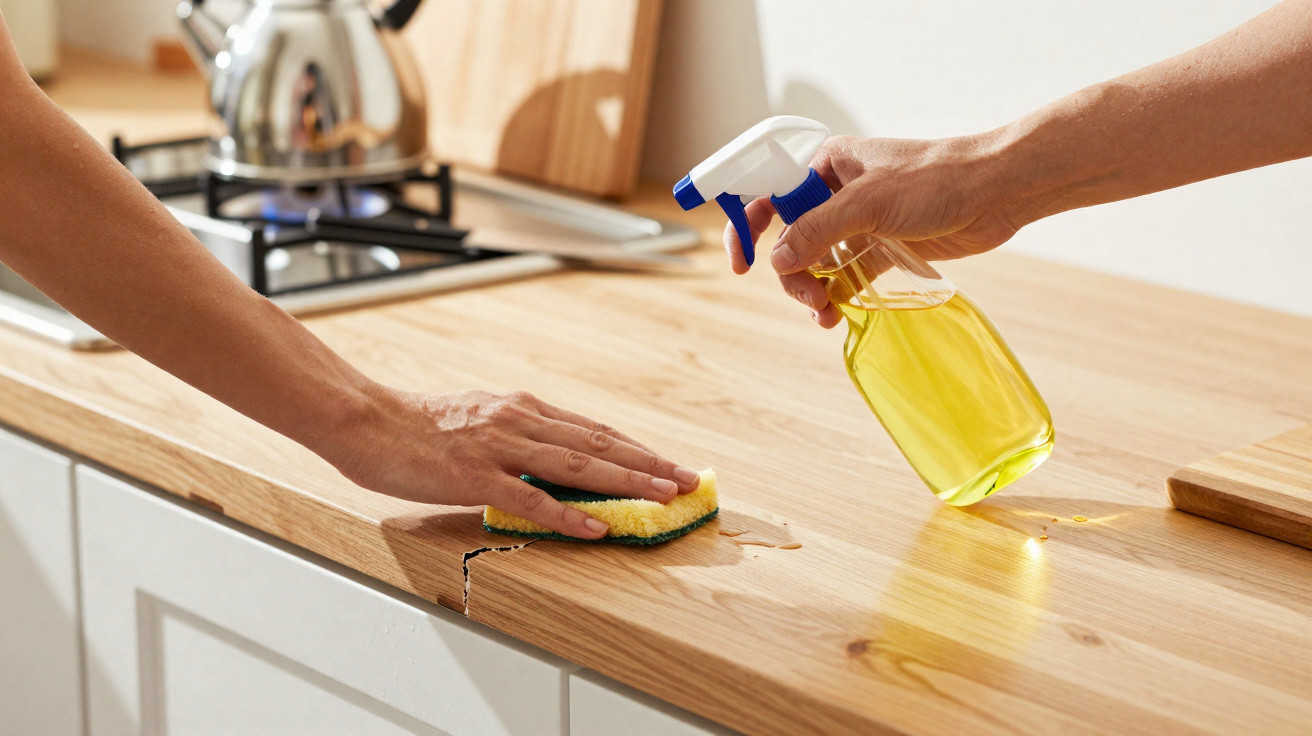
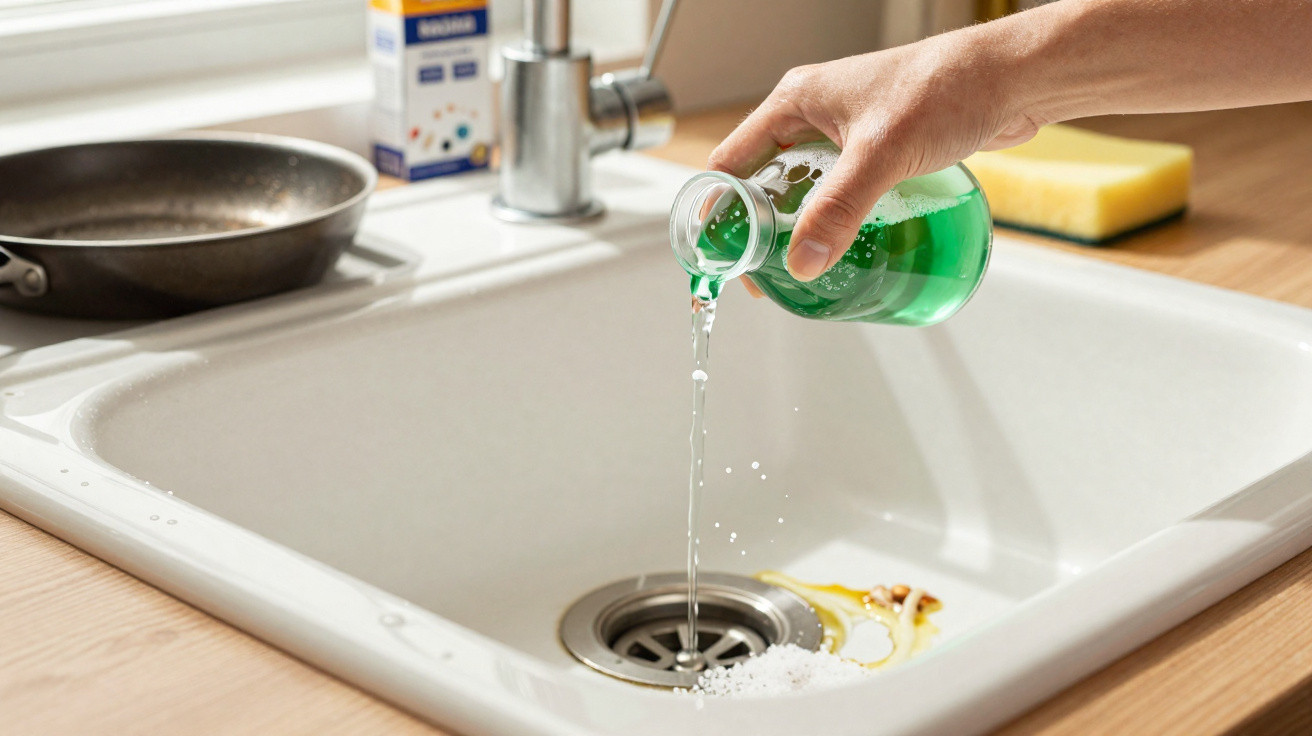
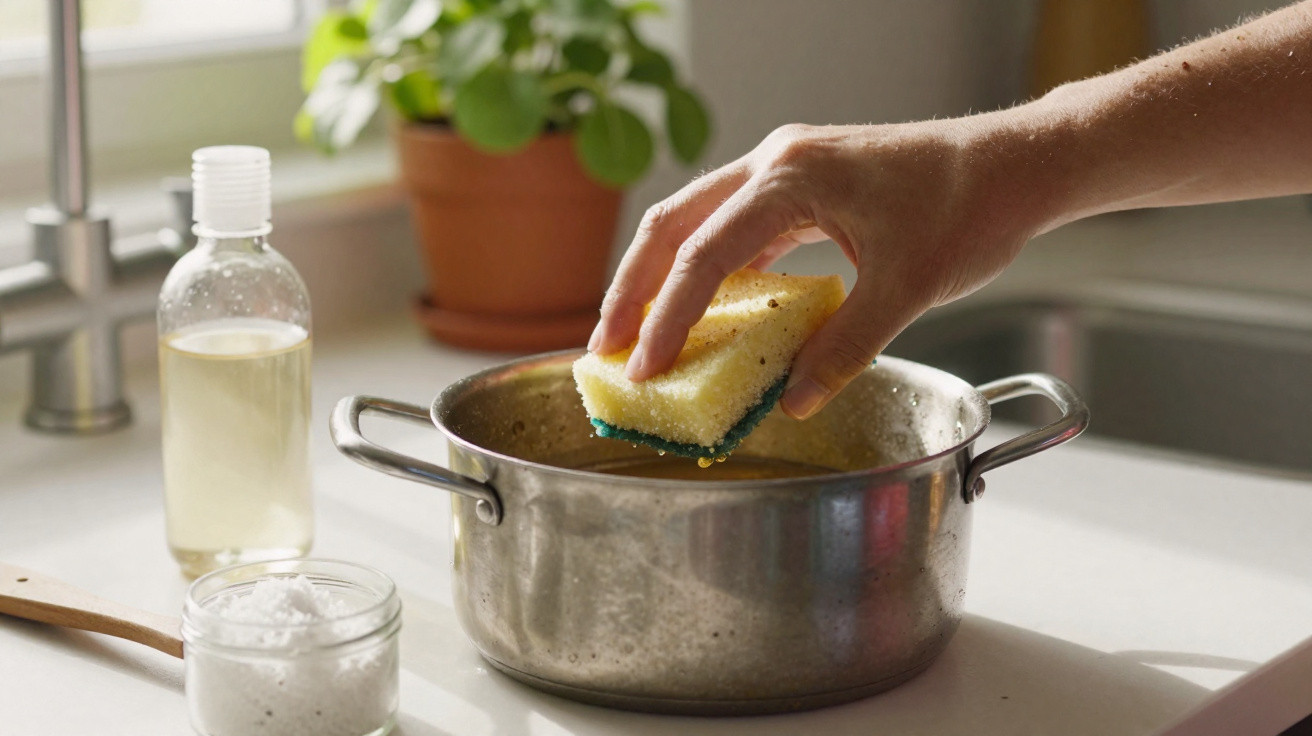
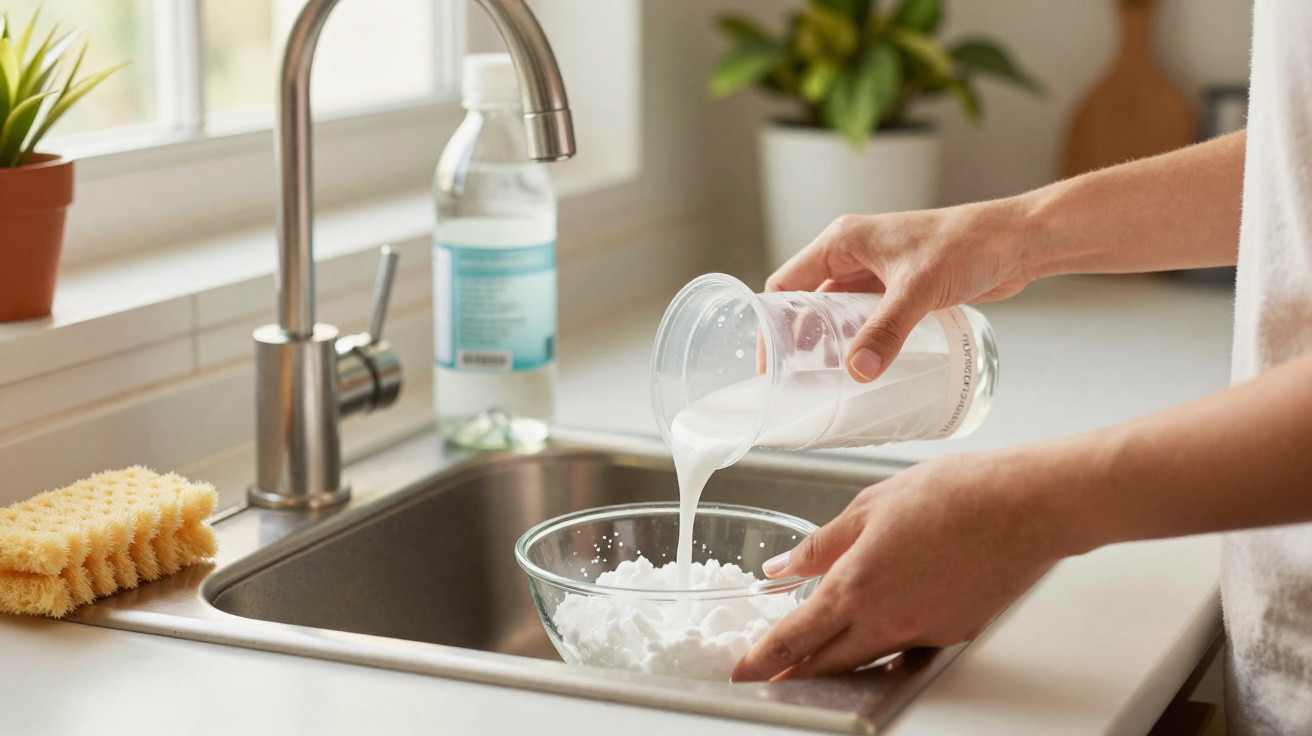
Give the sink a proper rinse with hot water and a small squirt of washing-up liquid, then clean the drain and the strainer or plug. Tip a combination of bicarbonate of soda and white vinegar down the drain, let it fizz, and then flush it through with hot water once more. That’s the closest thing to a reset.
Afterwards, leave the sink completely empty and dry. No glass. No paper. Nothing pretending to be clever.
This is where people often slip. We worry about the big-ticket items - switching off the gas, making sure windows are secure - and then leave half a lemon in the sink “for freshness”, a sponge sat in cloudy water, or the famous glass trick because someone with immaculate nails said it was genius.
We all recognise the moment: the taxi is waiting outside and you’re looking at a dirty mug by the sink thinking, “It’ll be fine.”
And honestly, nobody manages perfect routines every day. Life gets untidy, work finishes late, children spill things, and the sink turns into a temporary holding zone. But before a long summer break, that “temporary” becomes two, three, sometimes four weeks.
That’s where the real risk sits - quietly - underneath the glossy, feel-good coating of internet hacks.
“Odors don’t come from nowhere,” explains Laura Mendes, a professional cleaner who preps apartments for seasonal rentals. “They come from organic material breaking down in warm, stagnant conditions. A wet glass with paper in a dirty sink doesn’t fight that. It helps it.”
- Empty the sink completely: No glass, no sponge, no stray cutlery left camped in a corner.
- Clean the drain: Clear out any visible debris, then use bicarbonate of soda and vinegar or a specialised drain cleaner.
- Dry surfaces: Wipe down the sink, tap, and the surrounding area so no water is left standing.
- Open airflow: Leave a window slightly ajar or use ventilation settings if your building permits it.
- Deal with the bin: Take rubbish out as you leave for the airport, not “tomorrow morning”.
Why this “harmless” hack spreads so fast – and what to do instead
The glass-and-paper trick isn’t really about cleaning. It taps into something more basic: the worry of returning from a holiday - the very thing meant to reset you - only to walk straight into chaos. There’s a small comfort in believing a tiny ritual will keep things under control while you’re gone. A glass in the sink can feel like a little guard on duty.
But the version of you who comes home doesn’t need a prop. They need you - hot, slightly rushed, and half-focused on departure day - to spend three extra minutes on the boring basics.
Bin the last coffee filter. Rinse the sink. Lift the sponge out so it can dry, or simply throw out the exhausted one before you go.
| Key point | Detail | Value for the reader |
|---|---|---|
| “Hacks” prioritise aesthetics over hygiene | Polished videos ignore what happens in warm, stagnant kitchens | Helps you recognise tips that look great on screen but fail in real life |
| Standing water is the real culprit | Glass + paper + heat = bacterial growth, smells, insects | Gives you one simple rule: don’t leave anything with still water before trips |
| Basic routines beat clever tricks | An empty, clean, dry sink > any viral gadget or ritual | Provides a clear, repeatable checklist you can realistically stick to |
FAQ:
- Is a glass of water in the sink actually able to absorb odours?
No. Water left sitting in a glass won’t “pull” smells out of your kitchen. If anything, given enough time - especially in summer heat - it can start to smell itself.- Will paper in the glass trap insects while I’m away?
Not in any dependable way. You might catch the odd fly, but you’re also giving insects moisture and somewhere to land. Cleaning properly and removing food sources works far better.- What should I definitely not leave in the sink before travelling?
Dirty plates, half-full glasses, a damp sponge, food scraps in the strainer, and any standing water. All of these accelerate smells and bacterial growth.- Is there a safe, quick last-minute kitchen routine before leaving?
Yes: run or empty the dishwasher, wipe the worktops, clean and dry the sink and drain, take the rubbish out, and leave the fridge on and closed. It’s basic, but it’s what genuinely works.- Are any viral summer kitchen hacks worth doing?
Some are - particularly those involving real cleaning or organisation. Freezing a bottle of water to check for power cuts, for instance, has practical logic. The warning sign is anything promising huge results from a passive object that just “sits there”.
Comments
No comments yet. Be the first to comment!
Leave a Comment