
When people picture a lovely bathroom, they often imagine elegant hotels, brand‑new tiles and four‑figure bills. So everything stays as it is: too cluttered, too cold and somehow a bit unloved. Yet a handful of smart tweaks can transform the space - no tradespeople, no dust, no big budget.
Why taking a proper look at your own bathroom is worth it
Bathrooms are among the rooms we use daily and neglect the most. You might wipe the basin, add yet another product and cram overflowing cupboards shut - then you simply get used to the mess. In day‑to‑day life, energy costs, stale air and a generally restless feel quickly drop down the priority list.
"With five targeted adjustments, a normal bathroom can be improved visually and in terms of energy use - on a budget between 0 and about 20 euros."
The point isn’t “decor” for its own sake. It’s about structure, light, warmth, air and comfort. If you tackle those, you’ll notice a real before‑and‑after difference - often over the course of a single weekend.
1. Declutter ruthlessly: less stuff, more calm
The biggest improvement costs nothing: properly clearing out. Empty absolutely everything from the shower, cupboards and the sink area. For a moment, it will look like you’re moving house - and that jolt is exactly what you want.
A clear bathroom in three straightforward steps
- Sort products into groups: face & make‑up, body & hair, pharmacy & first aid.
- Throw away anything out of date, duplicated or unused for months.
- Keep only everyday essentials out on display.
Everything else can go into boxes, baskets or simple plastic trays you already have at home. If you fancy it, pick up two or three inexpensive baskets from a discount supermarket. This step alone makes the bathroom feel bigger, calmer and noticeably more cared for.
Hide the everyday eyesores
The next visual win comes from the items nobody wants to look at: the toilet brush, cleaning sprays, drain unblocker, spare toilet rolls. Store them in a cupboard, a closed unit, or at least an opaque basket.
Even a small lidded bin can change the whole impression of the room - often for under 10 euros. When you consistently put the unattractive bits out of sight, you can create a “hotel feel” at home in just minutes.
2. Upgrade the bathroom with light and mirrors
Plenty of bathrooms feel dated even when the tiles are still perfectly fine. Often, the real culprits are a dull mirror and yellowish lighting. With a tiny spend, you can make a big difference here.
"A clean mirror and the right LED make the room feel larger, brighter and more modern - without a single tile adhesive."
Checklist for a fresher look from your lighting
- Clean the mirror and any lamp shades thoroughly.
- Wipe switches and frames too - they collect a surprising amount of grime.
- Swap old incandescent or halogen bulbs for an LED in warm white (usually 2700–3000 Kelvin).
Warm white feels more welcoming than cold, office‑style light, while still showing your face naturally. Once the mirror reflects that brightness properly, the whole room instantly reads as more premium.
Coordinate accessories instead of creating a “decor jumble”
Filling a bathroom with bits and pieces doesn’t give it personality - it creates visual noise. A better approach is fewer items that work together. A small matching set of soap dispenser, tumbler and tray, in colours that relate to your taps or tiles, brings order to the scene.
Towels work the same way:
- Remove old, frayed towels or anything in completely different colours.
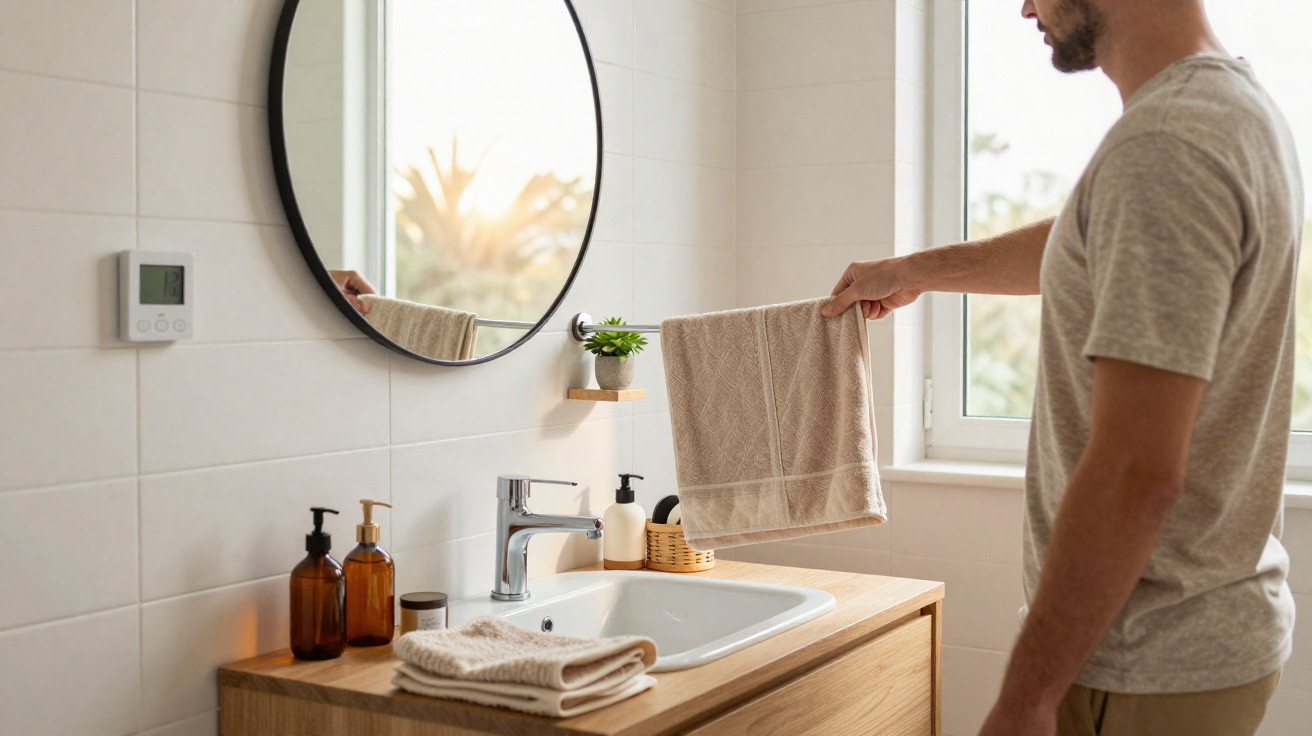
- Hang only two or three coordinating colours where they’re visible.
- Stack dry spare towels folded away in a cupboard or on a shelf.
If you tie the bath mat, towels and (if you have one) the shower curtain into the same colour palette, the space looks considered - even when everything is budget‑friendly.
3. Control the temperature smartly and save money
Warmth in the bathroom matters twice over: it affects comfort, and it can push energy costs up quickly if you let heating run unchecked. With prices rising, checking your thermostat settings can pay off.
"Each additional degree of room temperature costs roughly around 7 percent more heating energy."
Practical guide temperatures for comfort
| Room | Recommended temperature | Note |
|---|---|---|
| Living areas | approx. 19 °C | heated consistently |
| Bedroom | approx. 16 °C | cooler temperatures support sleep |
| Bathroom – in use | approx. 22 °C | shortly before and during shower/bath |
| Bathroom – otherwise | approx. 17 °C | for the rest of the day |
Keep the bathroom door shut while the room is warming up and while you’re showering, so the heat stays where you need it. Afterwards, you can turn it back down. A plush bath mat also takes the sting out of cold tiles - and immediately feels more luxurious.
4. Better air: prevent mould and create a comfortable climate
Moisture is the enemy of any bathroom. If damp air lingers, you risk not only mildew spots but also musty smells and long‑term damage to the building.
Use extractor fans and windows properly
- Dust and wipe the fan grille and blades regularly.
- Listen for unusual noises - they often mean parts are dirty or worn.
- After showering, open the window wide for 5–10 minutes.
A short, strong burst of ventilation pushes moist air outside without chilling the walls. Especially in small bathrooms, a brief air change is often enough to make the room feel comfortable and dry again.
If your bathroom has no window, check whether the extraction duct is clear and whether the fan runs on for long enough. It’s worth looking at the manual or doing a quick paper test: a sheet should be visibly pulled towards the duct.
5. Small comfort details with a big impact
Beyond the major levers - light, warmth and tidiness - it’s often the little touches that move a bathroom from “practical” to “I actually like being in here”. Think soft textiles, essentials within easy reach and a layout that makes sense.
Examples of mini upgrades
- Add a second hook for your towel right next to the shower.
- Use a small stool or basket for clothes while you shower.
- Create one clearly labelled section just for first‑aid items, so you’re not hunting in an emergency.
- Add a pleasant scent, for example via soap, shower gel or a subtle room fragrance.
These tweaks cost very little, yet reduce everyday friction: you find things faster, nothing ends up on the floor, and the bathroom feels less like a “work station” and more like a small comfort zone.
What these bathroom tricks are really doing - and where else they work
On a psychological level, these changes do something simple: your brain processes fewer stimuli at once, understands where things are more quickly, and starts associating the room with order rather than chaos. That quietly lowers stress - especially in the morning.
Many of the steps above translate directly to the kitchen, hallway or utility room: clear visible surfaces, hide the ugly items, stick to a few compatible colours, improve lighting deliberately, ventilate briefly, and manage temperature sensibly. When you start with the bathroom, you often get a motivating first win - and then apply the same approach to the rest of the home.
If you worry about throwing away too much, try a “trial box”: anything you don’t miss for three months can go for good. With cosmetics, old medicines and half‑used bottles, it becomes obvious very quickly what you actually use - and what’s just taking up expensive bathroom space.
Comments
No comments yet. Be the first to comment!
Leave a Comment