
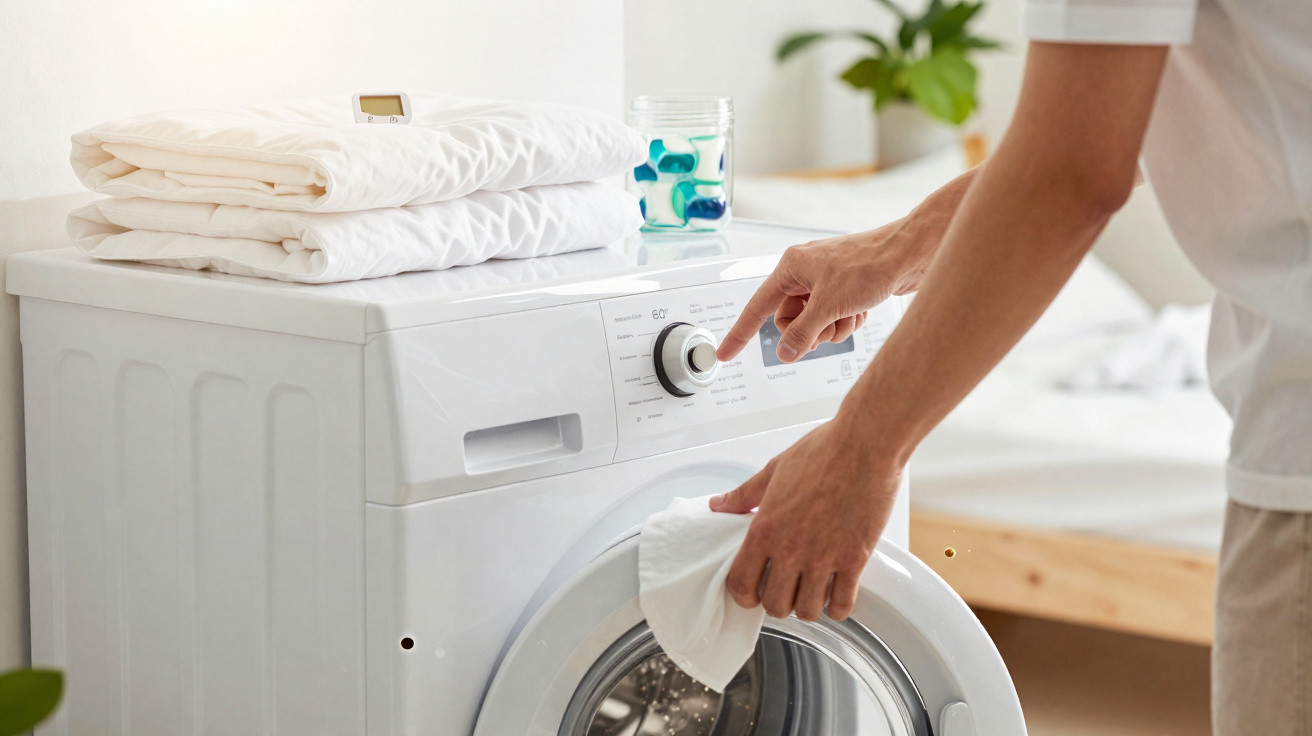
Plenty of people wash their bed linen at 40°C - out of habit and to save money.
Specialists say that if you actually want a hygienically clean bed, it rarely does the job.
If you run your bedding through the machine at 40°C once a month, it’s easy to feel reassured: it smells fresh, looks clean, so everything must be fine. Bacteriologists and allergy clinicians paint a different picture. A lukewarm wash may leave sheets soft and pleasantly scented, but it can also leave behind the very things in the fabric that contribute to allergies, eczema and irritated airways.
Why 40°C barely clears out your bed
During sleep, every person loses up to one litre of fluid each night. On top of that come skin flakes, natural oils, traces of cosmetics, dust and sometimes pet hair. All of it ends up in the bed - and much of it becomes lodged in the fibres of the sheets.
"What looks like ‘freshly washed’ to us is a lavish buffet of moisture and skin flakes for mites."
In many modern homes, the 40°C cycle - or an Eco 40°C programme - is the default. It’s seen as gentler, more energy-efficient and kinder to fabrics. Studies indicate that with a good enzyme-based detergent formula, a 40°C wash in a healthy household can remove a large share of common bacteria - but dust mites are a different matter.
Below 60°C, only a small percentage of mites are eliminated. A significant proportion come through the wash unfazed, along with their droppings, which are particularly potent allergens. On top of that, the wash temperature sits close to body temperature. For microorganisms, that’s more like a spa zone than a danger area.
What research says about the right temperature
Reviews of hygiene studies and hospital data point to a fairly clear conclusion: temperature is the most important non-chemical factor for making textiles genuinely hygienic.
- From around 60°C, with at least one hour of wash time, the number of house dust mites in bed linen drops to near zero.
- Many common bacteria can be reduced very substantially at this temperature.
- Short, “quick” 60°C programmes often don’t fully achieve the same result because the temperature isn’t maintained for long enough.
Because of this, professionals advise taking a closer look at textiles that sit tightly against the skin: underwear, towels and, of course, bed linen should - depending on the material - go through a true 60°C cycle regularly. Not constantly, but strategically.
How often should you really wash bed linen?
Most experts arrive at a similar rule of thumb: change sheets every 7 to 10 days. If you sweat heavily, regularly lie in bed wearing clothes, or have pets in the bedroom, it’s sensible to stick to the shorter end of that range.
When it comes to temperature, a two-step approach can be worthwhile:
- Regular wash: Wash sheets on a long programme with an enzyme-based liquid or powder detergent. Depending on the household, 40°C or 50°C can be enough here, as long as they’re spun well and dried completely.
- Hygiene wash: In certain situations, a 60°C cycle is clearly the better choice.
When 60°C is genuinely non-negotiable
Professionals point to several situations where it isn’t wise to economise on temperature:
- Acute infections in the household: After stomach bugs, flu or contagious skin conditions, sheets, pillowcases and towels should be washed at 60°C.
- Dust mite allergy: If you have a confirmed reaction to house dust mites, aim to wash bed linen at 60°C about once a month, ideally combined with mite-proof covers for the mattress and pillows.
- Heavy soiling: Blood, urine, vomit or other bodily fluids should be washed on a disinfecting cycle at 60°C or above.
For everything else, a gentler programme is usually sufficient - provided drying is done properly and the bed is aired regularly.
How to set the wash cycle properly
A common mistake is selecting 60°C but cramming the drum to the brim. In that case, heat can’t circulate properly, detergent doesn’t dissolve well, and germs in the inner layers can survive the cycle.
"For hygienic washing, the drum needs space: roughly a hand’s breadth of air should be left free at the top."
Suggested basic settings for bed sheets:
- Use the “Cottons” programme or “Bedding/household textiles”
- 60°C for hygiene-relevant loads; otherwise 40°C to 50°C on a long cycle
- The highest spin speed possible, if the fabric can tolerate it
- Avoid short programmes when the goal is germ reduction
Adding half a glass of clear household vinegar in the fabric softener compartment can lower the pH of the laundry, help bind odours and slightly smooth the fibres. Modern machines can handle this, as long as you don’t use it by the litre.
Drying: the second half of hygiene
Damp sheets are an ideal breeding ground for mould spores and bacteria. So hygiene depends not only on how you wash, but also on how you dry.
| Method | Advantages | What to watch out for |
|---|---|---|
| Tumble dryer | Fast and warm; dust mites and pollen are greatly reduced | Clean the filter regularly; follow the care label |
| Line drying in the sun | UV light helps reduce germs; fresh smell | Leave enough space; let it dry all the way through |
| Indoor clothes airer | Possible even without a balcony | Ventilate well; don’t allow persistent damp in the bedroom |
If you dry laundry in the bedroom, the room climate can worsen quickly. The extra humidity ends up back in the mattress and pillows - and mites especially thrive in those conditions.
Dust mites, allergens, skin: what really happens in bed
House dust mites aren’t visible to the naked eye, yet they live in almost every mattress. They prefer warm, slightly humid environments with plenty of organic material. Their droppings can trigger a runny nose, itchy eyes, coughing and asthma in sensitive individuals.
Bacteria in bed linen come from the skin’s natural flora, the mouth, intimate areas, and also from the air in the room. Many are harmless. However, if you have broken skin, eczema, acne or a weakened immune system, you may react more quickly to a bed environment that’s persistently “under strain”.
If you’re thinking, “But I don’t notice anything,” you’re only partly right. Many irritations aren’t obvious at first glance:
- A slightly blocked nose after waking up
- A tickly cough when you lie down
- Restless sleep and frequent changes of position
- Recurring small skin inflammations on the back or décolletage
All of that can be connected to the mattress, pillow and bed linen - it doesn’t have to be, but it occurs far more often than many people assume.
Saving energy while still staying hygienic
Many households avoid 60°C cycles because of electricity costs. That’s understandable, but it doesn’t automatically conflict with hygienic bedding care. With a bit of planning, you can balance both.
A workable compromise might look like this:
- Wash bed linen weekly at 40°C or 50°C on a long cycle
- Run a 60°C wash once a month, combined for the whole family’s sheets
- Load the washing machine fully but not overfilled, so water and energy are used efficiently
- Use energy-saving programmes only for normally soiled laundry when there are no illnesses involved
If you have a modern machine, you may benefit from load sensors that adjust water and energy use to the actual amount inside. Even so, the key point remains: hygiene washes don’t belong on the very fastest short programme.
What you can do besides changing the temperature
Even the best washing strategy helps little if the rest of the sleeping area is neglected. A few straightforward habits can keep the bed in better shape long term:
- Shake out the mattress and duvet briefly each day and air the bedroom well
- Turn the mattress every few months and vacuum it
- Use mite-proof covers if you have an allergy
- Don’t wear damp or heavily sweat-soaked sports clothes in bed
- Remove make-up thoroughly before going to sleep
People with allergies benefit in particular from not storing soft toys, thick rugs or open piles of books in the bedroom. All of these trap dust and continuously feed new material back into the mattress.
If you want to find what works best for you, try switching to 60°C for a few weeks and observe whether your sleep quality, skin and morning nasal symptoms change. Small adjustments to washing frequency and temperature are often enough to feel noticeably more comfortable in your own bed - without buying a new mattress or expensive specialist products.



Comments
No comments yet. Be the first to comment!
Leave a Comment