
Stubborn limescale rings around the kitchen sink are irritating, make the whole kitchen look grimy - and often feel impossible to shift.
A simple homemade blend can deal with them ruthlessly.
Limescale on taps and in the sink is a constant nuisance in many homes. Pricey specialist cleaners, a sharp chemical smell, endless scrubbing - it all gets old quickly. Yet many grandmothers had a straightforward answer long ago, one that works without heavy effort and without harsh chemicals: a warm, freshly mixed combination of everyday kitchen ingredients that effectively eats away at limescale.
Why limescale is so persistent in the kitchen
The root cause is in the tap water. In lots of areas it contains high levels of dissolved minerals such as calcium and magnesium. These minerals aren’t harmful in themselves, but they readily settle onto surfaces.
When water runs over stainless steel, ceramic or chrome taps, a fine residue remains once the water evaporates. With every wash-up, every blast of hot water from the kitchen tap, every cloud of steam, the layer builds a little more - until the familiar white, rough crust appears.
"The hotter the water, the faster the minerals crystallise and form solid limescale layers."
The worst spots are places where water tends to sit:
- The join between the tap base and the sink
- The rim around the plughole
- Grout lines and tiny gaps along the sink edge
- The aerator (tap nozzle)
Many people reach straight for strong chemical descalers. They do remove limescale, but they often come with several downsides: a pungent smell, irritation to skin and airways, and the need for gloves and good ventilation. Some products can also damage delicate finishes, such as copper, brushed metals or thin coatings.
On top of that, the chemical mix ends up going down the drain. If you want a clean kitchen without putting unnecessary strain on your health and the environment, a gentler - but still smart - alternative is usually the better route.
The vinegar and lemon household mix
The blend many grandmothers swore by uses three things most people already have at home: white vinegar, water and fresh lemon. There’s no mystery to it - just simple chemistry.
White vinegar provides acetic acid, while lemon brings citric acid. Both acids attack the alkaline minerals in limescale and break their bond with the surface. Used together, they tend to work more powerfully than either ingredient on its own.
How to mix the limescale remover properly
For a standard batch - enough for a sink and tap - do the following:
- Pour 250 ml white vinegar and 250 ml water into a heat-resistant container.
- Squeeze the juice from one medium fresh lemon and add it.
- Stir briefly so everything combines.
- Warm the mixture in the microwave for about 30 seconds, until it’s clearly warm but not boiling.
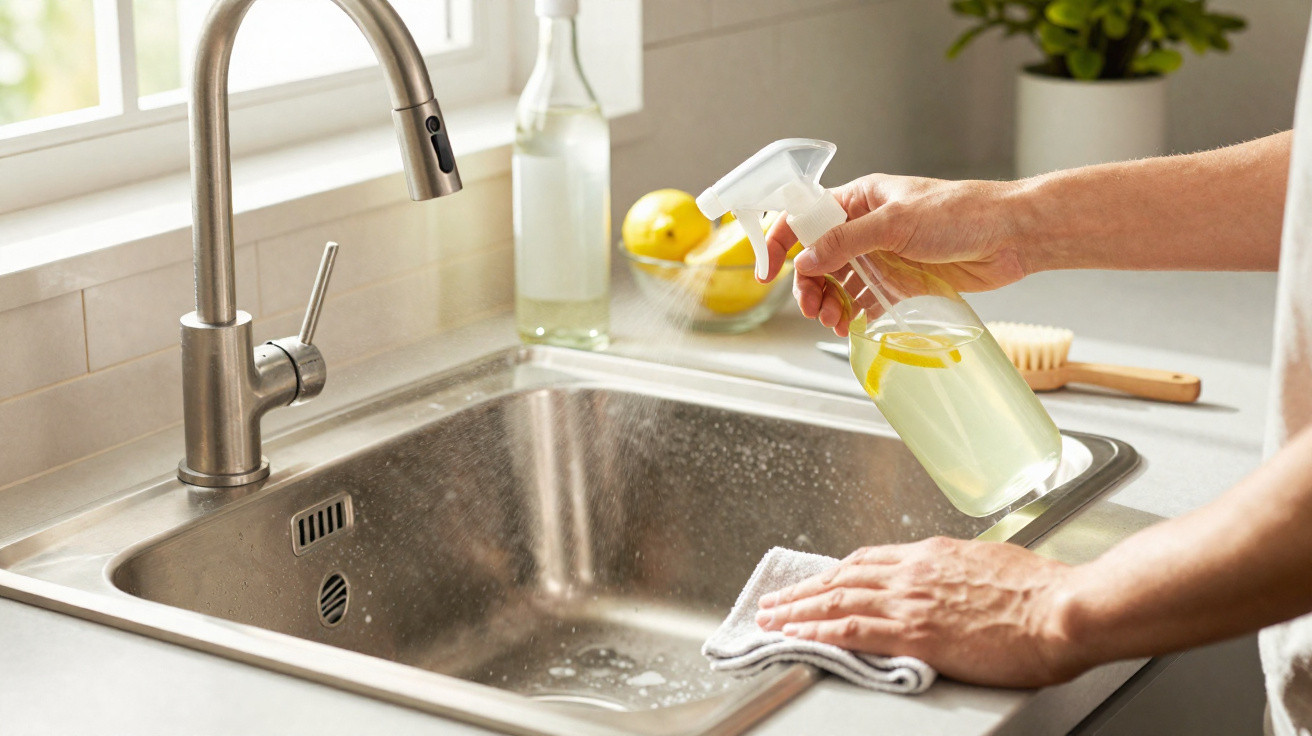
- Decant into an empty spray bottle.
Warming it up isn’t a minor detail; it’s a real boost. When the solution is warm, the acid molecules move faster and penetrate the limescale structure more effectively. That helps the deposit loosen more easily and more evenly.
Using it on the kitchen sink: step by step
Before you start, remove any obvious dirt. Vinegar and lemon act on limescale only when they can reach it directly - they won’t cut through greasy residue or leftover food bits.
Preparing the surface
- Wipe the sink and tap with a damp cloth to remove food residue.
- Clear away loose crumbs around the plughole.
- Give the surface a quick dry with a cloth so the acidic mix doesn’t get diluted straight away.
Spray, leave, wipe
Now for the grandmother’s trick:
- Spray the warm mixture generously over all limescaled areas, including small gaps and grout lines.
- Leave it to work for at least 20 minutes - don’t wipe too soon.
- After the waiting time, wipe everything with a damp microfibre cloth.
"After around 20 minutes, even stubborn limescale can usually be wiped away without any effort."
For tight spots - such as the join between the tap and sink, or the aerator - an old soft toothbrush works well. It reaches into crevices without scratching the finish.
Finally, rinse thoroughly with clean water. Acid residue shouldn’t be left sitting on metal or ceramic for long periods, as it can cause slight etching. Then dry the surfaces carefully - ideally with a clean tea towel or a dry microfibre cloth.
Why drying makes such a difference
After cleaning, many people simply leave the sink to air-dry. That’s exactly where the next limescale film starts. Every droplet that evaporates leaves minerals behind.
If you quickly wipe down with a cloth after washing up or cleaning, you’ll stay limescale-free for much longer. Shiny surfaces in particular - like stainless steel and chrome taps - remain visibly spot-free for longer.
Regular upkeep instead of emergency cleaning
This homemade vinegar–lemon mix isn’t only useful as a last resort for thick crusts. It’s most effective when you make it part of your routine.
- Spray once a week
- Leave it for a few minutes (with light build-up, 10 minutes is often enough)
- Rinse and dry - done
Used this way, you stop a hard layer forming in the first place. Over time that saves a lot of effort and frustration, because heavy scrubbing becomes largely unnecessary.
Does the trick work elsewhere around the home?
The same mix is handy in plenty of other places where limescale appears, for example:
- Limescaled shower heads (unscrew and soak in the warm solution)
- Limescale marks on stainless-steel sinks
- Light deposits on tiles around the sink
- Limescale spots on glass carafes or vases
Be cautious with sensitive natural stones such as marble or limestone. Acid can damage these surfaces. In those cases, test first on an inconspicuous area - or choose a different method.
If limescale is an issue all over the house
If you notice hard water in many places - the kettle, the shower screen, the toilet - it may be worth considering a water filter or a water softener. These systems reduce the amount of calcium and magnesium in the supply, helping to protect pipes, appliances and taps.
Even with softened water, basic upkeep still matters. Softer water can leave marks too, just more slowly. A quick weekly use of the grandmother’s mixture keeps kitchens and bathrooms looking well maintained.
Health, cost, environment: why the homemade mix wins
Compared with many ready-made products, the vinegar–lemon mix offers several practical advantages:
| Aspect | Homemade mixture | Chemical descaler |
|---|---|---|
| Ingredients | Vinegar, lemon, water | Often aggressive acids and additives |
| Smell | Brief vinegar note, then a lemon scent | Frequently sharp and irritating |
| Surface protection | Gentle when used correctly | Can attack coatings |
| Cost | Very low; ingredients are inexpensive | Noticeably more expensive per use |
| Environmental impact | Readily biodegradable | More chemical residue in wastewater |
For households with children or pets, avoiding strong chemicals can feel reassuring. And if you’d rather not put on gloves every time or throw the window wide open while cleaning, the homemade option is simply more pleasant to use.
Common practical questions
Can I use a different vinegar?
Plain white vinegar is the best choice because it’s colourless and doesn’t contain extra flavourings or dyes. Apple cider vinegar will work in principle too, but on very light materials it may leave faint discolouration.
How strong should the vinegar be?
Typical household vinegar is around 5 to 10 percent acid. Combined with water and lemon, that strength is sufficient. Highly concentrated vinegar essence should be diluted much more, otherwise you risk damaging sensitive surfaces.
What if the limescale is extremely thick?
In that situation, extend the contact time and repeat the treatment. You can also lay kitchen paper soaked in the mixture over the affected area and leave it in place for 30 to 40 minutes. Then wipe again and rinse thoroughly.
An old tip with modern results
This blend of vinegar, lemon and water draws on the know-how of earlier generations, yet it fits perfectly today: fewer chemicals, less packaging waste, lower costs - and still a visible result.
If you want to keep your kitchen limescale-free using simple ingredients, this home recipe is a strong ally. Try it once and you’ll often see it with the very first wipe: grandmother was right.


Comments
No comments yet. Be the first to comment!
Leave a Comment