
It sounds smart, but it comes with an awkward risk.
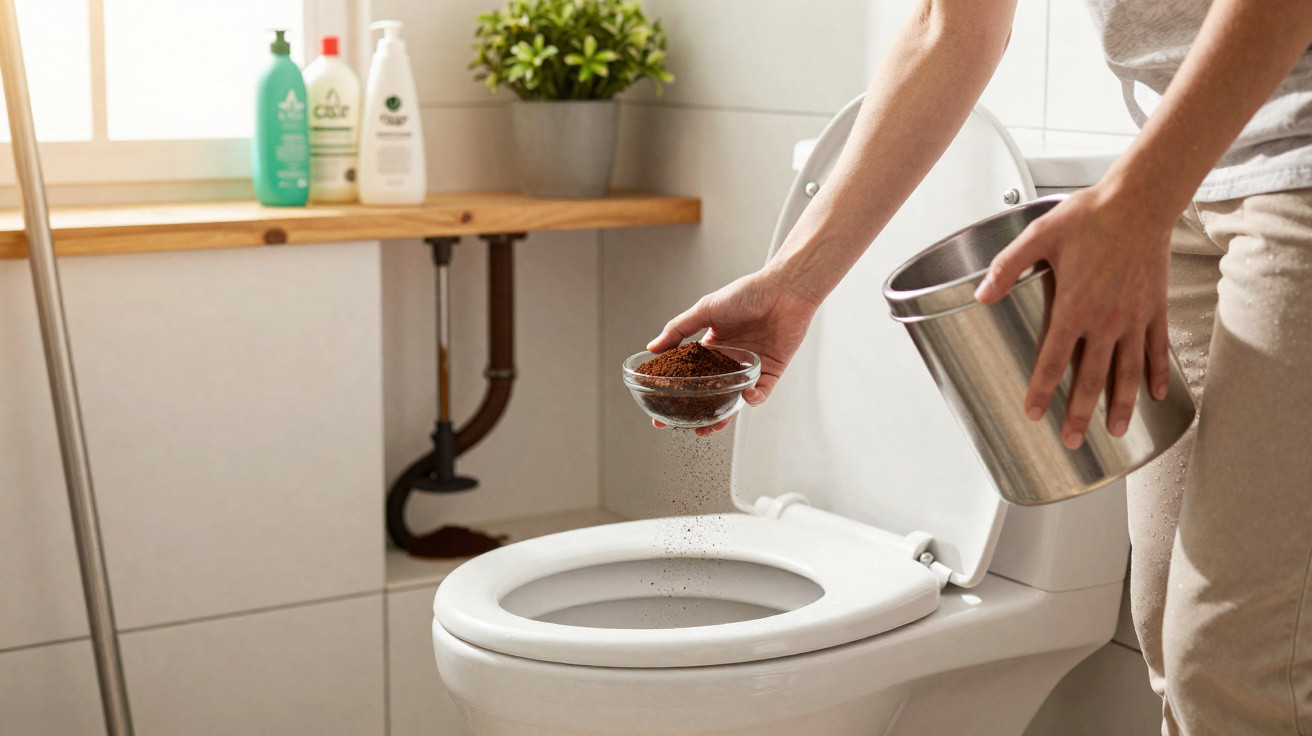
A tip is currently doing the rounds on TikTok, Instagram and in cleaning forums that almost sounds too good to be true: put a spoonful of coffee grounds into the toilet, give it a quick scrub, flush - and the bowl is supposed to look cleaner and smell fresher. What feels like a brilliant zero-waste hack can, behind the scenes, put serious strain on your pipework.
Why coffee grounds are suddenly ending up in the toilet
The idea is simple enough: after your morning coffee, the used grounds don’t go in the bin - they go straight into the loo. A small amount - usually about a tablespoon - is tipped into the bowl, spread around with the toilet brush, and then sent away with a flush.
People like it because the routine appears to tick several boxes at once: fewer chemicals, less waste, and less money spent on toilet tablets and fragranced blocks. If you make coffee every day anyway, the “cleaner” is effectively sitting there in the filter for free.
The coarse coffee grounds act like a very mild scouring powder in the bowl - and are also said to trap odours.
There’s also the belief that coffee grounds work as a natural odour absorber. In cleaning groups, some even suggest leaving a bit in the toilet before going away to mask sewer smells that can rise up when nobody is flushing at home.
What coffee grounds actually do in the toilet
In the ceramic bowl itself, coffee grounds can indeed make a small difference. The grains can rub away light build-up around the waterline without being as harsh on the glaze as traditional abrasive cream cleaners. If you’re only trying to shift faint discolouration, you may sometimes notice an improvement straight after scrubbing.
The trouble starts the moment you flush. Coffee grounds do not dissolve in water. Those brown particles travel through the trap and straight into the pipe system. And that’s where the “natural cleaning idea” can quickly end up requiring an emergency plumber.
When a spoonful turns into a plug in the pipe
Plumbers have classed coffee grounds as something that doesn’t belong in the toilet for years - in the same category as wet wipes, cotton buds or cooking fat. The reason is straightforward: the particles catch on rough interior surfaces, settle in bends, or bind together with other debris.
A common mix inside wastewater pipes:
- Coffee grounds as solid granules
- Fats and oils from the kitchen and bathroom
- Limescale from hard tap water
- Paper remnants and other fibres
Over time, that combination can form a dense plug that steadily narrows the pipe’s internal diameter. At first you may not notice anything; later the flush drains more slowly - until one day nothing moves at all.
Even small amounts of coffee grounds, flushed regularly, can be enough in older pipework to trigger an expensive blockage or a burst pipe.
The trend is particularly risky in the following situations:
- Older household pipework: rough inner walls, existing deposits and tight bends provide ideal points for coffee grounds to cling to.
- Blocks of flats with shared soil stacks: what seems harmless on an upper floor can collect in the main run below - combined with the grounds from multiple neighbours.
- Septic tanks and small treatment plants: extra solids add load to the system, may need pumping out more often, and can interfere with both equipment and biological processes.
What experts say about the social media trend
Many councils and drainage operators are now explicitly warning against disposing of coffee grounds via the toilet. In technical guidance, they increasingly appear on the same “do not flush” list as sanitary products, cotton buds and cooking oil.
Installers also report that, when clearing blocked pipes, they repeatedly find clearly recognisable coffee residue. Where there is already little fall in the run, or where limescale has narrowed the pipe, that “little bit of extra material” can be enough to tip the system over the edge.
There’s an additional cosmetic downside too: if coffee grounds stick to the porcelain or sit in the trap, they can leave brown streaks that look like dirt. People then tend to scrub harder or reach for stronger products - and end up using more chemicals than they would have before this trend.
How to use coffee grounds sensibly - without burdening the loo
Rather than sending grounds into the drainage system, there are plenty of uses where they genuinely work well - without risking your pipework or your wallet.
Neutralising odours without flushing
If you like the smell of coffee or want an odour-absorbing effect in the bathroom, simply dry the grounds and place them in a small dish in the room or beside the toilet. They can absorb smells from the air without affecting the pipes.
Tip: gently loosen the surface now and again and replace the contents every few weeks. That keeps the effect going - and afterwards the grounds can go in general waste, or better still into food waste or garden waste where that’s available.
A gentle scouring aid for the kitchen
In the kitchen, the gritty texture of coffee grounds can be used far more safely. Put a small amount on a cloth or sponge and you can, for example:
- remove onion or garlic odours from wooden chopping boards
- shift dried-on residue from pots and pans (not on delicate non-stick coatings)
- clean strongly smelling hands after handling fish or garlic
Afterwards, the leftovers should go into food waste or onto the compost - not down the sink.
Coffee grounds in the garden and on the compost
Gardeners have used coffee grounds for a long time, but in moderation. They contain, among other things, nitrogen, potassium and a little phosphorus, which makes them a useful addition to compost or flower beds. If you spread them directly onto soil, keep the layer thin and lightly work it in so it doesn’t go mouldy.
Many people mix coffee grounds, for instance:
- into compost to encourage decomposition
- into soil in balcony planters with heavy-feeding plants
- over the surface of beds before applying mulch
The same principle applies here: from the kitchen back into the biological cycle - but not through the toilet.
If you still want to try the trick: how to reduce the risk
Despite the warnings, some people still want to test the idea at least once. In forums, the advice is often to stick to a few safety basics:
- Use it only occasionally, not as an everyday habit.
- Use no more than one tablespoon of coffee grounds.
- Flush very thoroughly straight afterwards, ideally twice.
- Don’t try it in older properties with known drainage problems.
- Don’t use it with septic tanks or small treatment plants.
That still won’t make it completely risk-free. After all, you can’t see from the outside what your own pipes look like, or whether deposits have already built up.
Why the trend is so tempting - and where the mistake lies
The hype around coffee grounds in the toilet shows just how strong the desire is for simple, natural household fixes. A leftover that would otherwise be binned suddenly gets a new purpose. No harsh cleaner, no plastic container - it all feels logical and sustainable.
The mistake is that many hacks stop, mentally, at the ceramic bowl. What happens after the flush is the part the trend ignores. Down in the pipework, it’s not about fragrance or appearance; it’s about flow behaviour, pipe diameter, materials and existing build-up.
Cleaning sustainably doesn’t just mean less chemistry in the bowl - it also means not adding extra problem substances to the wastewater system.
If you genuinely want to clean in a more eco-friendly way, you’re usually better off sticking with proven basics: a decent toilet brush, occasional citric acid or a vinegar-based cleaner, careful dosing of products, and regular maintenance of the drains - without coffee grounds and without social-media experiments down the loo.


Comments
No comments yet. Be the first to comment!
Leave a Comment