
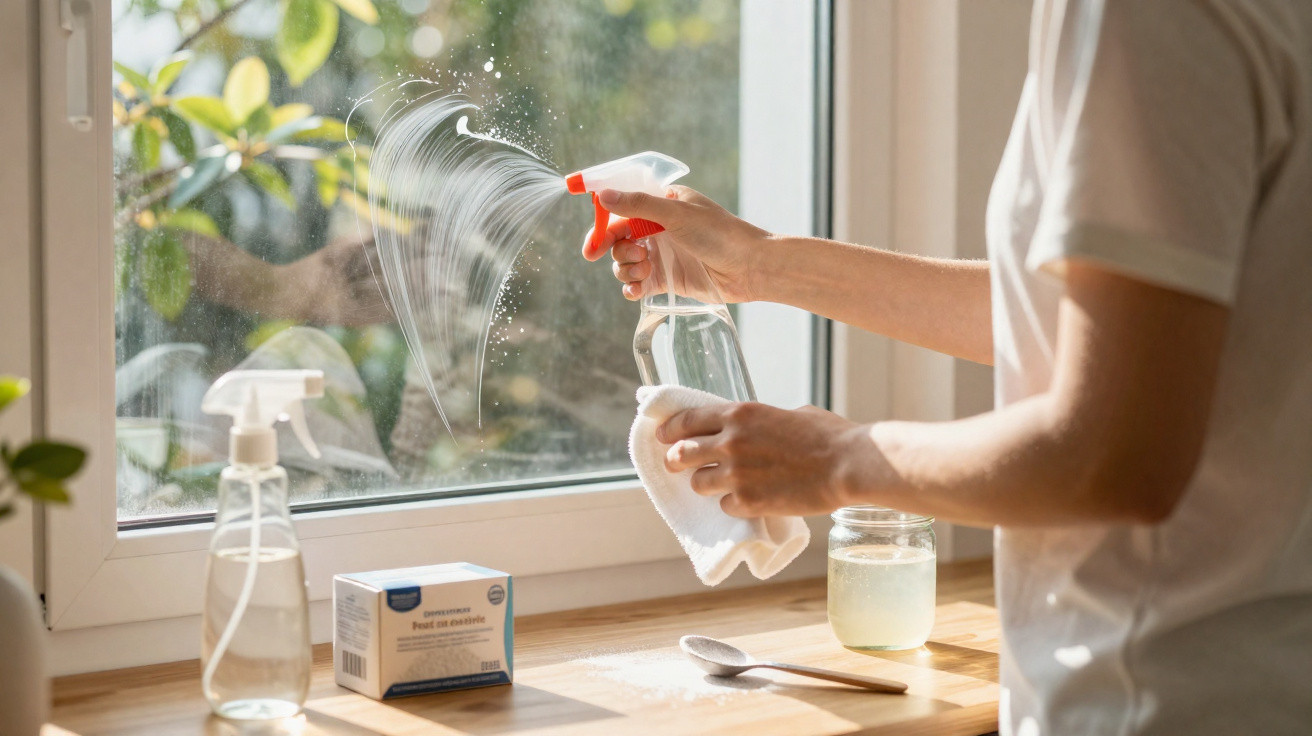
Many households now swear by white vinegar as a miracle fix for cleaning glass. Yet, especially in bright sunlight, a dull grey haze often remains, making all that effort feel wasted. One everyday cupboard staple-more commonly used to thicken sauces or lighten cakes-can deliver a noticeably better result for truly clear panes.
Why vinegar doesn’t actually leave windows perfectly clean
Mix white vinegar with water, spray it on the glass, wipe it off-this is the standard advice in countless how-to videos. In real life, though, it often plays out differently: as soon as the sun hits the window directly, or the room is too warm, streaks and cloudy edges appear.
The issue is down to how vinegar and water dry on glass. The liquid evaporates very quickly, and tiny dirt particles plus fine traces of limescale remain behind and settle unevenly. Under certain angles of light, those leftovers show up as an unattractive film. The larger the surface, the more obvious it becomes-such as on patio doors, big living-room windows, or frameless mirrors.
There’s another drawback: the sharp smell of vinegar can linger in the room for quite a while. In small flats with little airflow, that’s far from pleasant. For that reason, many people dilute it with even more water or start combining it with other cleaners. That may soften the odour, but it rarely solves the streaking.
“The solution isn’t more vinegar, but a completely different building block in the cleaner-and it’s usually already sitting in the kitchen cupboard.”
Cornflour (maize starch): the underrated glass-cleaning secret
The key ingredient is cornflour (maize starch), sold in supermarkets under brands such as Maizena. Normally it’s used to thicken sauces or make cakes fluffier. In a window cleaner, it takes on a surprisingly different job.
The fine starch particles affect the liquid’s surface tension. Put simply, the water–alcohol mixture spreads more evenly across the glass instead of beading into droplets. At the same time, the starch helps pick up tiny specks of grime and grease that would otherwise dry into a pale veil on the surface.
People who use it often describe a particularly effective three-part combination:
- Alcohol (household alcohol or cleaning alcohol) cuts through grease and disinfects.
- Water acts as the carrier and dilutes the mixture.
- Cornflour (maize starch) binds leftover residue and helps it dry evenly.
The payoff: it dries fast, leaves very little behind, and doesn’t come with a harsh smell.
Recipe: streak-free window spray with cornflour (maize starch)
If you want to try the idea at home, you only need a few ingredients and an empty spray bottle. Ideally, use a clean bottle with a fine mist spray, like the type used for shop-bought glass cleaner.
How to mix your own glass cleaner
For a handy batch that lasts through several cleaning sessions, use the following ratio:
| Ingredient | Amount | Purpose |
|---|---|---|
| Water (ideally lukewarm) | approx. 250 ml | Base liquid, dilutes the alcohol |
| Alcohol (household alcohol, approx. 70%) | approx. 250 ml | Breaks down grease, helps it dry quickly |
| Cornflour (maize starch) | 1 level tablespoon | Binds residue, helps prevent streaks |
Pour the water into the bottle first, then add the alcohol, and finally the cornflour (maize starch). Close the bottle tightly and shake hard until there are no visible lumps. The mixture will look slightly milky-this is normal.
“If you’re sensitive to smells, you’ll appreciate this: the mixture is almost odourless, so it’s also suitable for bedrooms and children’s rooms.”
Using it properly: how to keep windows and mirrors streak-free
Even the best mixture won’t impress if the method is off. With a few simple habits, though, you can get much more out of this DIY spray.
Step-by-step instructions
- Shake the bottle: Before each use, shake vigorously so the starch is evenly distributed again.
- Don’t over-spray: Apply a light mist rather than soaking the glass. Less product is easier to spread without streaks.
- Use a microfibre cloth: A clean, dry microfibre cloth works far better than kitchen roll or old rags.
- Clean top to bottom: This prevents drips running onto areas you’ve already finished and reduces marks.
- Avoid peak sunshine: Ideally clean in the morning or evening so the mixture doesn’t dry too quickly.
Using this approach, you can tackle more than standard windows and balcony doors, including:
- large wall mirrors in the bathroom
- mirrors in the hallway or bedroom
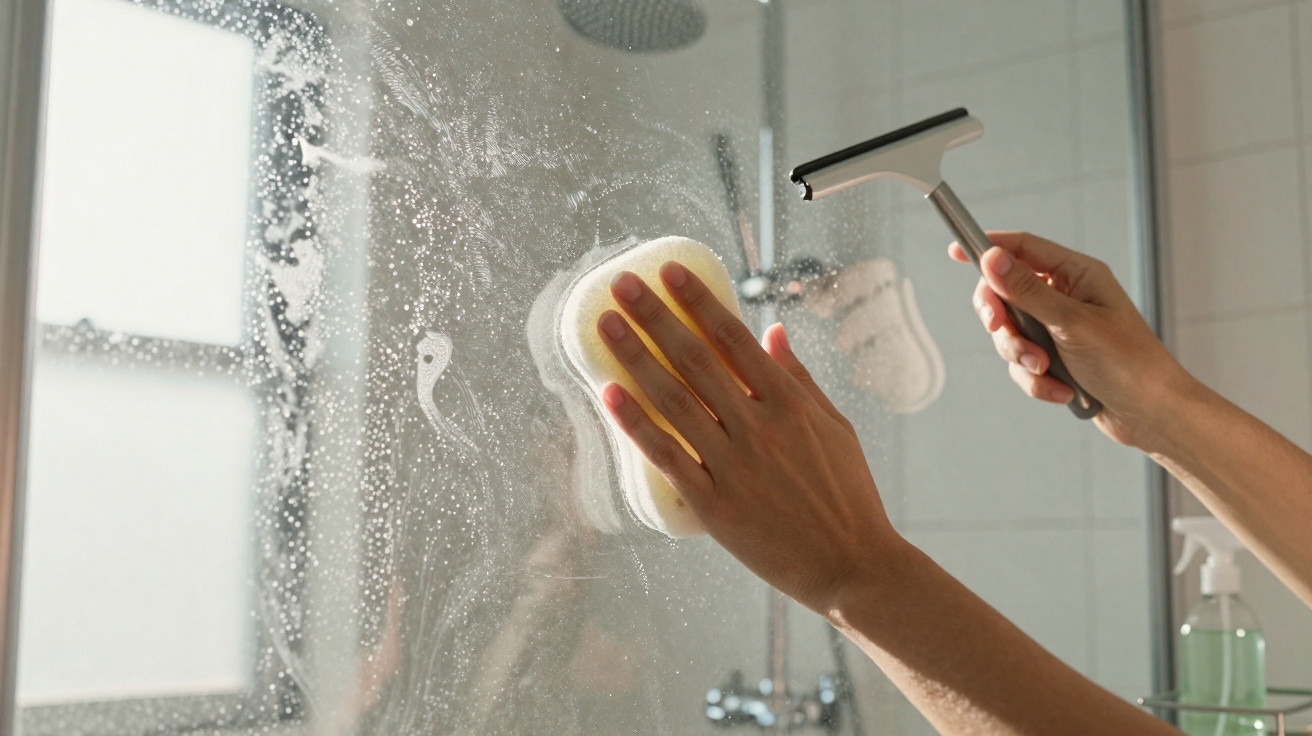
- glass shower screens
- glass coffee-table tops
What about grease splashes and stubborn marks?
In the kitchen, every glass cleaner eventually meets its match-especially with build-up above the hob. Over time, a layer of grease, steam residue, and dust can stick firmly to surfaces. For those areas, the cornflour (maize starch) spray can be tweaked slightly.
If you want, add a small amount of vinegar to the mix-around two to three tablespoons for the quantities listed above. Alcohol remains the main force against grease, while the starch still supports a clear finish. The vinegar mainly helps with deposits that have really hardened.
What matters is keeping the amount low and testing first to see how frames or seals react. On painted wooden frames or delicate plastic surfaces, it’s best to avoid contact with strongly acidic ingredients.
How long does the homemade cleaner last?
Over time, the starch can settle and the liquid may thicken slightly. That’s a sign you should mix a fresh batch. It’s usually best to make smaller amounts that you’ll use up within a few weeks.
If a sticky layer forms at the bottom of the bottle or the liquid starts to go stringy, pour what’s left down the sink. Mix a new batch and quickly rinse the bottle with hot water-done.
Practical tips for consistently clear panes
For reliably good results, it’s worth paying attention to the frames and the area around the windows. Dust, pollen, and fine particles collect in the corners and can get dragged across the glass as you wipe-an easy way to create extra streaks.
A useful routine:
- Wipe the frames first with a lightly damp cloth.
- Clear window sills of dust and leaves.
- Only then clean the glass with the cornflour (maize starch) spray.
If you live in an area with very hard water, you can use still mineral water or boiled tap water in the mixture. Less limescale further reduces the risk of marks on the glass.
Why cornflour (maize starch) works so well
From a physics point of view, the starch acts like a microscopic scaffold within the water–alcohol blend. It helps stop droplets from merging into uneven trails that dry into streaks. At the same time, it captures some of the loosened dirt that might otherwise remain on the glass surface.
The effect is similar to what commercial glass cleaners aim for-just with far simpler ingredients. No perfume, no dyes, no complicated chemical names-just something many people already keep in the pantry.
If you’re trying to streamline your cleaning cupboard, this straightforward recipe can replace several bottles of glass cleaner. And if you’ve relied on vinegar until now, you’ll often notice after the first sunny day: the glass looks visibly clearer, the familiar haze doesn’t show up-and your nose will be happier too.



Comments
No comments yet. Be the first to comment!
Leave a Comment