
A tiny detail in the fridge can change everything.
It’s a familiar story: a punnet of strawberries from the supermarket looks flawless, but a few days later the first soft, mushy patches appear - then mould follows. Instead of enjoying them, half ends up in the bin. With one straightforward trick using an everyday household item, you can extend fridge life to up to seven days and beyond - no special box, no gadgets.
Why strawberries go mouldy so quickly
Strawberries are among the most delicate fruits on the shelf. About 90% of their weight is water. That’s what makes them juicy - and also highly vulnerable.
Unlike apples, their skin isn’t smooth. It’s slightly porous, almost like a fine sponge. Moisture clings inside that structure, and dampness is exactly what mould needs to thrive.
The main culprit is a fungus called Botrytis cinerea, more commonly known as grey mould. It thrives on two things: warmth and high humidity. Refrigeration slows the process, but it doesn’t fully stop it. Even at 0 °C, the fungus can still remain active.
"Moisture is what decides whether they last two days or seven - not just temperature."
Packaging often makes it worse. In shops, strawberries are usually sold in shallow plastic punnets with minimal ventilation. After you get them home, condensation quickly forms inside - especially if the fruit was warm outdoors and then goes into a cold fridge. That moisture collects unnoticed at the bottom of the punnet, exactly where the lowest berries are resting. From the outside everything still looks fine, but decay is already starting out of sight.
The simple kitchen paper trick
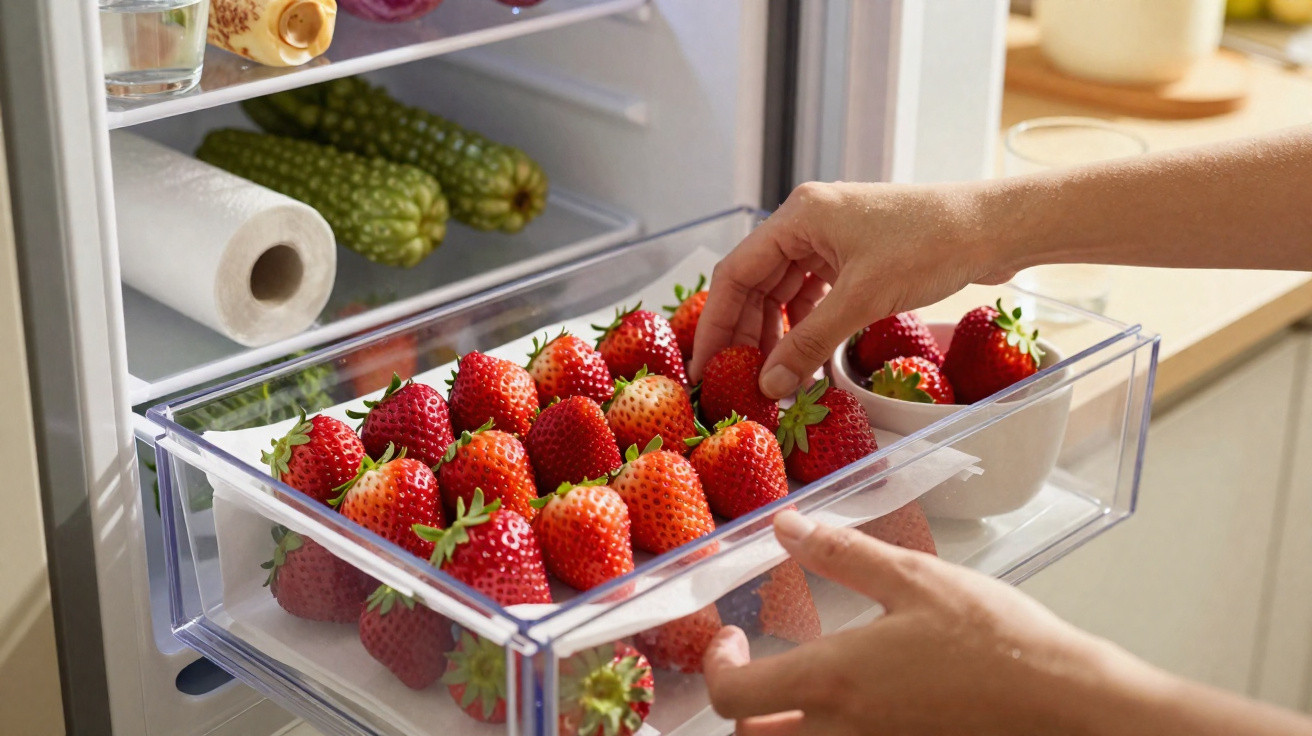
The good news: this tiny “microclimate” at the bottom of the punnet can be tackled with something most kitchens already have - ordinary kitchen paper (kitchen roll).
The logic is straightforward: if mould depends on moisture, you remove as much moisture as you can. Kitchen paper acts like a sponge for condensation, creating a dry buffer between the plastic and the fruit.
How to use the method correctly
- Place one layer of kitchen paper on the bottom of the punnet or a shallow container.
- Arrange the strawberries in a single layer on top, ideally without stacking.
- Optionally add another layer of kitchen paper over the top if the container is deeper.
- Close the punnet loosely and store in the fridge at 0–4 °C.
- Check the kitchen paper every 1–2 days and replace it if you can see moisture.
By absorbing moisture as it forms, the paper prevents water building up beneath the berries. The fruit stays noticeably firmer. Many households report that, using this approach, strawberries that previously lasted about three days now look and taste good for up to a week.
"Once kitchen paper is soaked through, it stops helping - and can even become a source of moisture itself. Changing it in time makes the difference."
Common mistakes that ruin strawberries
Washing strawberries too early
A common impulse after shopping is to rinse strawberries under running water and then put them in the fridge. That habit dramatically shortens their shelf life. Every wash adds extra moisture to the delicate surface.
Tests show that unwashed strawberries stored dry on kitchen paper in the fridge keep for several days longer on average than fruit that was washed and refrigerated straight after rinsing.
The rule of thumb is simple: wash only just before eating - not sooner.
The wrong neighbours in the fridge
Another overlooked issue is what sits nearby. Apples and bananas, in particular, release the ripening gas ethylene. This gas speeds up ripening in sensitive fruit such as strawberries.
A bunch of bananas stored right next to a punnet of strawberries can cut their fridge life by several days. Ideally, use a separate drawer - or at least keep distance from high-ethylene fruit.
Removing the leafy tops too soon
The green cap on a strawberry does more than look nice. It acts like a small lid, protecting the cut area at the top. If you hull strawberries immediately after buying them, you expose the fruit to air, bacteria and fungi.
So it’s better to remove the green tops only shortly before serving or using them - not when you put them away.
Hygiene option with a vinegar bath
Many people want to clean berries thoroughly, for example because of germs or residues. If you don’t want to skip washing, there’s a specific method that supports both cleanliness and longer keeping quality.
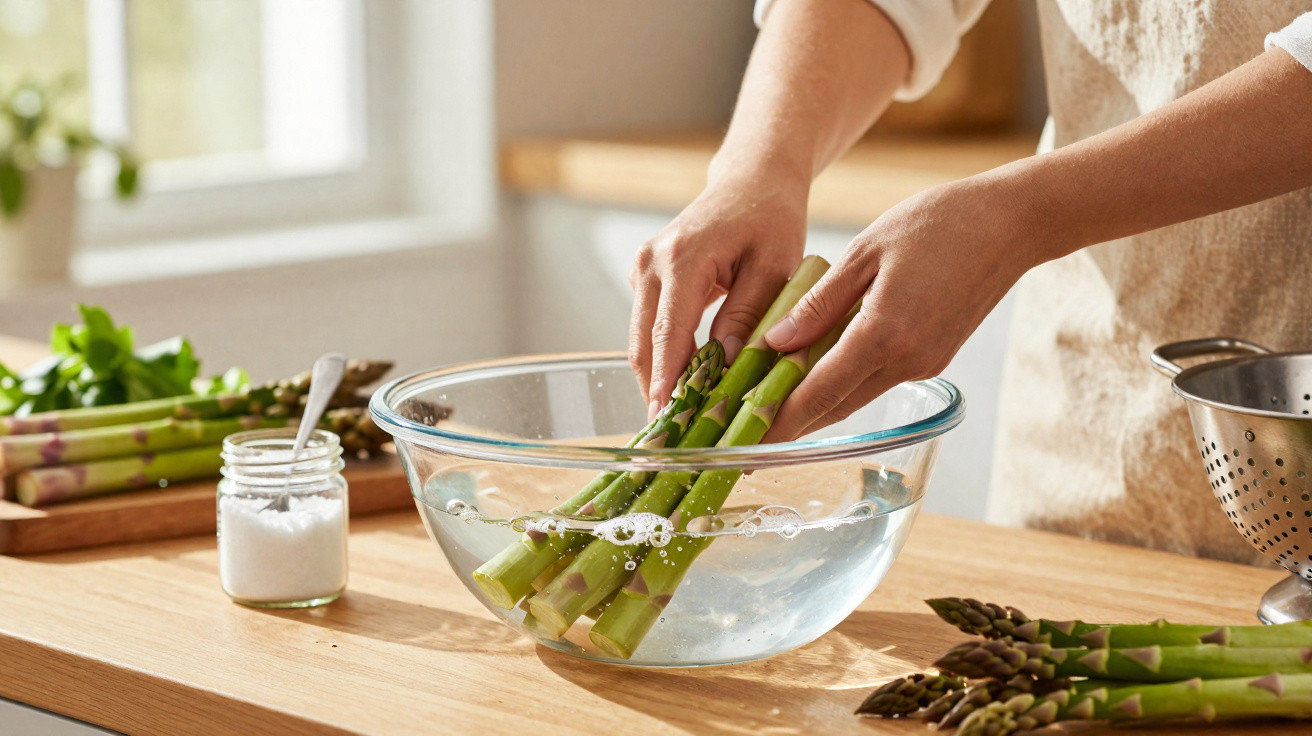
In a bowl, mix water with household vinegar at a ratio of 1 part vinegar to 3 parts water. Put the strawberries into this bath for about 5 minutes. The vinegar significantly reduces germs, including many mould spores.
| Step | What to do? |
|---|---|
| 1 | Fill a bowl with 1/4 vinegar and 3/4 water |
| 2 | Add the strawberries carefully and leave for 5 minutes |
| 3 | Rinse gently, not under a powerful stream |
| 4 | Let them dry thoroughly on kitchen paper |
| 5 | Store in the fridge using the kitchen paper trick |
When done properly, there’s no noticeable vinegar taste, because any excess is removed during the rinse. In households that use this method, strawberries often keep for up to two weeks under ideal conditions - especially when fridge temperature and humidity are well controlled.
The daily 30-second check
One more small habit can have a big impact: checking them regularly. A single mouldy strawberry in the punnet is enough to infect the rest in a short time.
If you take a quick look once a day and remove any suspicious fruit straight away, you break that chain reaction. The time cost is seconds; the benefit is far less food waste.
"One mouldy strawberry is like a fire starting point - remove it early and you often save the whole punnet."
How strawberries from the fridge actually taste aromatic
A fridge preserves freshness, but it dulls aroma. Strawberries straight from the cold drawer feel firmer, yet often taste less vivid. The fix is simple: take them out around 20 minutes before eating and let them come up to room temperature.
During that time, the volatile aroma compounds develop more fully. The sweetness tastes stronger and the flavour feels rounder. If you’ve taken care with storage, this final step is worth doing.
When special storage boxes are worth it - and when they’re not
Shops now sell dedicated fruit and berry boxes with ventilation slots or anti-condensation bases. They can be useful, but they’re not essential. For most households, kitchen paper in an existing container delivers a similar effect - usually for much less money.
Special boxes make the most sense if you regularly keep larger quantities of berries at home, for example in families or for anyone preparing lots of jam or desserts. If you only buy an occasional small punnet, a simple paper layer in the standard container already gives a strong benefit with minimal effort.
More tips to throw away fewer strawberries
If you realise - despite all the tricks - that you’ve bought too many, act early. Strawberries freeze well if you trim them, pat them dry, and pre-freeze them on a tray before transferring to a bag. That way they don’t clump into one solid block and remain handy for smoothies, cakes or porridge.
Quick options such as a crumble, rapid jam, or a simple strawberry quark dessert also help you use slightly bruised fruit sensibly. The key is to use berries with pressure marks early, rather than overlooking the punnet for “another day or two”.
If you combine the right temperature, dry storage with kitchen paper, distance from ripening-boosting fruit, and brief daily checks, strawberry season becomes far more relaxed - with noticeably less going in the bin.


Comments
No comments yet. Be the first to comment!
Leave a Comment