
What went wrong?
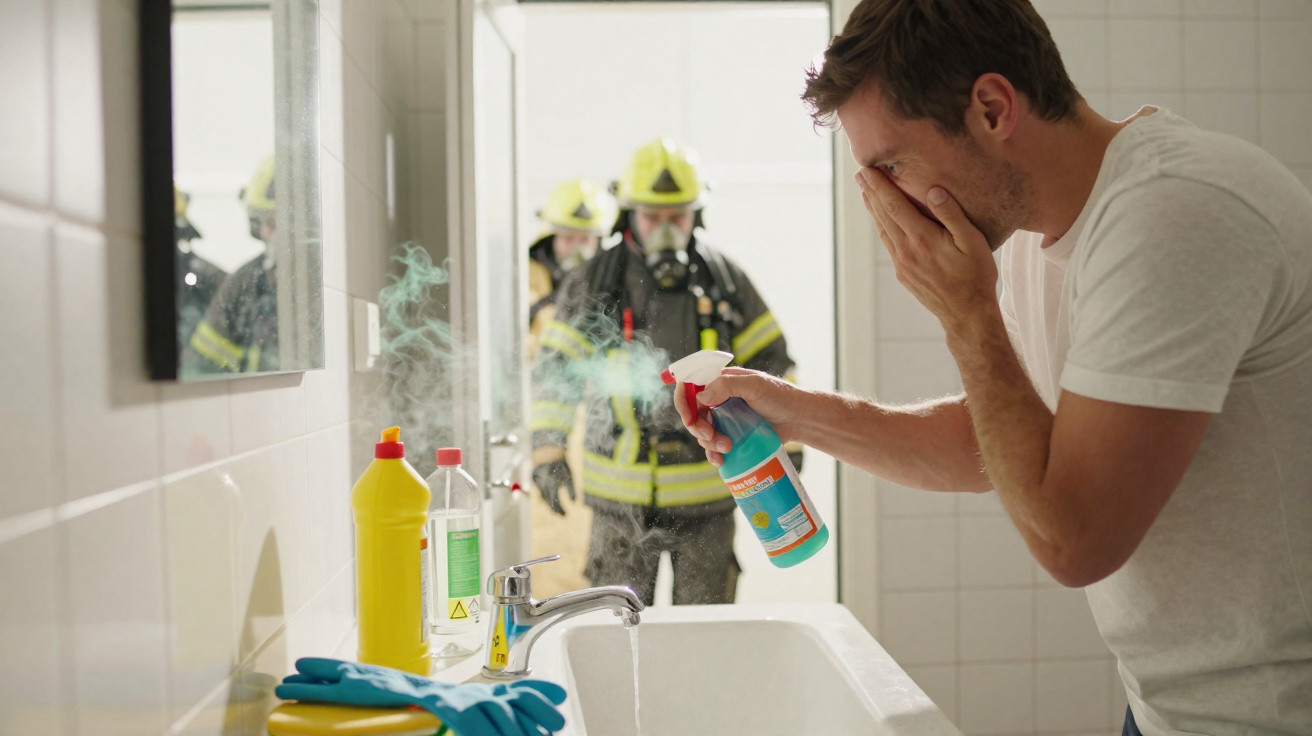
In the French city of Albi, a 35-year-old set out to clean his bathroom and ended up creating an extremely dangerous cloud of gas. He poured household bleach together with a vinegar-based cleaner into a spray bottle. The result was severe breathing difficulty, a full fire brigade response involving 13 firefighters, and an emergency transfer to hospital. The incident underlines how quickly seemingly everyday cleaning products can turn into a life-threatening hazard - including in homes in Germany.
What really happened inside the bathroom spray bottle
The man, in his flat in the Albi area, was trying to remove mould and built-up grime in the bathroom. To do that, he reached for two items many people keep at home: a chlorine-based cleaning product (often referred to as “Javel water” or simply a chlorine cleaner) and vinegar or a vinegar cleaner.
He combined both in a spray bottle so he could apply it to mouldy window areas and tiles. The chemical reaction began virtually immediately.
"Mixing a chlorine-based cleaner with an acidic liquid such as vinegar produces chlorine gas - a highly irritating, toxic gas."
Because this took place in a small bathroom with poor ventilation, the gas was able to build up in the room. The man inhaled the fumes directly and quickly developed serious breathing problems.
13 firefighters and three vehicles called out
According to initial reports, neighbours or family members alerted the emergency services when the 35-year-old could barely breathe. Dispatchers sent multiple units because it was unclear how much gas had accumulated in the bathroom and whether anyone else might be at risk.
In total, 13 firefighters arrived with three vehicles. Wearing breathing apparatus, crews entered the flat, took care of the man and moved him out of the danger area. At the same time, they ventilated the room intensively to bring down the concentration of gas in the bathroom.
He was taken to hospital so doctors could closely monitor his breathing and check for possible chemical burns. There is currently no information indicating his life was in danger, but the scale of the response shows how seriously such incidents are treated.
"Chlorine gas severely irritates the eyes, airways and lungs - just a few breaths can be enough to trigger serious symptoms."
Why chlorine cleaner and vinegar are such a dangerous combination
At the heart of the accident is a straightforward chemical process. Chlorine-based cleaners usually contain sodium hypochlorite. When that substance comes into contact with an acid - here, acetic acid from vinegar - chlorine gas is released.
Chlorine gas is:
- yellow-green, but at low concentrations often barely visible
- heavier than air, meaning it gathers near the floor and in low-lying areas
- strongly irritating to mucous membranes, the eyes and the lungs
In a cramped bathroom - possibly with hot water and minimal air exchange - the gas spreads rapidly and can reach high concentrations in a short time. Anyone staying in the room then inhales the full dose.
Typical symptoms of chlorine gas exposure
People affected often first notice a sharp smell and a scratchy throat. Within seconds to minutes, the following can occur:
- coughing fits and wheezing
- tightness in the chest, shortness of breath
- watering eyes and burning sensations
- a sore throat and stinging mucous membranes
- in severe cases, nausea, dizziness and vomiting
If you notice signs like these after cleaning, you should immediately open windows wide, leave the property and call the emergency number.
Why these accidents can happen in many households
Chlorine cleaner, toilet gel, mould remover, vinegar cleaner: these products are no longer confined to professional cleaning cupboards. DIY shops, discount retailers and online stores offer a huge range - and hardly anyone truly reads the warnings on the back.
Many people also assume: “If one product works well, combining them will work even better.” That exact mindset is what leads to dangerous mixes.
"Just a few sprays from a wrongly filled bottle are enough to turn an entire bathroom into a hazardous area."
Key risk factors include:
- small rooms (bathroom, toilet, storage cupboard)
- shut windows and doors
- hot showers that speed up the movement of vapour
- no respiratory protection and no protective gloves
Dangerous mixtures - these combinations should be off-limits
The Albi incident is an example of a broader household problem. It is not only chlorine cleaner and vinegar that can generate dangerous gases; there are several well-known “don’t mix” pairings.
| Combination | Possible outcome |
|---|---|
| Chlorine cleaner + vinegar/descaler | Formation of chlorine gas, severe irritation of the airways |
| Chlorine cleaner + acid-based toilet cleaner | Chlorine gas formation, high risk in small sanitary spaces |
| Ammonia-based cleaner + chlorine cleaner | Creation of chloramines, irritating fumes |
| Multiple drain cleaners used one after another | Violent reactions, splashes, corrosive vapours |
The most important rule: never mix cleaning products “just to see what happens” - not in a bucket and not in a toilet cistern.
How to clean safely: practical tips for bathroom and kitchen
A few simple habits can dramatically reduce the risk. You do not need to be a chemistry expert.
Basic rules for handling cleaning products
- Never combine different cleaning agents, not even “just a splash”.
- Read labels and hazard pictograms before first use.
- Always ventilate well while cleaning; open windows fully.
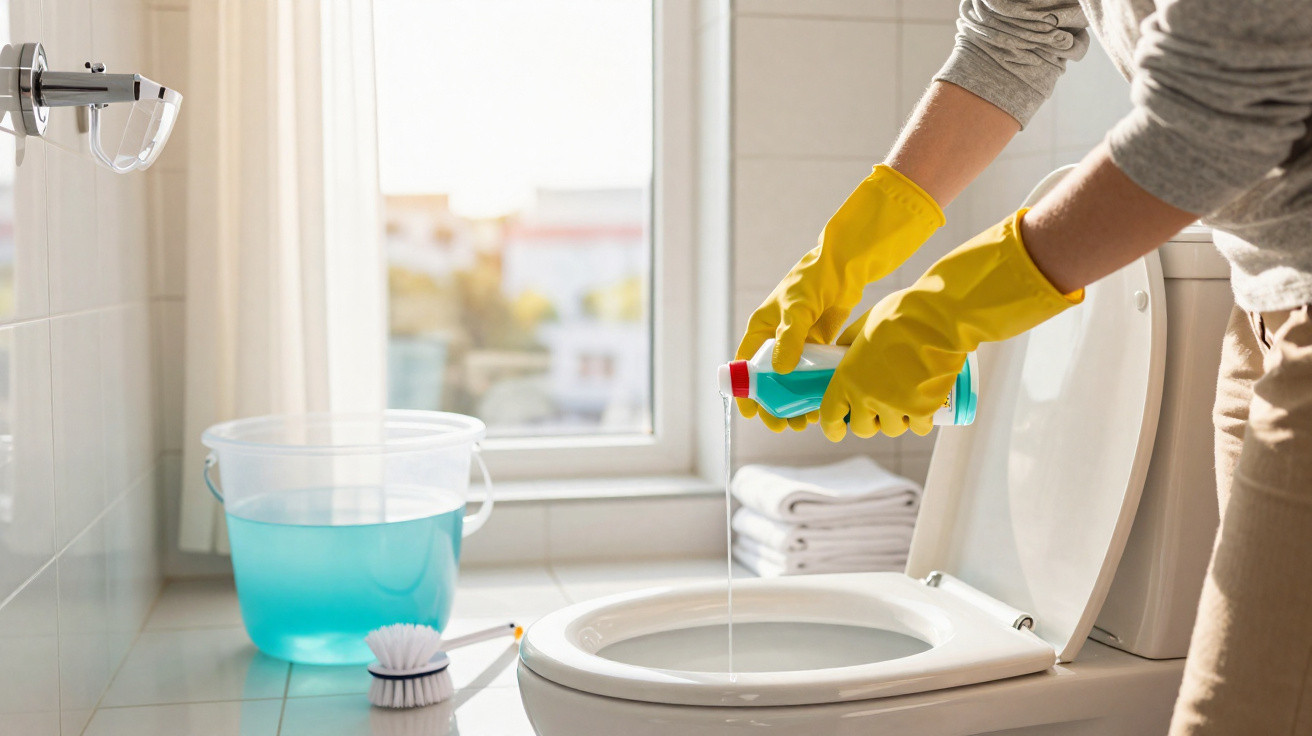
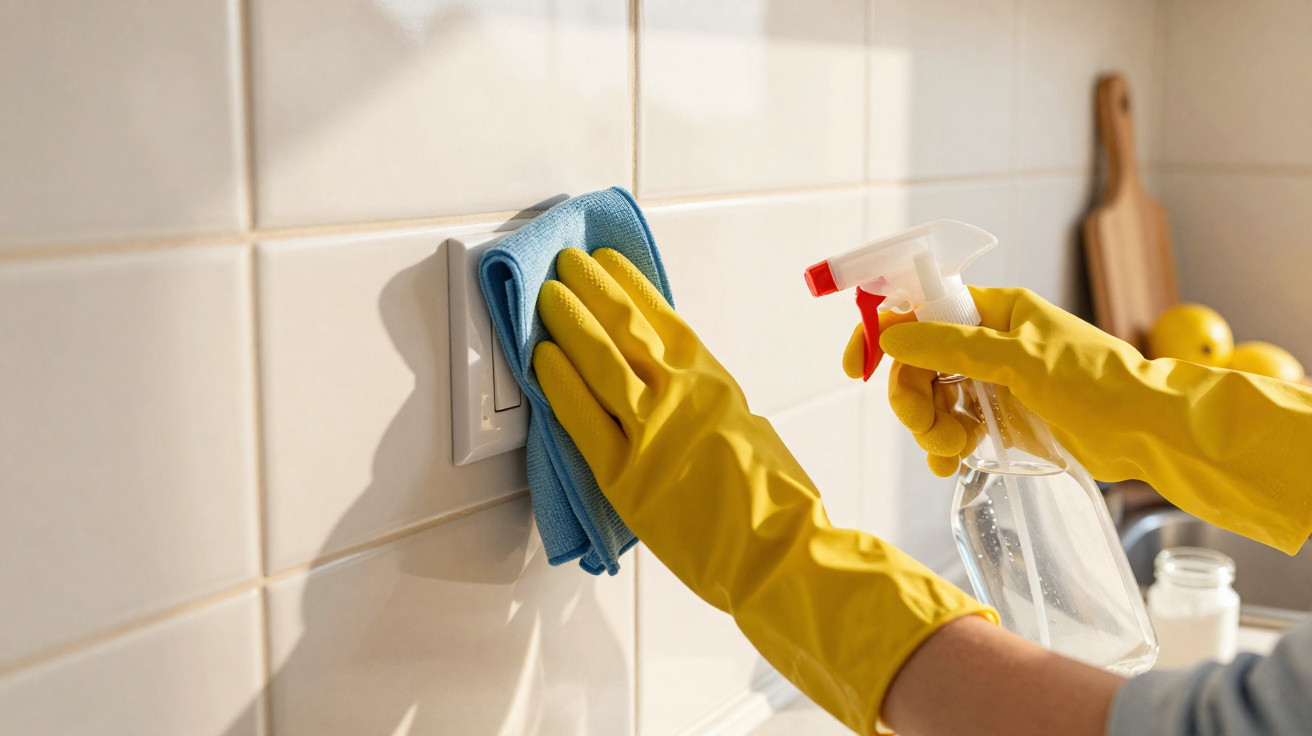
- Wear rubber gloves and keep your distance when using sprays.
- Dose products as the manufacturer instructs, not by guesswork.
If you want to tackle mould in the bathroom, stick to one product. Either use an approved chlorine-based mould remover or choose alcohol-based products or dedicated anti-mould treatments. Between different products, ventilate thoroughly and rinse surfaces with water.
What to do if something goes wrong
If anything smells unusual during cleaning and your airways start reacting, every minute matters. The steps below help to limit the danger:
- Put the cleaner down immediately and leave the room.
- Open windows - and, if possible, doors to the outside - without taking another deep breath.
- Warn other people and remove pets from the area.
- Call the emergency number and mention a possible mixture of cleaning products.
- Do not pour in additional products to “neutralise” anything.
If you feel your breathing is becoming difficult or the coughing will not stop, sit down, try to breathe calmly and wait for the fire brigade. DIY attempts with improvised masks or cloths over the face are not enough to reliably block chlorine gas.
Why the case in France is also relevant for Germany
The products and ingredients involved in this case are available in German supermarkets in exactly the same way. The warnings may be printed on the labels, but they often go unread in the cupboard. That blend of routine, lack of knowledge and time pressure is what makes similar accidents possible.
Many fire brigades in Germany report call-outs where residents accidentally generate hazardous fumes - in utility rooms, bathrooms or cellars. In blocks of flats, a wrong mixture can even affect neighbouring homes if gases spread through stairwells or ventilation shafts.
"A single moment of inattention is enough to turn a cleaning job into an emergency response with blue lights."
So, the next time you reach for a spray bottle during a deep clean, remember: cleaning power does not come from using as many products as possible at once - it comes from choosing the right product, using it with a clear plan, and keeping plenty of fresh air in the room.


Comments
No comments yet. Be the first to comment!
Leave a Comment