
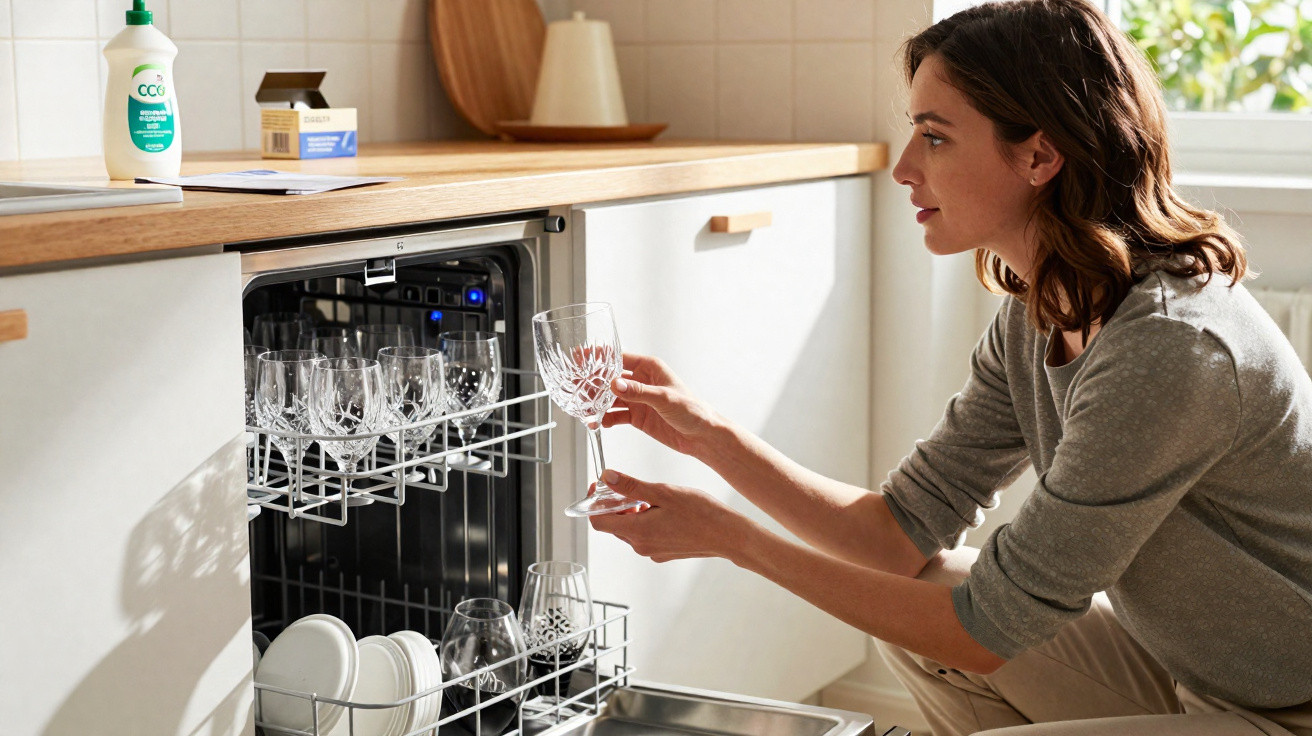
Warm steam spilled out as the kitchen lights caught the glassware… and there it was again: dull streaking. A faint cloudy film. One flute even had a dried water droplet right on the rim, like a tiny rebuke.
She exhaled, tugged a tea towel from the oven handle and began polishing-one glass after another. The whole promise of a “time‑saving appliance” felt like a punchline. From the living room her partner called out to ask whether the glasses were ready, and she replied with the clipped little “yep” that every worn‑out person recognises.
Later, sat at the kitchen table and idly scrolling on her phone, she noticed a small pictogram on the dishwasher’s control panel she’d somehow missed for years. One symbol-one setting-she’d owned all along without realising.
The mysterious mode hiding in plain sight
A lot of modern dishwashers include a programme that’s built almost entirely around glassware. It doesn’t make a fuss. It’s usually a small wine‑glass icon, or a label such as “Glass”, “Crystal”, “Gentle” or “Delicate”. Some people assume it’s pure marketing. Others never use it because the normal programme “cleans everything anyway”.
What it actually does is change the way the machine behaves: slightly lower temperatures, a softer spray pattern and a different rinse sequence. Instead of treating stemware like dinner plates, it handles it more like something you’d carefully pass from one person to another. That’s when the streaks begin to disappear-not through magic, but because the cycle is engineered for it.
Dishwasher makers know exactly how we judge their machines. Sparkly plates are nice, but crystal‑clear glasses are what people notice. That’s why this “hidden” programme is where they pack in the fussy details: longer rinses, tightly controlled heat, and timing that lets detergent and rinse aid do their work, then be completely washed away.
Once you’ve spotted that icon, you’ll wonder how you missed it. A tiny glass symbol that can change how your cupboard looks every day.
Across lab testing by several European consumer organisations, glass programmes nearly always outperform standard eco programmes for clarity and shine. Water use can be similar, and the cycle may even take longer, but glassware comes out looking meaningfully different. Less etching. Fewer spots. That irritating chalky haze on a favourite wine glass? Greatly reduced.
One German test compared a regular programme with the glass setting on identical machines. Under direct light, more than 60% of clear tumblers showed visible streaking on the standard cycle. On the glass programme, that figure fell to under 15%. That isn’t a minor improvement; it changes how the table looks when you set it.
People who entertain tend to notice first. They run the glass programme before a dinner, watch flutes come out looking restaurant‑ready, and then they stop going back. The shift is subtle, but it’s unmistakable.
On a technical level, streaks are the end result of a small chemical soap opera inside your dishwasher. Hard water brings minerals. Detergent lifts grease and food. Heat evaporates moisture off the glass. If the rinse phase doesn’t remove enough dissolved minerals and detergent, they dry where they sit. Those are the milky marks you’re seeing.
The glass setting calms that drama down. It typically avoids very high heat that can “bake” residues onto the surface, uses a longer or more controlled rinse, and keeps the spray gentler so water sheets off more evenly rather than forming stubborn droplets. With rinse aid in the mix, drying shifts from patchy and spot‑prone to smoother and cleaner.
Under a bright kitchen downlight, that’s the difference between “ugh, I’ll wipe that” and “wow, those look brand new”. The science may be dull; the moment you open the door is not.
How to actually use the glass cycle properly
Getting the best from the glass programme is more than selecting a different button-it starts with how you load the rack. Keep glasses separated so they don’t touch. Give each rim a little space. Position them so water can drain away freely and doesn’t collect in the bottom of the bowl. That slight angle matters far more than most people assume.
Next, choose the glass/crystal/delicate icon on the control panel. Where possible, pair it with a good‑quality rinse aid that suits the hardness of your local water. Tablets can be fine, but if you’re chasing streak‑free glass, liquid rinse aid is often the unsung hero. Press start-and try not to open the door halfway through.
When the programme ends, open the door a crack for 5 to 10 minutes before pulling the rack out. Letting the steam escape gives the last droplets time to slide away rather than flash‑drying into marks on hot glass.
A lot of people put glasses on the bottom rack because it “feels safer”, or they wedge in one more mug right beside them. That’s a reliable way to sabotage a good glass cycle. The top rack is usually designed for lighter items, with gentler spray and better angles. And when you cram things together, water hits in odd patterns-creating dead spots and splash rings.
There’s also the classic hard‑water mistake: adding far too much detergent in the hope that more powder means more clean. In practice, it often just creates more residue that can dry onto the glass. Dishwashers work best with balance-salt, detergent and rinse aid set to match your tap water. Let’s be honest: almost nobody truly keeps on top of that every day.
On a hectic weekday evening, it’s easy to stab the same “Eco 60°C” button and get on with life. But before a birthday, a date night at home, or Christmas lunch, that’s when the glass programme proves its value. You don’t need perfection every day-you just need the right setting when it matters.
One appliance engineer I spoke to put it bluntly:
“Ninety per cent of streaky glasses I see are from people using the wrong programme, not a broken dishwasher. The glass cycle exists for a reason, but most users never touch it.”
Behind that blunt take are a few quiet tweaks anyone can adopt. The most reliable combination is usually:
- Use the dedicated glass or delicate programme for stemware and good tumblers.
- Keep dishwasher salt and rinse aid correctly topped up, particularly in hard‑water areas.
- Load glasses on the top rack with space between them, angle them for drainage, and avoid very tall items that block the spray arms.
Do those three things and the dishwasher stops feeling like a mysterious box and starts acting like a tool you understand. It’s a small shift in household control-from “I hope this works” to “I know why this looks good”.
Beyond the cycle: making shiny glasses your new normal
Once you’ve seen what the glass programme can deliver, you can’t quite forget it. You begin to notice which glasses have that almost invisible sparkle-and which ones still look tired. You might even reorganise the cupboard: everyday tumblers on one side, favourites reserved for “glass‑cycle only” on the other.
In truth, it isn’t really about technology; it’s about friction. When streak‑free glass is as simple as pressing a different icon and loading a little more carefully, it stops being a chore and becomes a quiet routine. One of those small home upgrades nobody outside your house will comment on, but you’ll appreciate every evening.
It changes the social side too. Friends come round, take hold of a chilled, clear glass and say, “These look fancy, where did you get them?” You smile, thinking of the dishwasher humming away like an uncelebrated sous‑chef. You might share the “secret setting”. You might keep it to yourself.
On a rough day, those tiny wins matter more than we like to admit. Light catching a row of flawless glasses in the cupboard. Opening the dishwasher and not reaching for the tea towel. It’s not life‑changing, but it nudges the tone of the evening by a few quiet degrees. And once you’ve discovered that hidden symbol on the control panel, every wash turns into a small question: will they come out perfect again?
| Key point | Detail | Why it matters to you |
|---|---|---|
| Use the dedicated “glass” mode | Gentler programme, controlled temperatures, optimised rinsing | Immediately reduces streaks and haze on glasses |
| Load the top rack properly | Glasses spaced out and tilted, with nothing blocking the spray arms | More even cleaning and drying without rings |
| Set salt and rinse aid correctly | Adjust to local water hardness and use a good product | Limits limescale, improves shine and extends the life of your glasses |
FAQ:
- Why do my glasses still streak even on the glass cycle? Loading and water quality may be undoing the programme’s benefits. Leave space between glasses on the top rack, confirm the spray arms can rotate freely, and ensure salt and rinse aid are set correctly for your local water hardness.
- Can I wash crystal glasses using the glass mode? Many manufacturers say yes for modern lead‑free crystal, provided the programme is labelled gentle or glass. For very old or hand‑blown crystal, hand‑washing is still the safest approach.
- Is rinse aid necessary if I use all‑in‑one tablets? If you want streak‑free glass, a separate rinse aid almost always improves results. Tablets can work, but they rarely adapt as precisely to very hard or very soft water as liquid rinse aid.
- Why do my glasses look cloudy rather than just streaky? Cloudiness can be mineral deposits from hard water or permanent “etching” caused by harsh detergents and high heat. A gentle glass programme with the right salt and rinse aid often clears mineral haze, but it won’t reverse etching.
- How often should I use the hidden glass mode? Use it whenever you’re washing stemware or glasses you care about-before guests, big meals, or any time you notice marks building up. Everyday tumblers can stay on your usual programme if you’re not chasing perfection.




Comments
No comments yet. Be the first to comment!
Leave a Comment