
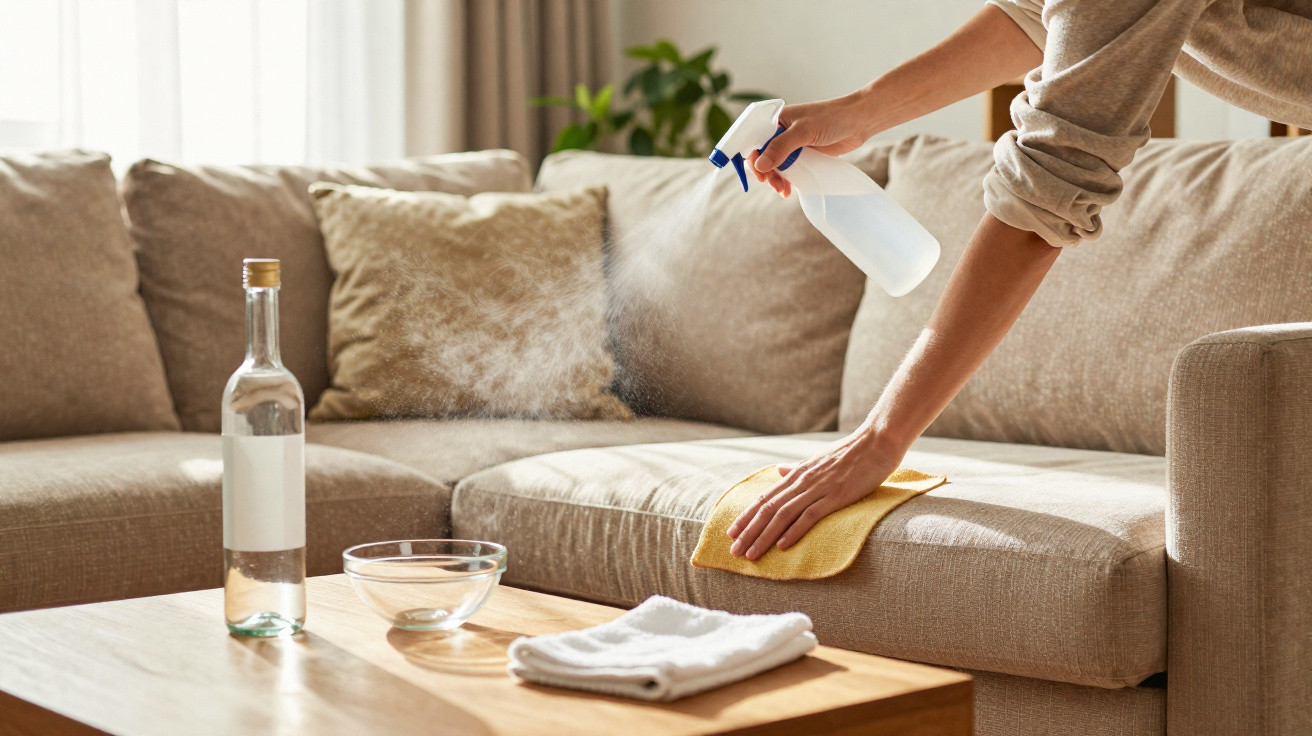
Your sofa can look perfectly presentable in daylight, yet the moment you sit down a flat, stale smell drifts up. Upholstery holds on to daily living: meals, pets, and whatever happened at last year’s get-together. Throwing the entire couch in the wash isn’t realistic, and shop-bought sprays can feel like you’re layering fragrance over the real issue. There’s an everyday liquid that works quickly to reset odours and perk up the pile. No foam. No fuss.
A friend once grabbed a plant mister, lightly sprayed the living-room sofa, and opened a window while we carried on chatting about nothing in particular. About ten minutes later, the space felt brighter-like the air had been swapped out-and the corduroy didn’t look quite so tired. I leaned in, waiting for lemon or lavender. Nothing. No perfume at all-just fresher fabric. Then she held up what she’d used.
The budget-friendly liquid that quietly resets tired sofas
No build-up, no mystery: the low-cost household liquid is plain, unflavoured vodka-ideally a basic bottle you’ve got tucked away-or any clear, high-proof ethanol you’d use for cleaning. Sprayed as a fine mist over upholstery, it flashes off fast, loosens trapped odours, and leaves virtually nothing behind. Yes-the trick is cheap, unflavoured vodka in a fine-mist spray.
Wardrobe teams in theatres have relied on this for years to keep costumes fresh between performances. One dresser told me they’d move along a rail with a mister, let the alcohol evaporate, brush the fabric, and put everything back under the stage lights. I used the same approach on a flea-market armchair that reeked of stale smoke and damp wool: a light spray, a short wait, then a gentle brush-and the musty smell eased enough for the piece to feel breathable again.
The reasoning is straightforward. Ethanol breaks down many of the compounds that cause odours and helps reduce the bacteria that thrive on them. Because alcohol evaporates quickly, it takes those smells with it instead of leaving a scented layer behind. Plain water can actually “wake up” old smells, and masking sprays can end up cloying or tacky. A clean alcohol mist settles, does its job, and disappears-letting the fabric feel like fabric again.
Step-by-step: revive upholstery without washing
Pour cheap, unflavoured vodka into a clean spray bottle-use it neat for stubborn odours, or dilute 1:1 with water for more delicate textiles. Vacuum the upholstery first to remove dust, then hold the bottle 20–30 cm from the surface and apply a barely-there haze; aim for dew, not drips. Open a window, leave it for 10–15 minutes, then lift the fibres with a soft brush or a dry cloth.
Begin cautiously. Test a hidden area first and check, once dry, for any colour transfer or a dull patch. Avoid soaking seams or foam, and don’t use this on leather, suede, silk, acetate, or rayon, which can mark or react. We all know the feeling when guests text “on the way” and the house smells a bit too lived-in; this is calmer than emergency cleaning. And let’s be honest: nobody does a full routine daily. Think of this as the five-minute reset your living room actually needs.
Patch-test first, keep flames far away, and use the finest mist you can.
“Cheap vodka is the backstage dry cleaner-fast, quiet, and gone before the curtain call,” a wardrobe manager told me with a shrug.
- Choose a fine-mist sprayer to prevent wet patches and water rings.
- Ventilate well; alcohol vapour needs somewhere to go.
- Steer clear of leather, suede, silk, acetate, and rayon; stick to hard-wearing, colourfast fabrics.
- Keep away from candles, pilot lights, and smokers; alcohol is flammable.
- For a softer finish, brush pile fabrics (velvet, corduroy) as they dry.
What this little ritual changes
It isn’t magic-it’s a nudge in the right direction. Once upholstery stops smelling tired, the whole room feels less nagging, and you notice colour again rather than must. Maintenance becomes lighter: a quick vacuum, a brief mist, a bit of fresh air, and you’re done. From there you can add more-cushions in sunlight, a slower Saturday deep-clean, or a throw that finally makes sense. Some people use white vinegar for the same purpose; it does work, but it brings a faint kitchen note with it. Vodka stays neutral and unobtrusive. The goal isn’t perfection; it’s that satisfying sense your home can reset quickly-without a washing machine, a hire van, or an invoice.
| Key point | Detail | Why it matters to you |
|---|---|---|
| Cheap liquid | Plain, unflavoured vodka in a fine-mist spray | A low-cost, no-residue way to refresh upholstery |
| Method | Vacuum, light mist, air out, gentle brush | A fast routine that suits real life and tight schedules |
| Safety | Patch-test, avoid delicate fabrics, keep from flames | Helps protect furniture and prevents accidental damage |
FAQ:
- Can I use rubbing alcohol instead of vodka? Yes, 70% isopropyl alcohol works similarly for deodorizing, but it often has a stronger scent and can be harsher on dyes. Test first, use a fine mist, and let it flash off with good airflow.
- Will vodka remove stains as well as smells? It can lighten fresh, water-based marks by lifting residue, but it’s not a full stain remover. Blot stains first, then mist if odour lingers. For set-in stains, use a fabric-safe cleaner.
- Is it safe around pets and kids? Keep them out of the room while you spray and until the fabric is fully dry. Alcohol vapour disperses quickly; don’t leave wet cushions within reach. Common sense beats panic every time.
- What fabrics should I avoid? Skip leather, suede, silk, acetate, and rayon. On wool or delicate blends, dilute 1:1 with water and test under a cushion or along the back seam.
- What if I can’t stand the idea of vodka? Try a 1:1 white vinegar and water mist, then air out well; the tang fades as it dries. For a neutral scent, you can add one drop of essential oil, but keep oils away from delicate fibres.

Comments
No comments yet. Be the first to comment!
Leave a Comment